Friday, September 14, 2012

Here's Your Golden Ticket


Dear George,
We felt sad when the school board shut down our neighhborhood’s Clifton School which was housed in a magnificent turn of the century Beaux-Arts style building on Clifton Avenue.  However, the building reopened soon as the Clifton Cultural Arts Center, providing a whole new set of contributions to the community.  Because of proximity to the University of Cincinnati and its art school, lots of painters, sculptors, potters, etc. live in Clifton.  Three years ago the CCAC initiated a large exhibition, called the Golden Ticket Art Show, in which they invited artists who lived or worked within a three-mile radius of their central Clifton location to exhibit their work.  It was a successful tribute to the arts in our immediate area.  Last year they expanded the radius to five miles, and it was even better.  This year artists who live or work within 25 miles of the CCAC were invited to participate.  Since a 25 mile radius encompasses the entire metropolitan area, it’s not exactly a neighborhood show any more but the display of 100 works by 69 artists was the best yet and an impressive statement about the fine arts in Cincinnati.  I think we enjoy art shows because we get newly reminded of people’s amazing skill and creativity, and that’s how we felt this time too.  I thought I would pass along images of some of the works we particularly enjoyed.  Visitors got to vote for their favorite piece on the Golden Ticket they received at the door.  See what you think. 
Love,
Dave


Michelle Heiman, "Beckett in Truck"


Clinton Wood, "Eastern Morning"


Bill Feinberg, 15/8/1967 (Death Comes for Magritte)


Mary Paula Wiggins, "Red House on Green”


Elise Thompson, "Little Dreamers"


Ray Abrams, "Guanajuato"


C. Pic Michel, "Emerging" 


Carolyn MacConnell, "Shut Eye"


Michael Oludare, "Pounded Yam" 


Mary Florez, "Watching You" 


Michelle Heimann, "Comfort" 


Karen Feinberg, "Willow" 


 Michael Agricola, "Self-portrait with Hands"


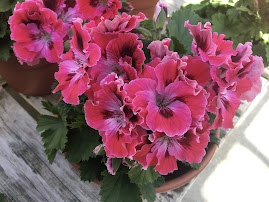
Susan Mahan, "Always Flowers"


Ryan Slattery, "Men of Honor"


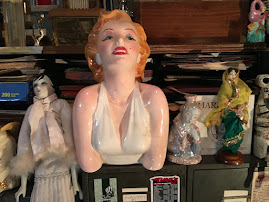
Edith Marrero, "Katrina Motorcycle Queen"


Tina Tammaro, "with the sun dreaming old battles" 


G-mail Comments
-Donna D (9-15):  these are really good!  who won?
-David L (9-15):  Believe it or not, the winner isn’t even in this batch. 
-Linda K-C (9-14): This looks like a great event.


Sunday, September 9, 2012

Do the Flies Get a Bum Rap?

Musca Domestica, up-close view

Dear George,
It’s hard to believe that the flies are gaining control over our lives, but that’s what seems to be happening.  Katja was scheduled for shoulder replacement surgery shortly after we returned from our Lake Cumberland camping trip.  When we got to the hospital, she went through the intake procedure, changed into a hospital gown, got hooked up to IV tubes, and was ready to be wheeled into the operating room when the anaesthesiologist asked her a couple of last-minute screening questions.  One was whether she had any abrasions.  Katja said no, but she did have some fly bites from camping.  The anaesthesiologist looked over the dozens of fresh bites on her forearms and calves, then called in the surgeon for consultation.  The surgeon said it was probably safe to proceed, but there was a slightly increased risk of infection that could result from the bites.  He recounted one of his cases in which a patient had gotten an infection because of his chigger bites and had had to have his newly installed shoulder taken back out, a messy and painful complication.  Katja promptly decided to reschedule.  So, instead of three hours on the operating table, we had French Onion soup at Panera.  We didn’t know whether to thank our Lake Cumberland flies or be angry at them.   

Though flies have rarely affected our daily lives as much as changing a scheduled operation, we’ve had many thousands – maybe millions -- of human-fly encounters over the years.  Except for other human beings, I’d say we’ve had more contact with flies than any other species.  Certainly more than snakes, mice, worms, ducks, squirrels, opossums, moles, etc.  One memorable experience was when we were young marrieds spending the summer working on a research project in Maine’s White Mountains.  To save money, we decided to live in our pup tent at a free National Forest campsite.  We had to drive five miles over a rocky one-lane road to get to the campground, and we never saw another camper during our entire stay.  The site was idyllic, perched on the bank of a small mountain lake in the midst of a primal pine forest.  The only terrible thing was the nightly invasion of the Maine black flies, tiny vampire-like creatures that seek out and thrive on warm blood.  After days of nonstop swatting, itching, and scratching, we went to the hardware store and purchased an electric bug zapper.  The bug zapper contained a bright light that was astonishingly effective in attracting flies, moths, and other insects as soon as the sun went down.  Each time a bug entered the zapper’s innards, the machine would give off a loud ZAPPPP as it vaporized the intruder.  We’d sit at the campfire each evening, clapping and cheering every time another bug was electrified.  It was so absorbing that, when we returned to Cincinnati, we installed the bug zapper on our back porch, even though we had no real need for it, and spent many evening hours raptly watching the action.

I got pretty obsessive about trying to kill the flies on our most recent trip, and, in retrospect, I think this was an overly harsh and even immoral approach.  The more time I spent hunting the flies, the more I came to respect them as adversaries.  They seemed to have fabulous sense organs and perhaps great communication skills as well since they would descend from all directions in a matter of seconds as soon as we opened a jar or can at the kitchen table.  And they were so speedy and deceptive it was next to impossible to swat them.   I thought back to my father ‘s reverence for nature and all its living creatures.  When Katja screamed upon coming across a large brown spider in his bathroom sink, he explained that the spider was a welcome dweller in his house and every bit as much a guest as we were.  I think he probably regarded flies as equally worthy of respect and consideration.  Perhaps, I thought to myself, people are simply prejudiced toward flies.  Certainly we wouldn’t been so distraught if we’d been visited by flitting butterflies at our campsite.  


The common housefly

Confused and worried, I decided to explore the true facts about flies, using my most sophisticated technological skills (i.e., googling the word “fly”).  I soon discovered that flies have whole bunches of positive traits that I didn’t know about.  First, as the photo above illustrates, flies are handsome little devils.  We normally don’t get to appreciate this because they are too small and too quick to examine in detail.  They have fantastic eyes, their wings are elegant, and they often have aesthetically pleasing coloration.  Flies, it turns out, help to clean up the natural environment by gobbling up decaying waste, and they help keep the bird and spider populations healthy by offering their own precious bodies as food.  Flies are also terrific pollinators, pollinating more plants and flowers than almost any other creature except bumblebees.  Without flies, the birds and plants and flowers would be in serious trouble.  In fact, a contributor to wiki.answers.com asserts: “if flies become instinct who knows what could happen.  we could all die…”  That’s such a profound insight.  I think the author might have meant “extinct”, but his or her meaning is clear.

While flies’ attributes are undoubtedly natural and sensible to their fellow flies, not all of them are appealing to humans.  Flies breed, lay their eggs, and are born in feces, garbage, or rotting animal flesh (a practice that the more delicate among us would find offensive).  I never realized it, but flies lack teeth and can’t chew.  So when they’re eating human food, they vomit or defecate on it first to liquefy it so they can slurp it up with their little straw-like tongues.  Flies also have sticky pads on their feet, so when they walk around or land on something they leave behind little traces of dog poop or rotting filth.  Because a single fly carries about a million bacteria on its body and its hairy legs, flies have an impressive capacity for spreading illness.  Some favorite fly diseases are dysentery, diarrhea, typhoid fever, E. coli infections, and cholera.  

On the whole, then, we can conclude that flies are our good friends and allies, and we shouldn’t be trying to hurt them.  If you’re going to be scheduled for surgery, you should just avoid mingling with them for the time being.  Even when you’re perfectly healthy, of course, there is a risk of typhoid fever, cholera, etc.  However, since we would all be dead if our friends the flies didn’t exist, I’d definitely rather risk cholera than be instinct myself.
Love,
Dave
      

Sources: 
“Common Housefly (Musca domestica)”, http://www.enchangtedlearning.com
“Flies in the home,” lancaster.unl.edu/pest/resources/flies015.shtml
“Insects – Flies”, http://www.uen.org
“What good are flies?”, http://wiki.answers.com


G-mail Comments

-Linda K-C (9-10): David, even it causes me to become instinct I don't care, you can not convince me they should be allowed to live, they sit on shit and sit on our foot. I hate flies, good advocating on their behalf. 
-David L (9-11): Hey Linda,  You have a really clear attitude.  Hard to argue with your reasoning.  Dave
-Linda K-C (9-11): Personally I would jail them. Also foot was to be food which only enhances my argument.
-Jennifer M (9-9): This is a good one. I like the photos of the flies and your fly facts. I am also glad that we are not instinct! :-)

Wednesday, September 5, 2012

Couple Camping: The New Marital Therapy

Katja, Dave, Mike, and Duffy at the State Dock, Lake Cumberland

Dear George,
One insight I’ve garnered from camping is how much happier couples are in the forest than in the city or the suburbs.  When you see married couples at the mall or the Olive Garden, usually they either look estranged or ready to holler at one another.  On the campground, in contrast, it’s all smiles and giggles.  Partly, people may be elated by the beauties of nature.  And I’m sure they enjoy the peace and quiet and opportunities to commune.  Most importantly, though, I think it’s a consequence of roughing it – shedding one’s reliance on modern conveniences, coping with the elements, getting back in touch with one’s primal pioneer spirit.  Nothing brings couples together more than dealing with challenging circumstances in the wilds.  I wouldn’t go so far as to claim that camping rejuvenates emotional bonds more than intensive therapy, but I’m sure it comes pretty close.  

Usually I go camping by myself with the sheepdogs, so my wife Katja hasn’t had as much opportunity to observe all these wonderful effects.  A center-city Philadelphia girl, she thinks of herself as someone who prefers a life of comfort and luxury.  However, I’m convinced this is a form of false self-consciousness, probably due to something her mother told her at an impressionable age.  In my view, Katja has an untapped “inner camper” to her nature that’s waiting to blossom forth under the right conditions.

Remarkably, the heavens aligned last week when the workers began laying hardwood floors on our second floor, making sleeping at home difficult.  Much to my amazement, Katja suggested that we take the week off and go camping at Lake Cumberland, about two hundred miles south of us near the Kentucky-Tennessee border. I’m not usually disposed to traveling that far in our gas-guzzling SUV, but it was hard to pass by such an opportunity.  I packed up our gear, and we set out on the Monday before Labor Day weekend.


Our SUV, packed to the gills with important stuff

It was 91 degrees out when we arrived at the state park in mid-afternoon, and there was practically nobody else on the campground.  We have a large, 8-person tent which accommodates the two of us and the sheepdogs with room to spare.  I don’t take it when camping by myself because it takes two people to set it up.  The tent is held up by four 21-foot poles.  Each pole is broken down into a bunch of smaller segments which were originally held together as a unit by an elastic band running through their centers (such that the whole pole popped together when you straightened out the various segments).  Unfortunately all the elastic bands are now broken, and we have to assemble each pole manually, link by link.  This makes erecting our voluminous tent more challenging.  Each time we tried to insert one pole in the tent sleeve, all the other poles fell apart, the pieces getting mixed up with one another and requiring that we sort them out and start over from the beginning.  It made for a frustrating task, the sort of thing that might be used at a weekend retreat to explore how couples deal with insanity.  I remarked that this was an enjoyable challenge, but Katja wasn’t enthused.  We did get the tent up after 90 minutes of struggle and pain.  I said that, because of our practice, our task would be much easier on our next trip.  Katja, however, said we should buy a new pop-up tent that would set itself up.


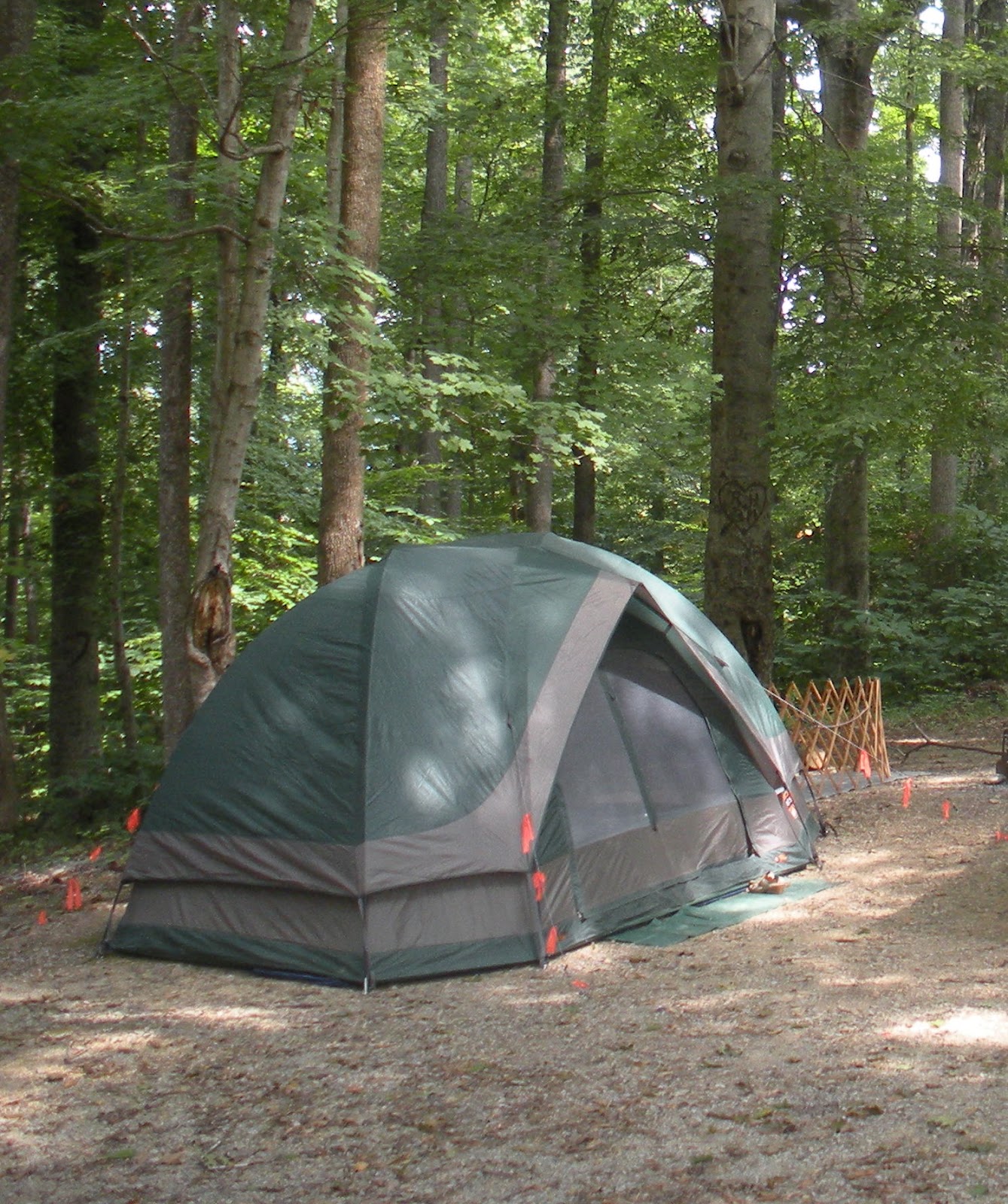
Our tent, finally assembled and looking good

I gathered some firewood from the forest, and Katja started making corned beef hash for dinner.  She hadn’t gotten very far before a swarm of flies descended on our table.  I wasn’t accustomed to this because parks in Ohio secretly spray their campgrounds with insecticide and there are no flies.  Kentucky, however, is more ecologically correct, and there’s no spraying.  My impression was that most of the bugs from Ohio had migrated to Kentucky.  Further, because we were the only campers in our wing of the park, all the local flies had come over to have dinner with us.  We got through the meal by my waving a dish towel frantically over our plates with my left hand while eating with my right.  It wasn’t a fully satisfying dining experience.  Here’s a picture of our cutting board which I took about 90 seconds after slicing a tomato on it.


Flies on the cutting board

Just by luck I’d bought a new screened dining canopy which had been on sale at our neighborhood drugstore at the end of last summer, and I set this up first thing the next morning.  Certain that this would eliminate our fly problems, I began cooking French toast and bacon for our breakfast.  Much to my dismay, the dining canopy didn’t work as advertised.  The canopy had no floor, and the walls were an inch or two above the ground, enabling the more clever and enterprising flies to gain ready access after a quick search.  The screened walls, moreover, kept them in there so that by the time that Katja arrived our new dining space was like a gigantic fly auditorium.  Again I used the old waving dish towel technique while we quickly gobbled up breakfast.  


Katja relaxes in our dining canopy with the door open to let out the flies

Afterward I went to the Country Store to discuss the fly situation with local experts.  No one had a quick fix, though a grizzled old customer said fly paper might help some.  The Country Store was out of fly paper, so I drove into town and got some “fly ribbons” at the supermarket.  These came in little spools that you pull out and unwind into thirty-inch hanging strips.  I didn’t unroll the strip properly the first time, and I tried to unwind and straighten out the paper manually with my fingers.  That was a horrible mistake.  Fly paper has to be the stickiest substance in the history of mankind.  It was more messy than manipulating paper soaked in Super Glue.  I had to scrub for five minutes at the rest room sink to get my fingers unglued.  I checked the fly paper strips an hour later, but no flies had yet been captured.  Two hours, no flies.  After four hours, still nothing.  By mid-afternoon, though, I had captured one large fly (see photo below).  After three days about a dozen flies, yellow jackets, and miscellaneous small bugs were stuck to the paper, at a cost of about 35 cents per insect. The remarkable thing is that the flies did seem to become steadily less frequent in our dining canopy.  I think flies are basically intelligent creatures, and they would prefer not to hang around a space that’s decorated with fly paper and insect corpses.   


Our first fly captive

By Wednesday we still hadn’t seen Lake Cumberland, and I figured out from the park map that we could take a one-mile hike from the park lodge and view it from an overlook.  Katja is still recovering from knee replacement surgery, but she gamely said she would give it a try.  We set out with the dogs at mid-morning.  It was a fairly strenuous hike with lots of rocks and roots and up-and-down climbs.  I thought the trail was very pretty, with ravines, sandstone cliffs, dried up rocky creeks, and mature oaks, beech trees, and evergreens.  Katja isn’t as keen on nature though, and, two-thirds of the way through our journey, she decided all the forest views looked the same and she didn’t want to go any further.  I suggested she sit down and wait for us, but she wanted to go back, so I gave her my car keys.  Katja headed back while the dogs and I proceeded to the overlook.  It was pleasant enough, though the lake views were obstructed by lots of  trees, and the dogs were ready to return after a few seconds.  


Lake Cumberland from the Overlook

Heading back, I started worrying about Katja returning alone on the trail.  She didn’t have a cell phone, and her gait is still a little unsteady.  My anxiety was intensified when I came across a fork on the trail where one branch headed uphill, the other down into a ravine.  I hadn’t the vaguest idea which way we’d come from.  I tried the ravine alternative, but, when I got down to a rocky creekbed, I realized I’d never seen that before, and so I headed back up.  Which way had Katja gone, I wondered?  I’d lost one of the dogs in the forest the day before, and now I was imagining that Katja was lost in the depths of the forest too.  I stepped up our pace and was very relieved when I got back to find Katja sitting in our car, enjoying the air conditioning and listening to NPR.  We headed back to our campsite.


Katja and the dogs on the Lake Bluff Trail

I returned to the Country Store, seeking new advice from the staff.  A different young woman and man were behind the counter.  This time I explained that my wife was getting tired of the campground, and I wondered if there were some place resorty where she could browse in little shops.  The woman said that nearby Jaymestown had a Dollar General, but there wasn’t much else of interest, and the next town over, Wessell Springs, had a few more stores plus a McDonald’s and a Wendy’s.  But it wasn’t very interesting either.  However, she said, it was about a thirty-minute trip to Elveron and that Elveron was a fabulous town to visit.  It had tons of antique stores, gift shops, and fun things to see and do.  Elveron would be very exciting, the best town in the entire region.  I couldn’t wait to tell Katja.  We set out the next morning.  The trip through the hilly countryside was pretty, and we passed by Wolf Creek Dam which had created the 101-mile long Lake Cumberland when it was built in 1950.  



Wolf Creek Dam

Elveron’s a little town of about 2000 people.  We cruised around the small downtown area, but we couldn’t find any of the attractions I’d been told about.  The most interesting-looking store was simply labelled “Consignment Store”.  It was closed and completely empty.  Betty Sue’s Boutique and Resale Shop was open, but Katja didn’t want to try it.  She suggested we turn around and head back to the campground.  That seemed unduly pessimistic.  I pulled over at the two-pump downtown gas station.  A gray-haired man in overalls was filling his gas tank.  I explained that my wife and I had come to Elveron to visit the antique district, and I wondered where it was.  The man looked warily at me and said there wasn’t any antique district.  There’d been an antique store once, but it had gone out of business a long time ago.  I asked what other shops in town Katja might enjoy.  He said there wasn’t anything of interest in Elveron.  His own wife hated it here.  He noted that there were 14 empty storefronts in town, practically the entire downtown.  He said, if we wanted to go to a really good town, we should go back to Wessell Springs, the town with the McDonald’s and Wendy’s near our campground.  I thanked him, and we headed back.  I couldn’t imagine why the Country Store clerk had told me what she did.  Either she had pretty limited judgment, or perhaps she just decided to be malicious because we city folk were more interested in gift shops than in fishing and hiking trails.  In any case, Wessell Springs did turn out to be bigger than Elveron, though it specialized mainly in secondhand junk shops, most of them a step down St. Vincent de Paul’s.  We did find one small antique mall that occupied Katja’s interest for a short while.  On the way home we stopped at a roadside ice cream parlor.  Their sundae machine was broken, but we enjoyed double scoops of chocolate ice cream.   


Some of the attractive merchandise in the Wessell Springs Olde Trading Post

All in all, our camping trip was well above average in terms of generating adversity and testing our resilience.  Katja was pretty miserable, but I was proud of her for hanging in there.  She was covered in bug bites by the end of the trip.  I never understand why that happens because nothing ever bites me.  However, I did manage to come down with a healthy case of poison ivy, and we jointly used up three bottles of anti-itch spray on our return.  At the same time, not everything during our stay was difficult.  The most relaxing periods were the end of the day, after eating supper and washing the evening dishes.  Katja and I would sit down by the campfire, and, unlike normal evenings at home where we retreat to the computer and the TV respectively, we sat around and reminisced about the past, our parents, our families, and our life together over the years.  Then we’d take the dogs into our cozy tent where we’d chat a bit more before nodding off.  Duffy would climb onto Katja’s air mattress, and Mike would lay by her side with his head on her pillow.  We all slept really well.  


The campfire

Anticipating the rainy aftermath of Hurricane Isaac, we packed most of our gear on Thursday night and set out for home early Friday morning.  We stopped at Berea on the way back, where Katja enjoyed the upscale shops and I gave the dogs a tour of the college campus.  Back in the car I diplomatically asked Katja what she would change about our trip if she could.  She said the heat, the flies, and having interesting places to go.  I agreed, and Katja said we should should pick another destination if we go camping again, probably closer to home.  As we approached the city, Katja said she was very sad being away from home so long, and I said I was very sad leaving the campground.  That proves my point.  Having a shared emotional experience of being sad together shows why camping is so therapeutic.  Last night I’d just drifted off at 12:30 when I heard Katja ask, “Would you like to talk?”  I said no, that I was asleep.  Katja said that if we were around the campfire, we’d be having a talk.  I didn’t say anything, but I secretly thought to myself that perhaps Katja would want to try out more campfires in the future.
Love,
Dave


G-mail Comments
-Donna D (9-8): sounds awful.  you can get build a fire at home in the hibachi on your front porch surrounded by bushes and trees, gather round it with blankets, and talk. donna
-David L (9-9):  Good advice.  I'd need to bring the dogs and the tent out to the porch too.  I'll bring this up with Katja as soon as she's recovered. 

Saturday, September 1, 2012

A Million to One?


Mike on the Baugh Branch Trail

Dear George,
Beset by household renovations, Katja and I recently left for a five-day camping trip to Lake Cumberland State Park in southern Kentucky.  While Katja was taking a nap one afternoon, I decided to take Mike and Duffy, our ten-year-old sheepdogs, on a hike on the Baugh Branch Trail.  We drove there since the trail was several miles from our campground and far from human habitation in the park’s 3,000 acres of forest.  The sign at the trail head indicated that it was 1.6 miles one way, and I thought we’d do a mile or so, then turn around and come back.  Despite a park rule forbidding unleashed dogs, I let Mike and Duffy off the leash after we’d walked a short distance.  It didn’t seem likely that we’d see anybody.  There was practically nobody at the campground, no cars were in the parking lot, and it looked like things would stay quiet until Labor Day weekend. 

The Baugh Branch Trail was heavily wooded and hilly.  As usual, Duffy stuck closely to me, sometimes leading the way, sometimes a few feet behind.  Mike, in contrast, always lags behind, anywhere from ten to thirty or more yards.  I kept a close eye on him, glancing back every twenty or thirty seconds, and he was always back there, plodding along to keep up with us.  After half an hour we started to get some glimpses of Lake Cumberland through the trees.  It was hot – a little over ninety degrees.  I put the leash back on Mike to keep him moving along at a steadier pace.

Finally we turned around, even though we hadn’t reached the trail’s end.  I was hot and sweating, and I was worried about the dogs getting dehydrated.  Once we’d begun our return, both dogs started moving more quickly, and I took Mike  back off the leash. The walk back took a long time.  Finally we got to a fork in the trail that I’d remembered was fairly near to our starting point.  That was a relief, and I hurried along to get back to the parking lot and the car.  Just as we were reaching the road I turned to look behind me, and I was startled to find that Mike was no longer in sight.  Thinking he must be right around a bend in the trail, I walked back calling his name.  He didn’t appear, however, and I started moving faster, calling, “Mike, Mike, Mikey, Mike!”  There was no sign at all of the dog.  I started running with Duffy, calling as loudly as I could.  We’d gone about 200 yards, back to the fork in the trail, when I realized that he couldn’t possibly have been lagging that far back.

Figuring that Mike had wandered off the trail, we turned around and started running toward the road.  I was still shouting at the top of my voice.  I wondered if by any chance Mike had gotten back to the car, and we hurried to the parking lot.  I circled the car, but there was no sign of Mike.  Then I saw something gray and white on the ground at the edge of the road.  My heart nearly stopped, and I ran toward what I thought was an animal’s corpse, but it turned out to be a culvert.  I started imagining how Katja would react if I couldn’t find Mike in the forest. I headed back toward the trail’s entrance and the forest in an ever-heightening state of panic. 

Just then a large black pickup truck came around a bend in the road.  I decided to wave the truck down and ask the driver to keep an eye out for Mike.  I stepped into the road, waved, and the driver pulled to a stop.  The man got out and came over to my side of the car – a stocky, brown-haired, thirtysomething man with a rural Kentucky accent.  Pointing to Duffy, I explained that I had two sheepdogs with me, but that I’d lost one of them in the forest.  Before I could even ask him to keep an eye out, the man said, “Yeah, I have the other one in the truck.”  He pointed to the back seat window, and there was Mike staring out at me behind the dark glass.  I nearly collapsed with relief.  I grabbed the man ‘s hand and started shaking it vigorously.  “You just saved my life,” I said, and I truly meant it.  The man explained that he’d seen Mike walking on the road, and he’d stopped and picked him up.  He said he’d owned an Old English Sheepdog years ago, and he’d always wanted another one, but they were hard to find.  I agreed that they were wonderful dogs.  The man opened his truck door, and Mike leapt out.  I thanked the man profusely, and he got back in the truck and drove off.  I gave Mike a big hug, my eyes tearing up.  I couldn’t believe my good fortune.    

Back at the campground I told Katja the story.  She too was near tears, and she held Mike closely to her.  I was still distressed and astonished.  I don’t normally believe in miracles, but this had come pretty close.  Mike finding his way back to the road by himself, the stranger coming along at that very moment and retrieving him, and then my flagging down the vehicle in which Mike was riding just seconds before I re-entered the forest.  What are the odds of all that coming together?  Maybe a million to one.  Even now, several days later, I still have reverberating emotions when I think about it.  My reactions are mostly feelings of ineptness and of anger at myself.  When one lets their dogs off the leash, they have to keep track.  I can’t believe I failed to do that. Every time I look at Mike I have feelings of relief and gratitude. Mike must be puzzled by the flood of  affection he’s suddenly getting.  For myself, I‘ve learned my lesson.  Always keep a close eye on your loved ones, canine and otherwise – they’re the most precious things in life.
Love,
Dave


G-mail Comments
Linda K-C (9-1):  And I think happened on the " once  in a blue moon "  day.  Wonder if you know the story  of the Lundy family ( I call them that some times ) and after the twins were here for one night I call them Jam and Jam, and that was after I was taking care of them and parents at a movie.  Anyway they had gone camping, or maybe a cottage, any way small camp area, no one around, J was driving 25 in 20 mile zone.  J in drivers seat, V in car seat behind, K in front, L in his car seat behind K, this was quite awhile ago before they talked as clearly.  Of course cop stops J, J rolls his window down, cop comes over leans his head in window. Cop wearing those glasses were they shine back at you and you can't see the eyes.  It was reported to me that V leaned up as close as possible and yelled, "you no eyes, I have eyes."  Other side of back seat , from L, loudly. "daddy go to jail? Daddy go to jail?”  The curious " you have no eyes" slightly worried " daddy go to jail?"  The back seat chanting went on and on.  Cop. " just go."  Hope to see you both soon 

Thursday, August 23, 2012

Farm Tale/Family Tale

Doris and Vic at their Birch Creek Farm (circa 1985)

Dear George,
Families are mysterious entities.  Except for myself, there’s nobody left from the family into which I was born, but, at the same time, our family has continued, grown, and expanded.  True, many things have changed with the evolving membership, but, on the other hand, some things have remained much the same.  Here’s my picture of how that happened. 


Family portrait at river house (1947): Vic, Peter, Dave, Steve, Doris, Vicki

Growing up and dispersing.   We kids – Steven, Peter, and Vicki, and I -- grew up in the 1940’s and 50’s  on the banks of the Menominee River, and our activities and lives together were inextricably tied to our rural forest/water location.  Then, between 1955 and 1965, we took turns departing for college, and soon we were married and dispersed between one coast and the other.  Though we all came back to Menominee to visit our parents each year, we were almost never there as a whole group, and, busy shaping our own independent lives, we grew out of touch.  


Vic at the Farm’s log cabin (1962)

Farm: A new home base.  Around 1961 Vic and Doris bought 240 acres of farm and forest land near Birch Creek, about five miles north of the city.  The property contained an old log cabin farmouse, dating back to 1886, a barn, and several smaller farm-related buildings.  No one had lived there for years, and the buildings were in a state of deterioration.  Though they hadn’t originally planned to do so, Vic and Doris soon began renovating the farmhouse and its associated buildings, first with the help of construction expert Jim Dama, later with George Jansen Jr.  By the 1970’s “Farm” had become cozy and habitable, and our parents were splitting their time between there and their riverbank home. That became a strain, and they decided to move full-time to Birch Creek.  They offered the river house to any of their children who might choose to live there, but there were no takers.  By that time I was teaching in Cincinnati, Steve was in a large law firm in Seattle, Peter was working for the Dean Witter firm at various locations in the U.S. and Canada, and Vicki had settled in Santa Cruz, pursuing a career as a marriage/family therapist.  


Margie with J and Jennifer at river house (circa 1972)

A new generation discovers Farm.  In 1967 Steve and Margie’s daughter Jennifer, the first grandchild in the family, was born, and our son J was soon followed in 1969.   In the next decade or so, there was a flood of newborns entering the family: Greg, Jacob, Jason, Rhys, Chris, Jessica, and Abra. The presence of this sizeable group seemed to spark my dad’s grandfatherly instincts, and he began organizing annual reunions at Farm in the mid-70’s, insisting that everybody come (and making it feasible by helping to subsidize the travel costs).  The upshot was that our children, from a very young age, grew up getting together with their cousins each summer at Farm, and these joyous, sometimes inebriated occasions strengthened our sense of our family. The grandchildren picked up on our camaraderie and formed close bonds with one another.  As he got older, my dad increasingly envisioned Farm as the homestead for our family for many generations to come.    


Vic and his granddaughter Abra at a reunion at Farm (circa 1991)

Catastrophe.  Our family was to come upon more painful times.  Our mom, Doris, died in 1986, and five years later Vic left Farm to move to a residential care facility in Cincinnati where he passed away in 1993.  The grandchildren by that time were mostly in their teens or older.  For a while we continued the tradition of annual reunions at Farm, but, in the absence of our parents, our get-togethers became less frequent.  My niece, Jennifer, and her fiancé, Wynn, decided to marry at Farm (rather than in Seattle), and we had a splendid reunion for the occasion in 2002.    However, full-scale tragedy for our family hit in the next few years with the deaths of my brothers Steven and Peter in 2005 and 2006, followed by my brother-in-law George in 2007.  All three were in their early 60’s, and this was devastating to our entire family, especially for the younger generations who lost their fathers and grandfathers.  For the most part, Farm went by the wayside.  I proposed to Vicki that we sell the property.  However, she argued adamantly for keeping it as our family connecting point.


Cousins V and Ingrid on the road at Farm (August, 2012)

Replenishment: The birth of a new generation.  In the meantime our family’s thirtysomething generation and their spouses – Jennifer and Wynn, J and K, Rhys and Tim, Jacob and Kazandra, Jason and Hilary -- began having kids of their own.  Jennifer and Wynn’s son Vincent was born in 2003, followed by Oscar, August, Ingrid, V, L, Anja, Gillian, Elle, Delphine, and Farrah over the next eight years.  Vicki and I talked about gifting the Farm property to our adult children, and, with our sisters-in-laws Margie and Gayle’s agreement, we proceeded to do that.  The new family owners responded with enthusiasm, several making trips to Menominee to work on the property’s upkeep and renovation.  Earlier this month a new grand reunion occurred.  Parents from our Seattle, California, and New Orleans branches with their six young children came, as did my sister Vicki, Katja, and myself.  To me, it symbolized a changing of the guard.  Vicki, Katja, and I were kind of like revered elders (well, maybe not that revered), but the farm itself and the family core now belonged to the younger generation.  The most thrilling aspect was the presence and interaction of the young cousins, ages three to nine, many of whom had never been to Farm and had never met one another before.  The Farm property provided a perfect setting for outdoor adventures and getting to know one another, and the cousins seemed to be bonding just as their parents had some 35 or 40 years before.  A new generation had come into being, and Vic and Doris’ vision of Farm and family suddenly seemed resurrected and likely to have a healthy future.
Love,
Dave


G-mail Comments
Vicki L (8-26):  Hi David,  Currently having a little mini reunion with my 4 grandchildren (Rhys and Jacob's families). Just read your narrative of the evolving connections /history between generations.. I feel teary for some reason, sad about the geographical distance...the complexity of 'modern' life...so touched to have them together...so aware of the commitment it takes to help glue these relationships (can I muster it?).....so loving the potential beauty of a family that stays connected over time. Changing times. My tears somehow shifted from sadness to gratitude as I read your story of our family.  Thanks,David, for your important efforts to help us understand our wonderful thread. Love, Vicki