Dear George,
My childhood home was out in the country, surrounded by forests and with only two or three other houses within a mile. Consequently we had lots of wildlife encounters, e.g., deer, porcupines, skunks, squirrels, etc. What is surprising to me is that we now live on a busy street at the center of a major midwestern city, and I have nearly as many wildlife experiences on our small urban property as I did as a kid in the country. Here are some curious facts about some of our wildlife denizens.
OPOSSUMS. The opossums lived under our back porch for years, and we’d see them now and then when we came home at night. They moved somewhere else when we had our porch reconstructed.
Opossums date back 70 million years, making them one of the oldest mammal families. Their name is derived from the Powhatan language, meaning “white dog or dog-like beast”. Females give birth to as many as 20 young, but only 13 can attach to a teat and survive. The babies are called joeys. When threatened, opossums will “play possum”, mimicking the appearance of a sick or dead animal and smelling bad. Opossums can eat thousands of ticks every season, and they are helpful to have in one’s yard.
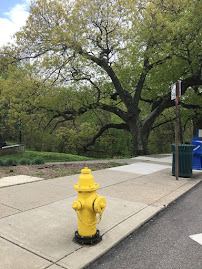
SQUIRRELS. The squirrels are faithful residents of our front yard because of our bountiful oak tree and its many acorns. They’ve built their nest of oak leaves on the window ledge outside our TV room. We watch them through the window while they seen to be watching Wheel of Fortune and Jeopardy.
The oldest squirrel fossil dates back about 40 million years. The squirrels’ name comes from the Ancient Greek word skiouros which means “shade” and “tail”. Squirrels are physical marvels. They can jump up to five feet vertically and eight feet between trees. Squirrels can run headfirst down tree trunks by rotating their hind ankles 180 degrees to grip the three bark. Their bushy tails act as parachutes, allowing them to survive falls as high as 100 feet. At top speed they can run twenty miles an hour. Squirrels are also clever little creatures. If they think another squirrel is watching, they pretend to bury a nut by digging a hole and then covering it up. Gray squirrels bury up to 10,000 nuts each fall. Unfortunately they forget where they bury up to 75% of their hidden nuts which has the desirable unintended consequence of planting new trees.
EUROPEAN WALL LIZARDS. I see our European wall lizards on our patio and driveway every time I leave or enter the house during warm summer months. Their family originated some 10 to 20 million years ago. The wall lizard was introduced to the United States when a 12-year-old boy from the Lazarus family smuggled 10 of them from a family vacation in northern Italy and released them near their East Walnut Hills home in Cincinnati. The wall lizard has expanded throughout Cincinnati and into parts of Northern Kentucky and southeastern Indiana. They are fast moving and good climbers. Wall lizards have a “third eye” on top of their head that helps detect predators from above. If a predator grabs its tail, the wall lizard sheds it in order to escape and grows a new tail later. Wall lizards eat garden insects spiders, bees, snails, small berries, and flower petals. They spend their days foraging and basking in the sun. When normal food sources are scarce, wall lizards have been known to eat their compatriots.
RABBITS. Every now and then I see a little cottontail rabbit near the tall grasses in our front yard garden. We owned rabbits for many years, and, because I regularly brought them out to an enclosure in our side yard, I was known for a while as the “Clifton rabbit man.”
The rabbit family emerged about 53 to 55 million years ago, shortly after the extinction of the dinosaurs. In the fourteenth century the word “rabbit” was originally “rabet”, meaning the young of the species. Rabbits’ teeth grow up to five inches a year and are worn down by chewing grass and hay. A rabbit’s eyes are positioned on the sides of its head, allowing it to see behind them without turning. Also they can turn their ears almost 270 degrees which allows them to pinpoint the exact location of a sound. They have excellent hearing and can hear sounds up to two miles away. Rabbits can jump 3 feet in the air and for a horizontal distance of 10 feet. They can also run up to 30 miles per hour, faster than Usain Bolt. Intelligent creatures, domestic rabbits can recognize their names and come when called. When a rabbit is extremely happy, it performs an athletic leap called a binky, twisting their body and kicking their feet in the air.
RACCOONS. Raccoons are the most interesting of all of our wildlife residents. A family lived in our attic for years. We’d hear them rummaging about in the night, but I didn’t pay much attention until I discovered that they had eaten the insulation in our heating/cooling system. The animal control people successfully removed them, but we still get solo visitors on our patio at night.
The first known members of the raccoon family lived in Europe about 25 million years ago. Fossil evidence indicates a close relationship between raccoons and bears. The name “raccoon” comes from the Powhatan term that means”animal that scratches with its hands,” stemming from the animal’s observed habits of “washing” its food. Raccoons can weigh up to 57 pounds, though most adults are between 11 and 26 pounds. Touch is the raccoon’s most important sense, and they can hear the quiet noises produced by earthworms underground. Raccoons are known as very intelligent animals. Early research found that they were able to open complex locks in fewer than 10 tries, apparently understanding the abstract principles of locking mechanisms. In their search for food, they can break into all but the most secure waste bins. Even inexperienced raccoons are capable of unscrewing jars, uncorking bottles, and opening door knobs. Due to their adaptability, raccoons have successfully used urban areas as a habitat. The first U.S. sighting of raccoons in an urban area was made in a suburb of Cincinnati in the 1920s.
That’s my story. I’m very impressed by our animal neighbors who possess various sensory and physical abilities that surpass those of humans. The more I learn, the more I appreciate their presence in our lives.
Love,
Dave