Tuesday, May 29, 2012
Memorial Day at the Dog Show
Dear George,
Donna, Katja, and I went to
the Cincinnati Kennel Club Dog Show over the Memorial Day weekend. I think it may have been the first real
dog show we’ve been to, certainly the first in many years. It’s a major event, with 140 breeds and
1400 dogs competing over the four-day weekend. We saw license plates from New Jersey, Virginia, Michigan,
and other exotic places. They held
the show at the Butler County Fairgrounds in nearby Hamilton, and it took up
the entire complex, with 12 indoor and 3 outdoor judging rings. The temperature was in the low 90’s,
and there were lots of RVs with their air conditioning running to keep the
animals cool. For dog-lovers like
us, it was non-stop fun. In fact,
we went for two days. They had
every sort of dog one could imagine, large and tiny, bushy and short-haired,
spotted and plain, cute and majestic.
We liked the big dogs the best: Scottish Deerhounds, St. Bernards,
Briards,Great Danes, Afghans, etc.
We only saw three Old English Sheepdogs, but they were grand. They looked at least twice the size of
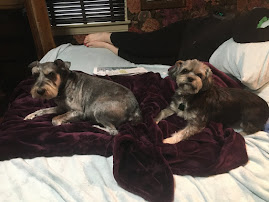
Mike and Duffy, but, when I asked, they actually weighed less than our dogs and
were mostly big balls of fluff. The owners in general were very friendly and enjoyed talking
about their dogs. Some owned as
many as two dozen. It was clear
they took the competition very seriously, grooming their dogs at length,
practicing their routines, and working out the dogs with utmost care. The dogs too were exceedingly
well-behaved and seemed to like performing in public. We rarely heard a dog bark the entire time we were there. For the most part, the dogs ignored one
another, concentrating on the business at hand. The obedience trials were especially interesting, and we
wished we had taken that task more seriously when our dogs were young. I took a bunch of pictures at the
show. Here’s what some of it
looked like.
Love,
Dave
Labels:
cincinnati,
dogs,
photography
Friday, May 25, 2012
Our Sweet Zoo Chums, the Takin
Dear
George,
I
find myself going to the Zoo more often these days. It’s just intrinsically pleasurable. The flora is remarkable, and, of
course, watching the animals and birds is rewarding. There are many highlights, but I think my number one place
is the Wilderness Canyon. It
features a Sumatran Rhino, Bactrian Camels, Red River Hogs, Prezewalski’s
Horses, an Emu, and several Takin.
Though
I’d never heard of them before, I’d have to say that the Takin are now my
favorites. They are lively
animals, and they are as cute as Muppets or even Old English Sheepdogs. They
like bumping heads with one another, or, in the absence of an adversary,
against a sturdy post which stands in their yard. In the wilds, Takin are mountain animals. They come from China, Burma (now
Myanmar), and Bhutan where they are the national animal. On average they’re about three and a
half feet tall and weigh 600 or more pounds. Their coats are yellowy brown, and it’s been speculated that
the legend of the “Golden Fleece” sought by Jason and the Argonauts was
inspired by the Golden Takin.
They’re related to musk oxen, sheep, and goats. Biologists classify them as
goat-antelopes. They eat twigs,
leaves, and bamboo shoots, and they love salt. Takin fossils have been dated back 1.6 million years. Today they are considered “vulnerable”,
with two of their four sub-species “endangered”.
Recently
a female Takin (named Mulan) was born to parents Xena and Noah at our zoo. I haven’t been able to get a picture of
Mulan yet, but here’s the rest of the crew.
Love,
Dave
SOURCES: http://books.google.com ("International Wildlife
Encyclopedia, pp. 2622-23); www.wikipedia.org ("Takin"); www.arkive.org (“Takin”); www.cincinnatizoo.org (“Takin”).
Labels:
photography,
zoo
Monday, May 21, 2012
Mysteries of the Surgical World
Dear George,
I don’t know why, but we seem
to be spending more time at the doctor’s office than we used to. Katja’s sort of banged up right
now. She had a successful left
knee replacement several years ago, but now her right knee is acting up. I went along with her to see her knee
surgeon, Dr. P, and he said the time has arrived. Dr. P is a gray-haired, grandfatherly sort with a warm,
reassuring manner. He told Katja
that she was a great candidate for knee surgery and that it would dramatically
improve her quality of life. Katja
was all for it. As he did last
time, Dr. P asked for Katja’s permission to pray before and after her surgery,
and he recommended that her circle of family and friends pray during the
operation too. Katja said that was
good, though I didn’t know if she’ll really arrange it. I myself am wary of surgeons who rely
too much on prayer to produce positive outcomes, but what do I know? Katja also has a lot of pain in her
left shoulder from a fall two years ago, and steroid shots no longer seem to
help. Dr. P has stopped doing
shoulders, but he referred her to his colleague, Dr. N, who is an expert in
upper body renovations.
Later we talked to a doctor
friend who wasn’t enthused about shoulder surgery. He said it’s more complicated, is done less frequently, and
is less reliable than knee replacements.
He advised Katja to explore the alternatives. Then another friend told us that her mom, a registered
nurse, had gone to a conference on shoulder surgery and promptly cancelled her
plan to have such an operation herself.
That was food for thought.
Katja did go ahead and make
an appointment with Dr. N, the shoulder surgeon. We arrived early and I spent some time looking through the
“Senior Citizen’s Guide” from the rack in the waiting room. There was an interesting article on
hearing loss that began with the question, “Do you feel that people mumble and
do not speak clearly?” I doubt that
I have any kind of hearing loss, but I’ve definitely noticed that people mumble
more nowadays. I’m not sure why that is, though it
could be related to the Republican-dominated Congress and/or the decline of
American civilization (both of which have been causing people to mumble
more). Then I ran across a blurb
on home health care that said that Certified Home Health Care Aides cost $33 an
hour while Uncertified Home Health Aides cost $18 an hour. I asked Katja which she would prefer,
and she said Certified. I thought
that Uncertified Aides looked like a better bargain, because I couldn’t imagine
how Certified Aides could be twice as good. If it comes to it, we’ll probably hire separate home
helpers.
Just about then, Dr. N’s
assistant called us into an examination room. He looked over Katja’s past records, asked a few questions,
and went off to see if he could find an old MRI. Katja put on a hospital gown with an open back. Then a junior doctor came in, asked
some more questions, and put Katja through a series of range of motion
exercises with her left arm and shoulder.
She did pretty well. Since
Dr. N hadn’t yet arrived, Katja wondered why the junior doctor had examined
her. I said I thought it was like
having both Uncertified and Certified Health Aides. The junior doctor did the real work so the Big Doctor
wouldn’t have to waste his time.
Dr. N did arrive shortly, accompanied by the Junior Doctor and a female
physical therapist whose only function seemed to be to act as a chaperone. Dr. N was friendly and jovial. He asked Katja about her recent trip to
Italy and recounted that he was just back from giving a conference paper in
Milan. They exchanged a few
minutes of Italy talk (probably about $25 worth at a rate of $300 per
hour). Then Dr. N repeated the
same range of motion exercises that the junior doctor had already done and
looked over her X-rays.
Like Dr. P had said about her
knee, Dr. N said that Katja was an outstanding candidate for shoulder
surgery. He explained how they
would make a 3-inch incision in the front of her shoulder, attach a metal ball
to the end of her arm bone, scrape out the arthritis, and glue in a plastic
lining in her shoulder socket.
According to Dr. N, the procedure is 99% successful, produces dramatic
pain reduction and very high satisfaction among patients, and will have her
driving in a week and playing tennis in a month. Dr. N didn’t see any point in more steroid injections, and
there was nothing that Katja’s personal trainer could do to help (quote: “You
have to watch out for these personal trainers”). I said I was worried because Katja had developed a blog clot
from her first knee replacement, then a life-threatening infection from another
hospitalization. Dr. N said no
problem. He was very confident and
optimistic, certainly moreso than our other consultants. He didn’t mention
anything about praying before or during the surgery, which I regarded as a
point in his favor. Katja was very
enthusiastic afterwards. I guess
if I had all that pain I’d be eager too.
The whole idea makes me nervous though. I’ll probably go ahead and pray even if Dr. N doesn’t
encourage it.
Love,
Dave
G-mail Comments
-Vicki L (5-22): Hi D, Enjoyed your blog as always. Re. your commentary on mumbling
- I'm in agreement. While I see lots of clients I've thrown my training out the
window. Mostly I tell them that their depression is a solid indicator of
their mental health; the world is a horrifying place and anyone who can't see
that is in serious trouble. They mostly go away happy in their depression or at
least proud of it. Love, Sis
Thursday, May 17, 2012
Playing Cards With Satan and You Know Who
Dear George,
Katja and I recently went to
a performance at the university of Igor Stravinsky’s opera, The Rake’s
Progress. We were disappointed in the production, but I did get
involved in the climactic scene in which the Devil challenges Tom Rakewell to a
game of cards for the possession of his soul. The Devil says he will cut the
deck three times. If Tom correctly identifies the card at the
bottom of the deck three times in a row, he’ll keep his soul. But if he misses even once, the Devil
wins. The Devil cuts the cards,
and Tom, thinking of his lady love, says the Queen of Hearts. The Devil turns the cards over, and, lo
and behold, it is the Queen of Hearts.
The Devil cuts the deck again; Tom guesses the Two of Spades. He’s correct again. Then Tom is right with the third and
final card. The Devil was
exasperated. I personally thought
that God must have intervened on Tom’s behalf. But even so, the opera had a tragic ending. The vengeful Devil turned Tom into a
raving lunatic, and he spent his remaining days locked away in the madhouse.
Tom Rakewell’s card game
reminded me of an experience I had at age thirteen. Like many teenagers, my peers and I had been debating whether
God really existed. I wasn’t that religious. Our family belonged to the Presbyterian Church, but we only
attended on Easter Sunday. I never
heard my parents express opinions, one way or the other, about God’s existence, but I was already
disillusioned about Santa and the Easter Bunny and suspected that God might be
just one more version of adult trickery.
Finally, to resolve the
nagging question, I decided to put God to the test. I took a deck of cards from my parents’ bureau dresser and
shuffled it several times. I decided that, if God really existed, he could
prove it by telling me what playing card was at the bottom of the pile. I closed my eyes, silently posed my
question to the Almighty, and concentrated as hard as I could. An image of the Five of Clubs popped
into my mind. I waited a few
seconds till I was certain. Then I
held my breath and turned the cards over.
I nearly went into shock.
The card I uncovered was …. the Five of Clubs! I was astonished and shaken. I realized that, with fifty-two cards in the deck, there was
one chance in fifty-two of predicting the correct card. That’s not beyond possibility. However, to do that the very first time
with reference to such a momentous life question was beyond belief. The odds might as well have been a
million to one.
I looked around the living
room for vapors or auras or some other sign of a mystical being’s presence, but
everything seemed normal. I
considered testing God one more time.
Then I thought that wouldn’t be right. I’d done my test; I’d gotten my answer. On the other hand, if I did give God
one more opportunity and got the correct card again, that would be hard to
dispute. After wavering back and
forth, I shuffled the cards again and cut the deck. I made my prediction and turned the deck over. I wasn’t even close. No revelation from Heaven above. I was partly disappointed, partly
relieved. I tried one last time,
and I was wrong again. Either God
didn’t exist, or he’d turned his attention to more important matters. A True Believer would probably say that
God had shown me the truth, but, since I failed to accept his message, he’d
left the game. A True Skeptic
would find it all amusing and say that you can never know what’s likely to
happen in our chaotic universe. In
essence, anyone can make of it what they will. From my adult perspective, I’d have to conclude that this wasn’t
a good test in the first place. If
God were out there watching over us, he probably wouldn’t bother to prove
himself to a 13-year-old. After a
few weeks I forgot about the issue of God’s existence and starting thinking
about girls instead.
Love,
Dave
Sunday, May 13, 2012
Thinking About My Mom On Mother's Day
Doris
with Dave and lamb
Dear George,
We owe Mother’s Day to a
woman named Anna Jarvis who was born in the tiny hamlet of Webster, West
Virginia. Her mother, Ann Maria,
had founded Mothers’ Day Work Clubs in five cities to promote sanitary
conditions and to feed and clothe Union and Confederate soldiers. After her mother’s death in 1907, Anna
embarked on a campaign to make “Mother’s Day” a recognized holiday, and her
efforts resulted in Woodrow Wilson declaring it an official U.S. holiday in
1914. It didn’t take long, though,
for Anna to become fed up with the commercialization of Mother’s Day, and in
the 1920’s she and her sister spent their family inheritance protesting against
what the holiday had turned into.
Both died in poverty.
Embittered by so many people sending their mothers printed greeting
cards, Anna said, “A printed card means nothing except that you are too lazy to
write to the woman who has done more for you than anyone in the world. And candy! You take a box to Mother – and then eat most of it yourself. A pretty sentiment.”
Despite such misgivings, I
always get nostalgic on Mother’s Day.
I’m sad that my mother is no longer alive and regret not saying to her
many things that I might have.
People whose mothers are still living should relish the fact and take
advantage of it. Growing up in our
family, the saddest thing we ever talked about was being a “motherless biccus.” No one knew exactly what this meant, but being motherless
was clearly a dire state of affairs.
I spent some time this morning looking at photos of my mom, Doris
L. These were taken mostly by my
dad but also a couple by my brother Peter. Here are a few
memories in honor of Mother’s Day and of my mother in particular.
Doris
My mother was a quite
striking beauty. She grew up in
Omaha in a one-child family, majored in French in college, and met my dad at
the University of Wisconsin around 1929 or 1930. She was a sorority girl, a horseback rider, and an excellent
tennis player Doris had a deep
voice such that callers on the phone would frequently say, “Hello, Mr.
L***” She tanned darkly in
the summer, and, even though she was a 100% Daughter of the American Republic,
my dad joked that she was part American Indian.
Doris
and Vic
Doris and Vic married in
1932. After a stint in Omaha, they
returned to Menominee. They led a
most amazing life together. They
struggled to survive financially through the Great Depression. When Katja and I married, my dad gave
me a silver dollar that Doris and he had kept in a secret place during the late
1930’s in case they lost everything.
Then my mom raised Steven and myself while my dad was stationed in the
Pacific theater during World War II.
The fifties got better.
Family
photo at YMCA camp (circa 1950)
Doris was a wife, mother,
homemaker, and social hostess; Vic, a Menominee lawyer and prosecuting
attorney. She gave birth to four
kids: Dave (1937), Steve (1941), Peter (1945), and Vicki (1947). In most families we knew the men were
breadwinners and the women raised the children. With four children in our family, it wasn’t an easy
task. Here we all are at family
visitation day at the YMCA camp near Green Bay.
With
Vicki
After three boys, Doris was
completely thrilled to have a daughter, and she lavished special attention on
Vicki. While the boys
presented more problems, I think that Doris worried the most about Vicki and
devoted herself to bringing her up properly.
Doris
with Steve and Dave at River House
From 1946 on our family
lived in a house made of Norway pine on the Menominee River. My mother loved that house and its
surroundings: the summer sunsets, the trees and wildflowers, the river and its
view, even the snowy winters. She
stocked a bird feeder outside the dining room window daily and called us
excitedly if a cardinal or a red-winged blackbird appeared in the driveway.
Uncle
Karl, Aunt Millie, Thor, and Uncle Kent
Doris and Vic made Xmas a
special occasion in our household.
Our extended family would gather on Xmas eve, along with visits by
friends. Vic’s twin brothers Karl
and Kent and Kent’s family, along with my aunt Martha, Uncle Ralph, and their
kids came every year. We children
would be at a fever pitch in anticipation of Santa’s pending visit. Doris was an excellent cook, and she
would prepare a big dinner of turkey or ham or even a goose. The adults would get a little tipsy
after a couple of Jim Beams on the rocks.
Vicki
and Micky at Mike’s grave
We had two Irish Setters in
our childhood, and Doris adored the dogs.
When Mike fell through the river ice one winter, Doris commanded the
children to stay in the house, and we watched out the living room window as she
crawled out on the ice on her stomach and pulled the dog to safety. On another occasion Mike and Micky got
into a vicious fight, and Doris sustained a deep gash in her hand when she got
in the middle to break up the fight.
Friends
at hunting camp in Cedar River (Doris second from left)
Doris and Vic lived their
whole adult lives in Menominee, and they had a wonderful friendship group there. My mom was very sociable and enjoyed
nothing more than gatherings with their close friends. At the Worth’s hunting camp, we kids
would go off in the forest while the parents hung out, drank beer and smoked,
and talked and talked.
Swedes
at the costume party
Doris, Vic, and their
friends had many parties, and often these were theme parties, e.g., centered on
art, poetry, music, theater, etc.
Costume parties were the best.
Here are some Swedish warriors who, despite their beards, are actually
my parents.
Doris
and Jean
Jean O’Hara was Doris’ best
friend, and our families spent a lot of time together. The moms spent a lot of time cooking
and talking in the kitchen while their husbands debated politics and Notre Dame
football in the living room.
Doris
and Dave on the Green Bay shore
The O’Hara’s lived on Green
Bay, and we spent a lot of time swimming there. Usually Doris sat in a lawnchair on the shore, keeping a
watchful eye on her children. I
still have a vivid memory of walking alone into the bay at around age 6 till
the water got up to my neck, then completely panicking and screaming for my
mother to save me. She did, and I
got a lifelong lesson in why mothers are so important.
Doris
and Steve at the art museum
U.P. towns like Menominee
were small and fairly isolated, but they were in driving distance of Milwaukee
and Chicago. Doris and Vic took us
on regular forays there, and visits to the Chicago Art Institute were an annual
part of our childhood education.
Family
reunion
My mother was distressed
when her kids reached young adulthood and scattered all over the country –
Vicki in California, Steve in Washington State, my family in Cincinnati, and
Peter in multiple places from L.A. to Toronto to New York City. My parents insisted that we all convene
each August in Menominee, and these were wonderful occasions. Here are Doris and Vic at the foot of
the willow tree in our front yard at River House, with various children and
grandchildren up in the tree.
With
Aggie at Farm
In the mid-1970’s Doris and
Vic moved into a farmhouse that they had renovated in the Birch Creek area. Farm was an immense source of
gratification to them in their later years. Here’s Doris with Aggie, one of their several dogs during
this period. Though Aggie was a
rather hyper dog that killed their pet goose in the front yard, Doris remained
emotionally attached to her nonetheless.
Lovey
When Puff, my parent’s last
dog, was killed by a passing car, a friend gave Doris a white cat named
Lovely. Though she’d been a dog
person all her life, Doris bonded completely with Lovey and spent many hours petting
her at the living room window.
Doris
and Vic leaving Farm
My mother’s last years were
difficult. She’d had two bouts of
lung cancer, and she had difficulty walking because of being in constant
pain. She pretty much gritted her
teeth and rarely complained to others.
Peter and I were with her in her hospital room on the last day of her
life, and she said to us, “I’m grateful.”
I think those were probably her last words. Even at death’s door, my mother’s inclination was to be
considerate to others.
Doris
laughing, with Vicki and Peter
More than anything else,
what I remember about my mother was her laughter. She had an ever-present sense of humor and impressed upon us
the importance of fun in one’s life.
Of the four of us kids, I think that Steven learned that lesson the
best. But Doris knew more about
having fun than any of her offspring.
That makes me happy.
Love,
Dave
G-mail Comments
-Kiera O (5-16): O, my, David. Such a feeling of
richness I have upon concluding the Mother's Day installment of your blog.
Thank you.
-David W (5-13): wonderful
entry David!!! So funny-i had a dream last night night that you and I were
hunting alligators which were chasing us all over this swampy area-funny and
horrifying. Take care. david
Subscribe to:
Posts (Atom)