Sunday, August 26, 2012
Archive: Vic's Photos (#3)
Family portrait
at YMCA camp (circa 1950): Steve, Dave, Vic with Vicki, Doris, Peter
Dear George,
This posting is the third cumulative archive of “Vic’s
Photos” that have previously appeared individually in this blog’s righthand
column. Past archives can be
accessed by scrolling down to “Labels” in the righthand column and clicking on
Archives. “Vic”, of course, is my
dad, V.A.L. Jr., who was an excellent amateur photographer and who documented
our family’s world from the late 30’s to the late 50’s and beyond. These photos
have been changed every week since July 2009, and, because they don’t get
automatically saved, I’ve decided to store groups of old ones here. My brother Peter restored and shared
postcards with our family containing these images from Vic’s original negatives,
and his project is the source of most of the photos contained here. The subjects of the photos include my
parents Doris and Vic; my brothers Steven and Peter, my sister Vicki, and
myself; my grandfathers V.A.L. Sr. and Guy Cramer; and various family members
and friends who will be identified as they appear. Many family memories kept alive through Vic’s and Peter’s
efforts.
Love,
Dave
PETER WITH HIS BIRTHDAY BIKE
Getting a new bike on one’s birthday was a major highlight
of growing up in our family and home town. Here’s my brother Peter, around age 8 or 9, with his
exciting new acquisition. Bikes
gave us a lot of mobility, signaled becoming a big kid, linked us to roaming
packs of friends, and were an important source of enjoyment, pride, adventure,
and exercise.
GUNFIGHTER STEVE
I don’t know about kids nowadays, but being lethal
gunfighters was paramount to our Menominee childhood in the 1940’s and early
50’s. Here’s my brother Steve
decked out in his full cowboy attire and engaged in a gunfight behind the sofa
in our living room at river house.
Despite dangerous circumstances, he looks pretty relaxed.
WORLD WAR II VETS (circa 1947)
My dad and many of his friends served with great pride in
World War II. Here’s Vic in his
Navy uniform, Pat Steffke in his Army uniform, and Mike O’Hara in his Marine
uniform. Also my brother Steve and
my Boy Scout self. The adults
kidded about the merits of the various branches of service, but it was clear
that they respected one another’s sacrifices. World War II shaped our entire generation, including
families and kids, and fostered strong idealism about America’s role in
rescuing the world from fascism.
VICKI AT THE MENOMINEE DRUG STORE
All of us took turns working at my grandfather’s
drugstores. We spent most of our
time at the Marinette drugstore which my dad was given from my granddad upon
retirement. We would sweep the floors, shovel the sidewalks, re-stock shelves,
help with inventory, ring up sales, take daily receipts to the bank, make
deliveries on our bicycles, and do whatever was needed to make ourselves
useful. Occasionally we would also
help out at the Menominee store on Electric Square which was owned and managed
by my Uncle Kent. This is my
sister Vicki at the Menominee store.
She looks pretty young to be a clerk – perhaps it’s her first day.
DORIS AND STEVE AT THE CHICAGO ART MUSEUM
This is my mom Doris and my brother Steve at the Chicago Art
Institute, sometime around 1951.
My parents would take us on a vacation trip to Chicago each year, and
the Art Institute and the Museum of Science and Industry were standard stops on
our tour. The Art Institute was
only of modest interest to the children.
They had a gallery of miniature rooms, each the size of a small
cardboard box, which got our attention, as did the exhibit of knights’
armor. Despite our childhood
nonchalance, our family visits instilled a lifelong appreciation of art
museums, so it turned out to be a good investment. This photo looks staged to me – I don’t think Steven was nearly
as keen on art as he looks.
JEAN AND DORIS
This is my mom, Doris, and her best friend, Jean
O’Hara. Jean and Mike and their
kids, Terry, Michael Dennis, Kevin (Kiera), and Patrick Sean, lived on M-35 on
the Green Bay shore, and our families spent a lot of time together at our
respective houses. The O’Hara’s
were gracious entertainers, and they and our parents had many enjoyable times
together. We kids, in the
meantime, had a lot of fun swimming in Green Bay and in the Menominee River and
engaging in mischief.
DAVE WITH GRANDPA GUY
My grandfather Guy Cramer lived in Omaha and moved to
Menominee is his older years. He
was an insurance executive and a veteran of the Spanish-American War. In Menominee Grandpa Guy lived in a
house down the street from us on Ogden Avenue. He regularly gave me metal toy soldiers, and I accumulated a
grand collection. Guy died when I
was 5. I have a positive memory of
him as a loving, generous grandfather.
DORIS AND DAVE AT GREEN BAY
Our family spent a lot of time on the Green Bay shore just
north of Menominee at friends’ homes.
This is my mother and myself.
One day at a young age I decided to walk out as far as I could in the
water. I got up to my neck and
then panicked, unable to move in any direction. I screamed and cried, and my mom who’d been sitting on the
beach with friends ran out and rescued me. It made me appreciate why it’s important to have a mother.
DORIS AND FRIENDS ON HORSEBACK
My mother enjoyed horseback riding in her youth, and she
rode from time to time at a stable located near Highway 577 at Menominee’s city
limits. I won’t swear to it, but
my recollection of family stories is that she went out west to recuperate at a
dude ranch right after I was born.
Infantile trauma might account for why I still get nervous about horses.
MOM AND SON ON THE LAWN
Many of my dad’s photos picture idyllic relationships of
Doris with her children. This
beer-drinking depiction of my mom and my crying self might actually be more true to
life. The photo reflects my father’s
sense of humor and probably his experimenting with different social themes and
modalities.
KATJA AND DAVE AT ANN ARBOR GRADUATION
By the mid-60’s my dad has stopped doing much photography,
but he did take this picture of my Ph.D. graduation from Michigan in 1968 in
Ann Arbor. I’d started my first
real job two years earlier at the University in Cincinnati, and both Katja and
I were relieved and pleased when I finished my lengthy, traumatic dissertation
task. I was so nervous when I
walked up on the stage to get my diploma that a worker held me by the shoulders
with two hands and pushed me in the correct direction, much as if she were
herding sheep.
CIRCUS PARADE
The circus came to Menominee every summer and set up at the
Ogden Ave. circus grounds, a block or two west of the Interstate Bridge. Our family would get up at 5 a.m. to go
over and watch the tents being erected.
Just as in Dumbo, the elephants pulled on the ropes to set up the big
tent. When it was all ready, they
held a circus parade down Ogden Avenue with elephants, camels, clowns, and
beautiful trapeze artists. The
entire experience was magical.
RIVER HOUSE CONSTRUCTION
My grandfather, Guy Cramer, built a house on the river as a
summer cottage in approximately 1941.
The grand fireplace was constructed with stones hauled in from nearby
fields. Our family moved there
shortly after the war, initially with kerosene lamps, drinking water from a
pump outside the front of the house, an outhouse next to the garage, and no
telephone. Family friend John S.
helped us keep a generator in the garage running which produced
electricity. When a few more
families moved out on the river, we got a party line telephone and felt more
like a part of civilization.
MARS FAMILY
Vic and Ruth Mars were close friends of my parents, and we
were friends with their kids Mary and Charlie. Each December the Mars invited the children in their social
circle to their house on Christmas Eve.
As night fell, the children hid behind the chairs and sofas in the
living room, and, before you knew it, there was Santa himself, delivering
presents under the tree to all assembled.
It was astonishing to the younger kids and remained exciting for the
older, more cynical ones as well.
FLORENCE CALEY
The Caleys, Florence and Bill, were among my parents’
closest friends, and their kids, Bill Jr., Tom, and Bruce, were among our
frequent playmates. Florence was a
former English teacher and a very kind, sensitive person with a good sense of
humor. She served as my informal
counselor on a couple of occasions during my rocky teen-age years. Bill was among the set of dads who took
their adolescent sons to hunting camp at Cedar River.
FAMILY CIRCLE WITH V.A., OLGA, GUY
This 1940 family portrait includes (in the front row) my
paternal grandmother Olga, my mother Doris, myself, my maternal grandfather
Guy, my aunt Martha, and my paternal grandfather, V.A. Sr. In the back row, my uncle Karl, my dad
Vic, and my uncle Kent. My grandmother Olga died when I was 3, and I have no
memories of her from my childhood.
She was very prominent in Republican politics in Wisconsin, serving as
the state chairperson of the party.
We grew up in a staunchly Republican household, though it didn’t rub off
on all the children.
DAVE AND SALLY WITH DORIS, WINTER 1940
Here’s my first childhood friend Sally F. and I with my
mother in about 1940. Menominee
winters were cold, and we were bundled up. We lived a half block away from the Michigan Tourist
Information Lodge, which offered a steep hill for sledding. About two years after this photo was
taken, Sally and I began kindergarten at Boswell School, a half mile away from
our house, and we small fry would walk there together every day, even in the
bitter weather of January and February.
DORIS, HELEN, AND BUCK
This is my mom with Katja’s parents, Helen and Buck, at
Katja’s and my wedding. When we
were married in Yellow Springs in August of 1960, our families drove there from
Philadelphia and Menominee respectively.
There was some tension because Katja’s folks were not enthusiastic about
our marriage, and they expressed their doubts to my parents. Everybody did their best to maintain
civil behavior, and it all did come off in the end.
OUR SWEDISH COUSIN ANITA
This is Steven and myself with our cousin Anita from
Sweden. Anita came for a year of
study abroad at Marinette High School and lived with my Uncle Ralph and Aunt
Martha at Pine Beach. She was
several years older than I, and we thought she was very beautiful. Her English was very good, and she was
a charming teenage girl. I still
remember that it made me nervous to stand so close to her for this
picture.
G-mail Comments
-Gayle C-L (8-27): David, As usual Awesome :))) Hope ur having a nice
summer. I've been really busy w
work. But all in all it's been
pretty good. I've been going to the
beach a little and running some good races Give Katya my love.
Take care. :)
Thursday, August 23, 2012
Farm Tale/Family Tale
Doris and Vic at their Birch
Creek Farm (circa 1985)
Dear George,
Families are mysterious
entities. Except for myself,
there’s nobody left from the family into which I was born, but, at the same
time, our family has continued, grown, and expanded. True, many things have changed with the evolving membership,
but, on the other hand, some things have remained much the same. Here’s my picture of how that happened.
Family portrait at river
house (1947): Vic, Peter, Dave, Steve, Doris, Vicki
Growing up and dispersing. We
kids – Steven, Peter, and Vicki, and I -- grew up in the 1940’s and 50’s on the banks of the Menominee River,
and our activities and lives together were inextricably tied to our rural
forest/water location. Then,
between 1955 and 1965, we took turns departing for college, and soon we were
married and dispersed between one coast and the other. Though we all came back to Menominee to
visit our parents each year, we were almost never there as a whole group, and,
busy shaping our own independent lives, we grew out of touch.
Vic at the Farm’s log cabin
(1962)
Farm: A new home base. Around
1961 Vic and Doris bought 240 acres of farm and forest land near Birch Creek,
about five miles north of the city.
The property contained an old log cabin farmouse, dating back to 1886, a
barn, and several smaller farm-related buildings. No one had lived there for years, and the buildings were in
a state of deterioration. Though
they hadn’t originally planned to do so, Vic and Doris soon began renovating
the farmhouse and its associated buildings, first with the help of construction
expert Jim Dama, later with George Jansen Jr. By the 1970’s “Farm” had become cozy and habitable, and our
parents were splitting their time between there and their riverbank home. That
became a strain, and they decided to move full-time to Birch Creek. They offered the river house to any of
their children who might choose to live there, but there were no takers. By that time I was teaching in
Cincinnati, Steve was in a large law firm in Seattle, Peter was working for the
Dean Witter firm at various locations in the U.S. and Canada, and Vicki had
settled in Santa Cruz, pursuing a career as a marriage/family therapist.
Margie with J and Jennifer at
river house (circa 1972)
A new generation discovers
Farm. In 1967 Steve and Margie’s daughter Jennifer, the first
grandchild in the family, was born, and our son J was soon followed in
1969. In the next decade or
so, there was a flood of newborns entering the family: Greg, Jacob, Jason,
Rhys, Chris, Jessica, and Abra. The presence of this sizeable group seemed to
spark my dad’s grandfatherly instincts, and he began organizing annual reunions
at Farm in the mid-70’s, insisting that everybody come (and making it feasible
by helping to subsidize the travel costs). The upshot was that our children, from a very young age,
grew up getting together with their cousins each summer at Farm, and these
joyous, sometimes inebriated occasions strengthened our sense of our family.
The grandchildren picked up on our camaraderie and formed close bonds with one
another. As he got older, my dad
increasingly envisioned Farm as the homestead for our family for many
generations to come.
Vic and his granddaughter
Abra at a reunion at Farm (circa 1991)
Catastrophe. Our
family was to come upon more painful times. Our mom, Doris, died in 1986, and five years later Vic left
Farm to move to a residential care facility in Cincinnati where he passed away
in 1993. The grandchildren by that
time were mostly in their teens or older.
For a while we continued the tradition of annual reunions at Farm, but,
in the absence of our parents, our get-togethers became less frequent. My niece, Jennifer, and her fiancé,
Wynn, decided to marry at Farm (rather than in Seattle), and we had a splendid
reunion for the occasion in 2002. However, full-scale tragedy for our family hit
in the next few years with the deaths of my brothers Steven and Peter in 2005
and 2006, followed by my brother-in-law George in 2007. All three were in their early 60’s, and
this was devastating to our entire family, especially for the younger
generations who lost their fathers and grandfathers. For the most part, Farm went by the wayside. I proposed to Vicki that we sell the
property. However, she argued
adamantly for keeping it as our family connecting point.
Cousins V and Ingrid on the
road at Farm (August, 2012)
Replenishment: The birth
of a new generation. In the meantime our family’s
thirtysomething generation and their spouses – Jennifer and Wynn, J and K, Rhys
and Tim, Jacob and Kazandra, Jason and Hilary -- began having kids of their
own. Jennifer and Wynn’s son
Vincent was born in 2003, followed by Oscar, August, Ingrid, V, L, Anja,
Gillian, Elle, Delphine, and Farrah over the next eight years. Vicki and I talked about gifting the
Farm property to our adult children, and, with our sisters-in-laws Margie and
Gayle’s agreement, we proceeded to do that. The new family owners responded with enthusiasm, several
making trips to Menominee to work on the property’s upkeep and renovation. Earlier this month a new grand reunion
occurred. Parents from our
Seattle, California, and New Orleans branches with their six young children
came, as did my sister Vicki, Katja, and myself. To me, it symbolized a changing of the guard. Vicki, Katja, and I were kind of like
revered elders (well, maybe not that revered), but the farm itself and the
family core now belonged to the younger generation. The most thrilling aspect was the presence and interaction
of the young cousins, ages three to nine, many of whom had never been to Farm
and had never met one another before.
The Farm property provided a perfect setting for outdoor adventures and
getting to know one another, and the cousins seemed to be bonding just as their
parents had some 35 or 40 years before.
A new generation had come into being, and Vic and Doris’ vision of Farm
and family suddenly seemed resurrected and likely to have a healthy future.
Love,
Dave
G-mail Comments
Vicki L
(8-26): Hi David, Currently having a little mini reunion
with my 4 grandchildren (Rhys and Jacob's families). Just read your narrative
of the evolving connections /history between generations.. I feel teary for
some reason, sad about the geographical distance...the complexity of 'modern'
life...so touched to have them together...so aware of the commitment it takes
to help glue these relationships (can I muster it?).....so loving the potential
beauty of a family that stays connected over time. Changing times. My tears
somehow shifted from sadness to gratitude as I read your story of our
family. Thanks,David, for your
important efforts to help us understand our wonderful thread. Love, Vicki
Sunday, August 19, 2012
The Return of Grey Wolves to Menominee County
Wolf spotted on a forest road in
nearby Oconto County (May 17, 2012)
Dear George,
At our recent family
reunion in Birch Creek I mentioned to my sister Vicki that I’d run across a
news item about grey wolves being sighted in Menominee County. My four-year-old granddaughter V was
listening, and her eyes opened as wide as can be. She’d already heard somebody mention that a family of black
bears lived on our property (which is true), and the possibility of wolves in
the back yard was too much to contemplate.
A few decades ago grey
wolves had nearly vanished from Michigan’s Upper Peninsula. Only six animals were located in a
census conducted in 1973. However,
experts estimate that there are more than 600 living in the U.P. today. Half a dozen wolves equipped with radio
collars were shot and killed in the U.P. in 2010, including one in Menominee
County. Last January a resident
named Jennifer K. reported sighting a wolf outside her home in Wallace, just a
few miles north of our family property in Birch Creek (see pic below). Dan K., a Menominee County hunting
guide, said that he’d used to see a couple of wolves per year, but now he sees
about three per month. He watched
a wolf run down and kill a fawn on a Menominee County road last year. In nearby
Marinette County a local bearhunter lost track of Dixie, one of his bluetick
hunting hounds, then minutes later found her skeletal remains totally stripped
and devoured by wolves. Two dairy
farmers in eastern Menominee County had 17 of their cattle killed by wolf packs
in a recent year, and they suspect that the disappearance of multiple pets is
also attributable to wolves. One
of the farmers bought a donkey to help protect his herd since donkeys have a
keen sense of hearing and go after predators. So far the donkey just brays all day and night. Wildlife biologists state that wolves
don’t pose a threat because they’re afraid of humans, though a Menominee County
logger reports having been surrounded by a pack of eight wolves. He now carries a weapon when he works
in the forest.
Grey wolf, caught by a trail camera at
Wallace in Menominee County (Jan. 20, 2012)
Grey wolves range between
80 and 100 pounds, about the size of Old English Sheepdogs, and look like
shaggy German Shepherds. They hunt
alone or in packs of 4 to 7, preying on deer, beaver, rabbits, rodents, and
other small animals, as well as livestock, carrion, and garbage. Wolves develop strong social bonds and
may even sacrifice themselves to protect their family group. A pack of wolves has a territory of
about 100 square miles, and they can trot nonstop for up to 20 straight hours,
allowing them to cover large distances in search of prey. A grey wolf eats up to 20 pounds of
meat at a time and can go for up to a week without eating again. When they can’t find animal prey, they
eat berries, bugs, and grasses.
Map of the Grey Wolf Range: North
Central States
Up till January of this
year wolves were protected by the Endangered Species Act, but farmers and
cattle growers in the U.P. have been angered because of wolves eating their
livestock and reducing the deer population. Despite a $25,000 fine, there’s been a rash of grey wolf
killings in the U.P. in recent years.
Environmentalists disagree that wolves constitute a significant threat
to the deer herd. There are about
300,000 deer in the U.P., but only 600 wolves. It’s estimated that each wolf will consume about 15-18 deer
per year. That amounts to only
about 4% of the U.P.’s deer herd, and many of the deer consumed by wolves are
already dying from starvation, weakened by old age, or have been killed by
automobiles.
Wolf pack, Isle Royale, Upper
Peninsula
I personally think the idea
that our family property might occasionally be visited by a wolf pack is exciting. It’s scary, to be true, but that helps
lend a little emotional edge to family visits.
Love,
Dave
Sources:
“Grey Wolf,” http://news.softpedia.com
“Hunting:
Wolf threat hits home in Marinette County.” http://wolfsaga.blogspot.com
“Michigan
Grey Wolf,” www.greatnorthernoutdoors.net
“No Doubt: Deer Patterns
Change in Wolf Country,” http://forest.mtu.edu
“Rash of wolf kills in Upper
Peninsula worry federal wildlife officials,” www.mlive.com/outdoors
“Upper Peninsula Wolves Killed
Despite Being Endangered,” www.defenders.org
“Wolf Sighting in Menominee
County,” http://up.secondwavemedia.com
“Wolves versus farmers,” www.dailypress.net
Wednesday, August 15, 2012
No Wonder They Call It Eden
Sunday Afternoon in Eden Park,
Cincinnati (circa 1910)
Dear
George,
Cincinnati
has many enjoyable features, but each year I get more impressed by and attached
to the park system. There are over
100 parks in the city, and they make up 10% of the urban land area. Eden Park, along the river and next to
the trendy Mt. Adams neighborhood, is the fourth largest and one of our
favorites. We take all our
out-of-town visitors there to enjoy the Ohio River view. When our son J was a kid, Eden Park was
a frequent destination for family expeditions, and now it’s a regular outing
for our grandkids on visits here.
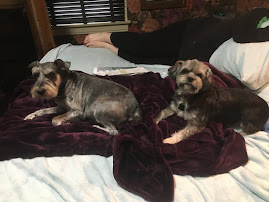
It’s also a favorite location for weekly hikes with sheepdogs Mike,
Duffy, and Sophie. Here are some
vintage postcards, most of them a hundred years old, which give a picture of
the park’s history and many of its prominent features today.
The Gardens of Nicholas Longworth (ca.
1910)
In
the mid-1800's the land which was later
to become Eden Park was owned by Nicholas Longworth, Cincinnati lawyer,
banker, real estate speculator, winemaker, and one of the wealthiest
individuals in America. Called the
"father of American grape culture," Longworth maintained a huge
vineyard of Catawba grapes on the hillsides along the Ohio River east of
downtown and made sparkling wines which were distributed throughout the U.S.
and Europe. The vineyard was
particularly famous for its Golden Wedding Champagne. Longworth, his wife Susanna, and their children lived in the
Greek Revival mansion in downtown Cincinnati which is now the Taft Museum of
Art. Eden Park’s name derives from
Longworth who called his land the Garden of Eden. Years later a group of Protestant and Catholic clergy
created a list of ten places around the world where the Garden of Eden might
have been located. Clermont
County, adjoining Cincinnati, was the sole North American site in the list
because of its many fruiting trees and the influence of Native Americans who
built serpentine mounds in the area.
Because Eden Park faces Clermont County to the east, city leaders
dedicated Eden Park’s name in honor of the biblical association.
Scene in Eden Park (ca. 1910)
The
city began acquiring land for Eden Park in 1859. The original purpose was to construct a new reservoir to
hold the city’s water supply, but officials soon recognized that the land could
simultaneously serve as a municipal park. Longworth’s vineyard had been
tragically destroyed by disease in the late 1850’s, and his son negotiated with
the city to allow portions of the land to be used to create Eden Park. Famed landscape architect Adolph
Strauch, who also designed Spring Grove Cemetery, was hired to do the initial
landscaping plan. Because of
the park’s centrality to the Ohio River valley, two artillery emplacements were
built there to defend the city against invasion by the Confederate Army. The guns were ever fired.
Twin Lakes overlooking the Ohio River
and Northern Kentucky (ca. 1910)
The
most popular spot in Eden Park is the Ohio River Overlook with its twin lakes,
footbridge, walking paths, sculptures, and a playground that our grandkids
recently enjoyed. Twin Lakes was
originally an old quarry, but it was soon reconstructed to host an overlook
with a striking views in both directions of the Ohio River. It's the most popular gathering place
in Eden Park for picnicking or simply relaxing and enjoying the view, and it's
almost always the starting point for forays with the sheepdogs.
The Ohio River Monument (ca. 1940)
In
1929 President Herbert Hoover dedicated this 30-foot granite shaft at the Overlook on Cliff Drive to
commemorate the completion of a system of 49 locks and dams that made river
traffic possible along the entire length of the Ohio River. The dedication coincided with a
flotilla of boats that stretched along the entire 908 miles between Pittsburgh
and Cairo, Illinois.
Reservoir (ca. 1910)
The
city’s new reservoir was constructed near the center of Eden Park, and, though
it’s now long gone, giant remnants of its stone walls remain today. The reservoir was covered over by the
present-day Mirror Lake which attracts walkers who circle its perimeter and
which features a fountain that shoots a geyser of water sixty feet into the
air.
Water Tower (ca. 1910)
The
Water Tower, at 172 feet, is the tallest structure in Eden Park, and it’s
visible from many different vantage points. It was built in 1894 to hold water, but now it’s used by the
city as a communications facility.
Archway, Eden Park (ca, 1910)
The Archway is at the main entrance to Eden Park, located across
Gilbert Avenue from the Baldwin Piano Factory. It was constructed in 1874. Termed a double-decked viaduct, the top half was first used
by horse cars, later by street cars; and the lower deck was used by
pedestrians and carriage riders.
The viaduct was in use until 1949 when the Mount Adams Incline was
closed and needed bridge repairs proved too costly.
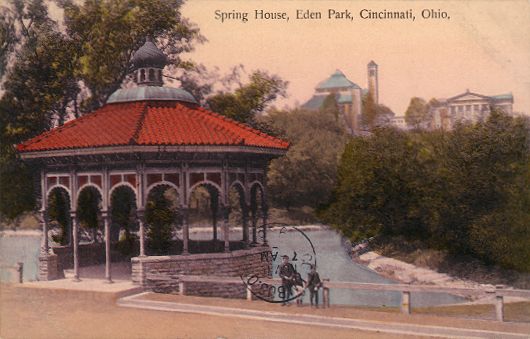
Spring House (ca. 1910)
The
Spring House Gazebo, recently renovated by the city, is the oldest structure in
Cincinnati’s parks and often used as the symbol of the whole system. We recently went to an art exhibit
about the city where the gazebo was the subject of one of the oil
paintings. It was designed by
Cornelius M. Foster and built in 1904, replacing the Longworth’s spring house.
Krohn Conservatory (ca. 1950)
The
Krohn Conservatory in Eden Park has been one of our favorite excursions for
many years. Eden Park was the site
of greenhouses since the 1880s.
The park board decided to build a modern greenhouse conservatory in
1930, and the new building was created in Art Deco style, built of aluminum and
glass. It opened in 1933 in the
midst of the depression and was named for Park Commissioner Irwin Krohn. The conservatory features over 3,500
plant species; a rainforest waterfall; an Orchid house; palm, tropical, and
desert houses; and an annual Butterfly show. It’s also a super place for taking photos.
Art School and Art Museum (ca. 1910)
We
love the Cincinnati Art Museum.
It’s probably the most important place that keeps us being
semi-cultivated persons. It was
built in Eden Park in 1886, designed by architect James W. McLaughlin who also
designed the art academy building next door. This is one of the oldest art museums in the U.S. and the
first art museum west of the Alleghenies.
Its 60,000 works constitute one of the largest collections in the
Midwest. Founders debated whether
to locate the museum in Eden Park, Burnet Woods, or downtown, and major donor
Charles West picked Eden Park.
That was a sound choice (though Burnet Woods would have been practically
next door to us).
Elsinore Arch (ca. 1910)
The
Elsinore Arch is located on Gilbert Avenue, a couple of blocks down the street
from Katja’s former workplace.
Elsinore, of course, was the fictional Danish Royal Castle in
Shakespeare’s Hamlet. The Eden Park structure, formerly a
valve house for the Water Works, was inspired by a local production of the
play. It may be the most esoteric
water works building in the world.
It was placed on the U.S. National Register of Historic Places in
1980.
Capitoline Wolf (ca. 2010)
The
statue of the Capitoline Wolf portrays Romulus and Remus, the founders of Rome,
suckling milk from a mother wolf.
The statue was a favorite of fascist dictator Benito Mussolini, and he
sent it to Cincinnati in 1931 in recognition of the city being named for the
Roman hero, Cincinnatus Lucius Quinctius.
The original ancient Etruscan statue is in Rome, and Mussolini also sent
replicas of the wolf statue to Rome, Georgia, and Rome, New York.
Playhouse in the Park (ca. 2010)
Eden
Park today has many other noteworthy features. The Playhouse in the Park is the city’s most important
theatrical venue, and the Seasongood Pavilion is the outdoor site for summer
concerts. We enjoy walking in the
Presidential Grove (where elegant hardwood trees are dedicated to the various
presidents), the Magnolia grove, and the Hinkle Floral Trail. The hillside next to the Playhouse
offers a wonderful view of downtown and the city, as well as access to Mt.
Adams with all its restaurants and bars.
Maybe it isn’t that far-fetched to think of Eden Park as a latter-day
Paradise.
Love,
Dave
Sources:
"A Walk in the Park:
Paradise Found," www.cincinnati.com/visitorsguide
“Capitoline
Wolf,” www.queencitytour.blogspot.com
"Eden
Park: A jewel in the crown of the Cincy parks system," www.hellocincinnati.com
“Mount
Adams,” www.cincy.com/home/neighborhoods/
"Nicholas
Longworth (winemaker)," www.wikipedia.org
“Ohio
River Overlook and Monument,” www.igougo.com
Labels:
cincinnati,
history
Subscribe to:
Posts (Atom)