Showing posts with label nature. Show all posts

Sunday, April 7, 2024

AN ODE TO APRIL


Dear George, 
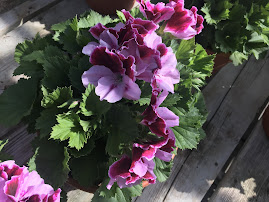
All the months have something special about them, but I think that April might be the best. It’s the month when the flowering trees in our neighborhood come into full bloom — dogwood, redbuds, magnolias — signaling the full-fledged arrival of spring. The trees are not only beautiful, but they symbolize rebirth, new beginnings, the warm and abundant future that is waiting for us. The birds return, the squirrels and lizards are busy, the flowers begin sprouting in our garden, and Katja and I go to Rahn’s greenhouses to pick out pansies for planting. I do still wear my winter coat on the cooler April days, but the college kids I pass by are dressed in T-shirts and Bermuda shorts, probably viewing me as a daffy old geezer. 

When I was a kid our family lived in the country on the Menominee River, and April meant the total transformation of our forest world. As the snow and ice melted our gravel road turned into muddy ruts, and we couldn’t get to town, consequently enjoying our own personal holidays from school. The ice on the river melted and flowed out in early April, making a massive tinkling sound that led my parents to name it “Chinese Bells Day.” My brother Steven and I would put on hip waders and step into the flowing ice near the shore with bamboo poles, retrieving miscellaneous objects that were floating along with the ice, e.g., tin cans, rubber balls, lawn furniture, whatever. The trillium were the first spring flowers to bloom in the forest, and my mother would have us bring potted plants to our grade school teachers. Once the road dried out sufficiently we were able to ride our bikes to town and school. 

Easter, of course, occurs in early April, and we painted Easter eggs in school to bring home in preparation for the Easter Bunny’s visit. The public schools in my home town closed for the Good Friday and Easter Monday holidays. Our family was not very religious, but we did go faithfully to the First Presbyterian Church every Easter. My brother and I were always amazed at the amount of the check that my father put in the collection basket. He explained that he was covering the whole year. 

In Cincinnati the warm weather arrives earlier than in Northern Michigan, and April, with average high temperatures of 65 degrees, is one of the most pleasant months of the year. When our son was a teenager he played high school tennis for Walnut Hills, and we parents waited all winter for the arrival of April and the beginning of the boys’ tennis season. In retrospect, I would say that we were the stereotypic insane tennis parents. We attended all of our son’s matches, ecstatic with victories, anguished with defeat. In addition to Cincinnati, we travelled as a family to other tournaments in the region, e.g., Middletown, Dayton, Columbus, Indianapolis, Charleston, West Virginia . 

In addition to tennis, Cincinnati Reds baseball starts around the beginning of April, and the Cincinnati Zoo hosts its annual “Zoo Blooms” event throughout the month with its millions of tulips, daffodils, and hyacinths. The Greater Cincinnati Restaurant Week is held in late April, as is the Greater Cincinnati Earth Day Festival. 

It’s believed that April was named after Aphrodite, the Greek goddess of love. Diamonds are the April birthstone, daisies and sweet peas are the April birth flowers, and April is the National Poetry Month. George Washington was inaugurated on April 30, 1789, and the Titanic sank on April 15, 1912. Of course, many famous people have been born in April. These include William Shakespeare (April 23, 1564), Leonardo da Vinci (April 15, 1452), Queen Elizabeth II (April 21, 1926), Babe Ruth (April 8, 1895), and Billie Holiday (April 15, 1915). 

I’ve been around for well over eighty Aprils, and each becomes more significant as time goes by. Our sweet family from New Orleans already came to visit this April, making it a special month this year. I look forward to what’s to come. 
Love, Dave

Thursday, September 22, 2022

A GATLINBURG REPORT


Dear George, 
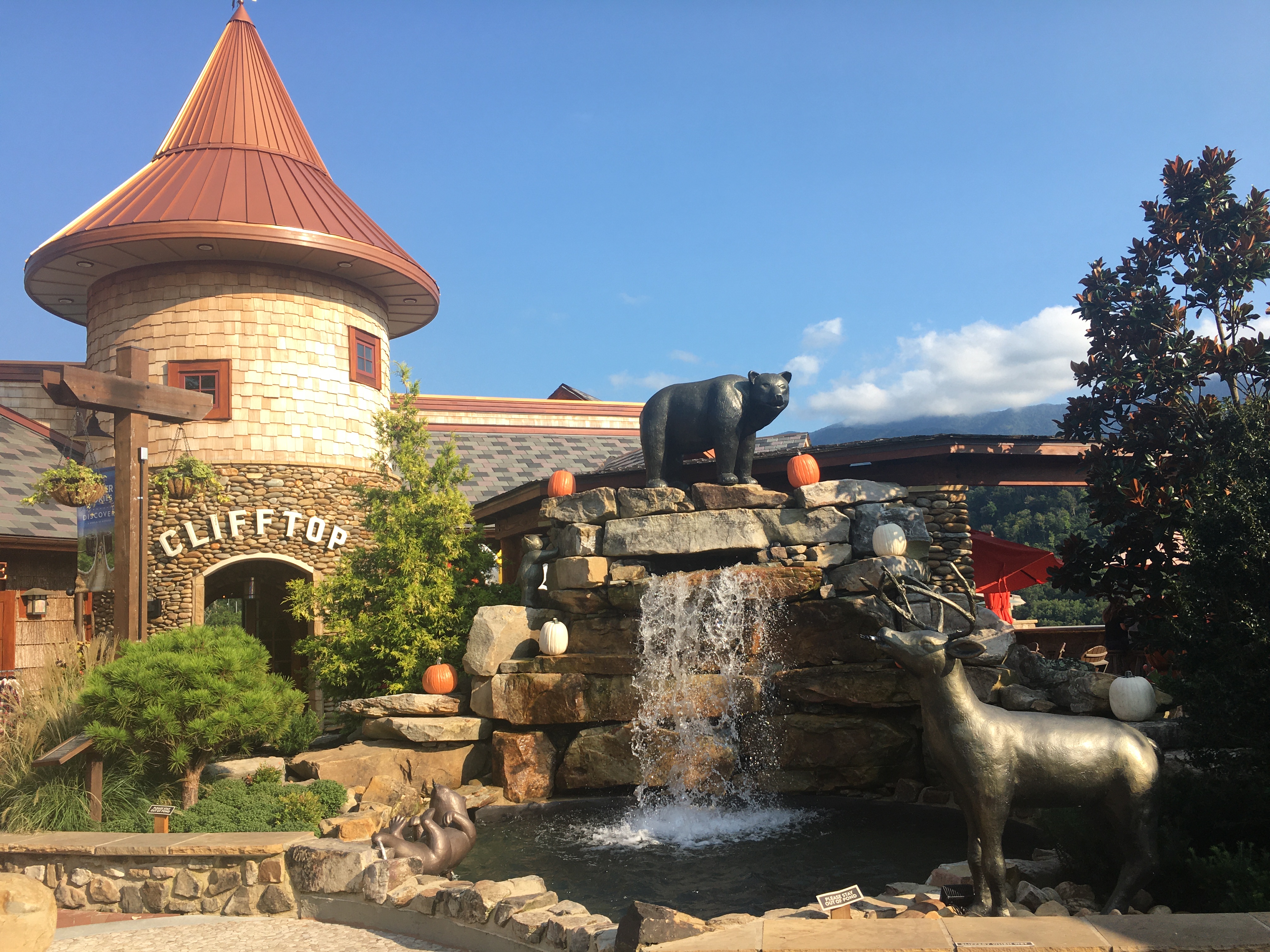
 We’ve driven through the Smoky Mountains in Tennessee and North Carolina several times on our way to the South Carolina and Florida coasts, but we’ve never stopped to vacation there. Inspired by our recent trip to northern Michigan, we decided to spend a week in Gatlinburg, Tennessee, the famous resort town that’s the gateway to the Smokies. The Smokies include the country’s most visited national park, and the mountains were awesome. With both of us limping around a bit we did our mountain touring by car rather than by hiking. In particular, we visited the Roaring Fork Nature Motor Trail near Gatlinburg and Highway 441 south through the Great Smokies National Park to the Chimney Tops and to the Newfound Gap. At one stop a lady said to me, “We are in God’s presence.” While I didn’t agree with her on all the details, I did share the sentiment. Here are some of the views.


Downtown Gatlinburg could be regarded either as a tourist paradise or a tourist nightmare. The mile-long strip along the Parkway is filled with every sort of attraction one might imagine: endless gift shops, restaurants of all sorts, art galleries, wineries (including Cotton Candy Wine), mini-golf courses, video game arcades, an aquarium that USA Today listed as the best in the country, the Ripley Believe It or Not museum (where we spent several enjoyable hours), the Amazing Mirror Maze, an earthquake ride, escape games, laser tag, skylifts up adjacent mountains, a space needle, candy makers, movie theaters, ice cream shops, and a mountain adventure park. We browsed in the shops, ate at numerous good restaurants (most notably, Chesapeake’s), and feasted on dark chocolate almonds from the Ole Smoky candy factory. Here are a few pics to give a flavor of downtown Gatlinburg.


The highlight of our trip was the afternoon we spent at Anakeesta, Gatlinburg’s new mountain-top theme park that opened in 2017. You get there by riding a skylift to the top of the mountain. Katja was completely relaxed and fearless, riding no-handsies, while my knuckles turned white from gripping the safety bar in front of us. Anakeesta is a beautifully done mountain village with attractive shops, multiple restaurants, a lush botanical garden, and numerous treetop adventures for kids and families, e.g., ziplines, a mountain coaster, and an 880-foot Skywalk bridge. I climbed to the top of the AnaVista Tower which offers scenic views of the mountains as far away as Kentucky on a clear day. Among other treats, we enjoyed a delicious meal at the Cliff Top Restaurant.


One of the main things about our recent trips to Michigan and Tennessee is that they have helped us put the pandemic behind us. After two and a half years of feeling locked up at home, life does seems to be getting back to normal these days. It’s about time. 
Love, Dave

Monday, May 23, 2022

STUFF I USED TO DO


Dear George, 
 I’ve started up again in my OLLI class in Advanced Poetry after a three-month break. This week I’ve written a poem inspired by our growing up on the Menominee River. I’ve enclosed it here with a dedication to my siblings Steven, Peter, and Vicki, with whom I shared these experiences. 
Love, 
Dave


STUFF I USED TO DO 

So many things I did in the past 
Like climb our willow tree to the top 
Cops and robbers, such a blast 
Collect the caps from bottles of pop 

Put a worm upon his hook 
Barefoot races in the snow 
Catch a tadpole in the brook 
Pull a bloodsucker off my toe 

Ride no handsies on my bike 
Find a four-leaf clover in the grass 
Toss a snowball at a girl I like 
Fish the lagoon for perch and bass 

Marbles for keepsies after school 
Trap fireflies in a Mason jar 
Wear an eye patch, that’s so cool 
Search the sky for a shooting star 

Crawl underneath a barbed wire fence 
Carve my initials in a beechwood tree 
Ice cream cones, two dips for five cents 
Take second place in the spelling bee 

Poke a stick into an ant hill 
Find new treasures at the City Dump 
Bumper car driving, such a thrill 
Stand at the pier, hold my nose and jump 

Collect nightcrawlers at the graveyard after dark 
Listen to boxing on the radio 
Pitch my tent at Mason Park 
Shoot some free throws like a pro 

Row to Pig Island in our boat 
Eat wild berries off the forest floor 
Carry a frog in the pocket of my coat 
Read Batman comics at my uncle’s store 

Battle my brothers in an acorn fight 
Skip a stone upon the lake 
Light a campfire in the dark of night 
Lift the rocks, catch a garter snake 

I miss these things from days of old 
Netflix gets boring when all is told

Wednesday, October 27, 2021

THE BEST OF TIMES


Dear George, 
 I lived in four places while growing up in Menominee between 1937 and 1955. Up until I was six my parents lived had a second floor apartment in a large white house on Ogden Avenue (now 10th Ave.) at the foot of the Interstate Bridge. My age-mate and first friend, Sally Fernstrum, and her parents lived on the first floor, and Sally and I walked four or five blocks each day to kindergarten at Boswell School. At the end of that year my family moved to Sheridan Road (now 1st St.) around Michigan Ave. (now 16th Ave.), next to the State Street neighborhood where many family friends lived (Burkes, St. Peters, Worths, Sawyers, Murphys, and others). With the U.S. entry into World War II, my dad went for officer training at the Great Lakes Naval Station and was then shipped off to the Pacific. My mother, my younger brother Steve, and I moved to a second floor apartment at the corner of Quimby (3rd Ave.) and Sheridan Road. I think the building might have been owned by my paternal grandfather, V.A. Sr. Then when my dad returned in 1946, we moved to our house on the river that had been built by my maternal grandfather, Guy Cramer. That move was monumental for our family. For us kids, we went from being town kids to country kids — entirely new lives. I wrote a poem about this some time back, and recently I’ve worked at revising it for my OLLI poetry class. Here is the current version. 
Love, Dave 

              The Best of Times 

With the war finally over  
and my father back from the Pacific, 
our family, poorer than magpies, 
moved into my dead grandpa’s cottage, 
set among the white oaks 
on the banks of the Menominee, 
the only house on River Road, 
built of Norway Pine 
and boulders from the field, 
no electricity, 
no running water, 
no indoor toilet, 
no telephone, 
six-foot pine snakes in the foundation, 
a gaggle of bats in the attic, 
porcupines nesting in the evergreens. 
We grilled hot dogs at the outdoor fireplace, 
took weekly baths in the river, 
and caught fireflies in a Mason jar. 
With big snowstorms, 
the County took half a week to plow River Road, 
giving us kids private holidays from school. 
We pioneers of the Great North Woods, 
we children of the forest. 

As the oldest I had many tasks, 
to light the kerosene lanterns at sundown, 
to keep the firewood bin stocked, 
to bring water from the outdoor pump 
for the dog’s bowl and my parents’ coffee, 
to gather wild strawberries for breakfast, 
to shovel the walk in winter, 
and, most of all, to raise Old Glory, 
then fold her up again at dusk. 

My favorite times 
were going with my father to the city dump, 
a twenty-minute trek up the road, 
pulling my red wagon 
to lug found treasures home. 
I collected bottle caps 
while Dad searched for household goods, 
a bedside table with a chipped leg, 
a discarded flower vase, 
someone’s seashell ashtray 
from their Florida vacation, 
rusty old tools or perhaps a tin bucket. 

We loved our years on the river, 
swimming from morn till dusk, 
riding our bikes down the old road, 
camping out at Brewery Park, 
shooting at beer cans with the .22, 
acorn fights with my brother Steven, 
taking our green rowboat 
with its one horsepower motor 
for picnics on Indian Island 
or into the channel with its 
family of Great Blue Herons. 

Then came the summer of 1948 
and new neighbors, the Orths and the Meads,
built houses down from ours  
and the County strung up telephone and electric lines. 
Our wilderness world would never be quite the same.


Tuesday, August 10, 2021

ALL ABOUT SQUIRRELS

DEAR GEORGE, Growing up on the river, we kids considered the squirrels to be part of our family. They built their nests in the oak trees in our front yard and driveway, scurried about our lawn all day long, and thrived on the thousands of acorns as well as the overflow of seeds from Mother’s bird feeder. They never seemed worried about our Irish Setters, probably because they were too quick to get caught. My dad explained that the squirrels were important because some of their buried acorns would grow into new trees and help replenish the forest. Some seventy years later and in the big city, we still have squirrels all over the place. Iko gets excited and pulls on the leash when he spots them on our daily walks though they’re too quick for him as well. Katja and I watch the pair of squirrels that have built their nest on the window ledge outside our second-floor TV room. They don’t mind us watching them from the other side of the window.
Squirrels have been around for 36 million years, about 180 times longer than we humans. They live on every continent in the world except Antartica. Gray tree squirrels (our familiar friends) grow up to 12 inches in body length with a tail up to 10 inches. Adults weigh between 14 and 21 ounces. Up until the mid-1800’s squirrels were virtually unknown in American cities except as exotic pets. In July 1856 the New York Daily Times reported a huge crowd gathered in Central Park to witness the rare appearance of a gray squirrel, probably a pet that had escaped from its Fifth Avenue owner. Cities, however, began introducing squirrels to parks for their entertainment value, and by the mid-1880’s there were 1500 squirrels in Central Park.
If they had an Olympics for animals, squirrels would bring home a lot of the medals. Though less than 5 percent the body size of human beings, they can run 20 miles an hour and leap a distance of twenty feet. Because of their ability to use their tail as a parachute, squirrels can fall off a tree branch or electric wire 100 feet above the the ground, land on their feet, and not get hurt. Squirrels are double-jointed, and consequently they can turn their ankles and face in any direction. Because of this ability, they are one of the few creatures that can run headfirst down a tree trunk. Not only that but their eyes are positioned so that they can see behind themselves.
Squirrels mostly eat nuts, seeds, and fruit, though they sometimes enjoy an occasional insect, bird egg, or young snake. They’re serious eaters, taking in their own body weight every week. Squirrels don’t hibernate during the winter, Instead they rely on stockpiles of food that they gather and store in hiding places in the ground. Because putting all their food in a single location might make it vulnerable to thieves, squirrels do “scatter hoarding”, spreading their food across hundreds or even thousands of locations. Such clever little guys, they are even known to dig fake holes with no food in them in order to trick onlooking thieves. Researchers at Berkeley have found that, when given a mixture of different types of nuts, squirrels will sort the nuts by type and bury each type in a different spot.
Squirrels live alone most of the time, though they’ll sometimes nest together in the cold winter months. They build their nests with leaves, twigs, bark, moss, dried grass, and other materials in the forks of nut-bearing trees (e.g., oaks) or sometimes in people’s attics or chimneys. Groups of squirrels (called a “scurry” or a “dray”) are very territorial and will fight to the death defending their area, especially mothers protecting their babies. The squirrel mating season is from February through May, with males trying to attract attention by slapping the bark of trees and chattering loudly. Baby squirrels are called kits. They are born hairless, blind, deaf, and about one inch long. Each litter has two to four kits who are weaned after 7 or 8 weeks and leave the nest after 14 or 15 weeks.
Squirrels’ lives are threatened by a large bunch of predators: hawks, weasels, raccoons, bobcats, coyotes, foxes, cats, snakes, owls, dogs, human beings. Tail flicking and the “yuk” or “quaa” call are used to ward off and to warn other squirrels about predators. Squirrels in cities rely more on visual signals because of the noisy background environment, while squirrels in quieter forests vocalize more. Because of all their predators, most squirrels don’t live beyond two years, though those that manage to survive may live for six to twelve years in the wild.
There are about 2 billion Eastern gray squirrels in the U.S. In Ohio there are four species: gray, red, fox, and flying squirrels. Much to my surprise, the flying squirrel is the most common species in Ohio, but they’re rarely seen because they stay in forests and are nocturnal. Eastern gray squirrels are most populous in Cincinnati and Columbus, while Eastern fox squirrels are dominant in Cleveland, Toledo, and Youngstown. There were so many gray squirrels in the state in the nineteenth century that the Ohio General Assembly required each taxable adult to produce to the township clerk a number of squirrel scalps in proportion to county levies (a minimum of 10 but no more than 100 scalps per person). Fox, red, and gray squirrels are still legal game animals in Ohio, though Ohio state law says that, after trapping them, one must not keep squirrels in their possession for over 24 hours.
Americans have eaten squirrels for food since the Colonial days, and they remain a popular item in several Southern states. Chefs describe the meat as delicious, like a cross between a lamb and a duck — incredibly sweet, nutty, and very lean. Consumers like the fact that squirrels are local and a wild meat. Because the loin is so small, a squirrel is cooked exactly like a rabbit, either very quickly or for a long time. There are about 12 companies on the internet that sell grey squirrel, and most local butchers can obtain them if asked. Potential cooks should ask the butcher to skin the squirrels because an amateur would pull them into pieces.
I asked Katja about cooking squirrels for supper one day, and she’s thinking it over. But whether or not we eat some, I’m glad to have done my research. Now I look at our little neighbors with a newfound appreciation. LOVE, DAVE
SOURCES: arrow exterminating.com, “21 Interesting Facts About Squirrels”; asking lot.com, “How many squirrels live in Ohio”; havahart.com, “Squirrels”; livescience.com, “Squirrels: Diet, Habits & Other Facts”; ohiodnr.gov, “Eastern Gray Squirrel”; ohiohistorycentral.org, “Eastern Gray Squirrel”; quora.com, “How many squirrels are there in the world”; skedaddlewildlife.com, “How Long Do Squirrels Live?”; summitenvironmenalsolutions.com, “20 Fun facts about squirrels”; theguardian.com, “The ultimate ethical meal: a grey squirrel”; treehugger.com, “18 Things You May Not Know About Squirrels”; vancouverwildlife.com, “Squirrel Facts and Information”; vice.com, “We Should Think About Eating Squirrel”; wikipedia.org, “Eastern Gray Squirrel”.

Saturday, April 3, 2021

Winston and the Creatures

DEAR GEORGE, My household project this past month has been to clean up the attic room in which I’ve stored detritus that I’ve accumulated over the past four decades (e.g., 1970s magazines, old encyclopedias, antique photos and postcards). Thousands and thousands of items. What a mess. Most of it is useless, though, now and then, I’ve run across items of sentimental value. One of these is a story I’d written in February 1989 about our Bedlington Terrier Winston and the wild creatures that invaded our house and property. It brought back lots of memories, so I thought I would post it here.
“On a chilly Sunday morning at the beginning of the month we slept late, only to be awakened by Winston’s incessant barking. He was pawing wildly at the bedroom door, and he somehow managed to nudge it open, then dashed headlong down the stairwell. Katja followed him to check out the commotion, and moments later she was screaming uncontrollably from the kitchen. Our next-door neighbor was standing on the back porch with a baseball bat in hand. As Katja sobbed, the neighbor explained that two dogs roaming free had attacked our rabbit hutch to get at our bunnies, Jasper and Moonbeam. The dogs had run off when our neighbor approached, but the rabbits’ hearts had burst, and they lay dead on the floor of the hutch. We buried them solemnly next to the porch and grieved for days.
“Two weeks later Katja came in from the back porch, yelling urgently to me to come downstairs. She pointed out the back door. There on the porch, rummaging about the plastic garbage bags, was a full-grown opossum — an ugly brute, large, almost Winston’s size, with a pale whiskered face and a tail like a rat’s. I thought momentarily about trying to catch him, but the sight of him staring back at me made me nervous, and we left him alone.
“On the following Wednesday night, I was working at my office after Evening College when Katja called on the phone. She was sobbing, and I couldn’t make out her words. Something about Winston. As it turned out, she had stepped out on the porch to walk the dog. The 40-pound bag of dog food had been knocked over, and a large tail was protruding from it. Winston leaped at the intruder, and Katja slipped on the rain-soaked stairs, landing on her arm and back. Before she could recover Winston had the opossum by the neck and was shaking it to and fro. I raced home, and Katja was waiting for me. She explained that Winston had momentarily let go of the animal, and she’d pulled him back into the house. She assumed that the opossum was dead, but, when she looked back out, he had vanished. Winston was banned from our bed for the next two nights.
“Then, yesterday, I heard Katja screaming from downstairs again. (For unknown reasons, I am never at the scene of these events.) Winston was racing madly through the living room, and as I stepped into the foyer, a large bird flew past me and caromed off the front door window. Maybe a starling, I’m not sure. With the dog madly in chase, the bird zoomed through the living room, dining room, kitchen, and back again, bouncing off one window after the next. I tied Winston up and opened the front and back doors. Within a minute our aerial visitor was gone.
“These are, I must say, peculiar and trying times. As a lifelong city-dweller, Katja is a bit undone. Having grown up in the country, I take it more in stride. Winston is stimulated and full of fervor. This February, without question, has been the highlight of his mostly uneventful life. All in all, we’ve mad enough excitement from the wild creatures to last the rest of the year.” LOVE, DAVE

Saturday, February 13, 2021

A Touch of Winter

DEAR GEORGE: We got our first real dose of winter this week, a storm that brought in ten inches of snow on Wednesday, then one or two more on Thursday. I always find this exciting. It takes me back to childhood in the Upper Peninsula. Snowmen, forts, snowball fights, sledding, snow-shoeing on the river. Iko, who has spent most of his life in New Orleans, finds the snow puzzling, but I think he likes it all right. Here are some photos of our neighborhood in the snow. LOVE, DAVE

Wednesday, July 29, 2020

MEERKAT POEMS

Dear George,
The meerkats are among my favorite exhibits at the zoo.  They’re always busy and active, diving in and out of their burrows, checking out the world about them.  I think they enjoy watching the humans as much as the humans enjoy watching them.  Here are a few meerkat poems, dedicated to their happy spirit.
Love,
Dave


My Meerkat Family


Here you have my family.
Meerkat Mob Number Two Thousand Four.
That is our mother standing at the rear.  
We Meerkats are called mobs.
though the British call us gangs.   
I am right near the middle.  
They say I have a serious look.
but it doesn’t really matter 
because all Meerkats have serious looks.  
We are not separate beings  
but interchangeable pieces  
in the Great Meerkat Collective.   
We look alike
think alike
act alike.
We are not as quick as cheetahs
as majestic as lions
as strong as rhinos.
But we are brave
and determined 
and when the apocalypse arrives
as it surely will 
we will be the last remaining species on earth
because we stick together
and prize the group above the individual.  
Humans could learn a lot from Meerkats. 

                           * * *


A Meerkat Primer


Not just anyone can be a Meerkat.
You have to be tough
also smart
very quick on your feet
able to scramble through a four-inch bolt-hole.
My family has lived in the desert for eons.
In July, one hundred and twenty at high noon
so we retire to the depths of our burrow
where it’s pitch black, cooler.
We spend the remainder of our time
hunting for food.
Butterflies and beetles, moths
maybe a lizard or a baby bird
if lucky, a small snake
an egg or two, some cactus seeds 
even a scorpion.
I get new brothers and sisters four times a year 
usually after a rainy season 
sometimes six or seven pups, sometimes three or four 
We Meerkats live to age thirteen 
longer than squirrels or skunks or rabbits.
There are half a million Meerkats
in the world today
five times as many Meerkats as giraffes. 

               * * *


The Sentries 


Raza and I are sentries
posted at our station dawn to dusk 
rain or shine, dust storms, lightning.
Ever vigilant
we don’t allow ourselves to  blink. 
Meerkats have deadly ancestral enemies
the hawk-eagles
the bat-eared foxes, the jackals
the spotted snakes with their long fangs
and poisonous venom.
My responsibility is to watch to the north
where the eagles fly in 
while Raza looks south
for the foxes and jackals.
We have keen vision and keen hearing
and at our slightest warning cry 
our family members dive into their burrow holes
ready to enjoy another Meerkat day 

               * * *


What Meerkats Think


Meerkats think all the time, you know. 
Not so much about life’s meaning
but more practical stuff
like the dozens of things my mom has told me.
Keep out of the midday sun
Mark our territory
 and defend against the rival mobs
Always take care of the baby pups
Drink the water when you come across it
The juiciest beetles hide under rotten logs.
And every day, of course, I think about our enemies.
How I might snatch an eagle right out of the sky
or twist a desert snake into knots
Gang up with my sisters and brothers
to chase away a hungry jackal. 
And most of all I think about Lavinia 
the sweetest Meerkat I’ve ever seen
who lives with her sisters across the great valley
and hopefully one day will be my bride.
I wonder if Lavinia ever thinks of me.