Showing posts with label poetry. Show all posts

Wednesday, April 22, 2026

POETRY FEVER


 Dear George, 
 I started taking poetry classes at OLLI in 2015, and I’ve taken them at least once every term since. That amounts to several hundred poems shared with colleagues. I can trace my interest in poetry back to Washington Grade School where we first learned to write in rhyme. Later, as a freshman at Antioch College, I studied poetry more seriously with Professor Judson Jerome who taught me to write in free verse. I was eager to be a literature major, headed for a career in writing, but Jerome convinced me that it wasn’t lucrative so I switched to Psychology. There went my poetry career for roughly 65 years. Nowadays I devote every day to writing and/or revising poems, many of them autobiographical in nature. I was shocked when I was closed out in registration from my Advanced Poetry class this quarter because of size limits, but the instructor let me in anyway. Here is the poem that I brought to the class today. 
Love, 
Dave 

                         Life Puzzles  

Marriage, that most bewildering of journeys 
Two different persons, one single union 
Like ships in a storm 
Or cats and dogs spattting 
How has this anomaly even survived?   

My wife Katja and I, born into alternate worlds 
She from Philadelphia; I, the North Woods  
Friends are mystified, think we’re alien beings 
Yet we’ve stuck together for               
            Sixty-six                         
                        Odd                                   
                                    Years   

My wife came of age on Philly’s Main Line 
A student of classics at the High School for Girls 
French Literature, Balzac and Baudelaire 
Weekend outings to the Philadelphia Art Museum 
Or Wanamaker’s for tea sandwiches and pink lemonade 
The passions of her soul: The Opera, The Symphony 
And following Queen Elizabeth and her royal clan   

Meanwhile             
        my family lived in Michigan’s Upper Peninsula 
A house made of pine in a forest on the river 
Childhood obsessions:             
        Camping at Mason Park             
        Shooting hoops on an icy driveway 
         Trapping otter on the riverbank 
Our family’s yearly highlight:  The U.P. State Fair at Escanaba             
The demolition derby…the freak show…the Country Music Cavalcade 
And,  of course, most thrilling of all: The Green Bay Packers!!!   

So how did we get together?  — such a blur 
But she thought the North Woods romantic 
And I found the Big City EYE-POPPING!   

We’ve attended the opera every summer
Though resistant at the start,              
        I’ve gradually improved  
In August we go to the County Fair 
                which sets my heart thumping 
The goats and the sheep, bloomin’ onions, bumper cars 
My wife loves the rabbits and the ferris wheel
 If not for me, she would have missed out   

I think this must be the secret of long marriages 
Like potluck dinners, each brings different treats to the table

Thursday, February 5, 2026

MENOMINEE NOSTALGIA


Dear George, 
According to Thomas Wolfe, “You can’t go home again” — truly a paradox since we think of home as a safe place to which we can always return. Wolfe reminds us that change is an ever-present feature of reality. Thus, the world we return to is never what it used to be and we ourselves have inevitably changed as well. Still, “going home” remains emotionally powerful because it involves reconnection with one’s past, if only through one’s memories. 

I left my home town for college when I turned 18 in 1955. While I wasn’t to be a full-time resident again, I’ve visited regularly ever since. In certain ways Menominee is exactly the same as it was in the 1950’s. The magnificent natural environment is unchanged, with the town’s southern border stretching along the Menominee River and its eastern edge along the Green Bay shoreline. The three auto bridges to Wisconsin remain in place. The layout of streets is identical, and virtually all of the buildings are the same. And many of the important landmarks remain, e.g., the courthouse, the library, the marina, the Presbyterian Church, Henes Park. 

I made a list of 70 important places in my youth. About a third of them are still there. Ten have relocated to other parts of town or to Marinette across the river, e.g., the hospital, the newspaper, my high school. Over half of the significant places of my youth are gone. Thinking about these losses, I decided to poetically commemorate some of Menominee’s places from my youth that no longer exist. 
Love, 
Dave 

             The Sheridan Road Business District (now First Street) 

THE LUNDGREN REXALL DRUGSTORE 
Uncle Kent’s store was right on the Square 
Weekdays Steven and I would eat there 
Read the new comic books 
Batman battling with crooks 
And vegetable soup, more than fair 

THE LLOYD THEATER 
The Lloyd, my first movie at night 
“Meet Me in St. Louis” — a delight 
Margaret O’Brien, so swell 
Judy Garland, a sweet belle 
The World’ Fair, an incredible sight 

MONTGOMERY WARD 
Montgomery Ward carried home goods stuff 
Suspenders, black trousers with a cuff 
They had lawn mowers and tools 
Fake furs and fake jewels 
Endless kitchenware, more than enough 

THE A&P GROCERY 
The A&P carried yummy things to eat 
Creamy pastries, avocados, pig meat 
We were often low on cash 
So my mom would make hash 
But sometimes she’d get me a treat 

WASHINGTON GRADE SCHOOL 
First grade, Washington school, downtown 
The best times were on the playground 
Playing boys chase the girls 
Kiddies racing in whirls 
When the bell rang, we had to calm down. 

KIRBY STREET CANDY STORE 
The candy store, half a block from school 
The lemon gum drops made me drool 
Each piece cost a penny 
One nickel, you’d get many 
And caps for my cap gun, so cool. 

COMMERCIAL BANK 
I saved my savings at the Commercial Bank 
Whose interior was large but dark and dank 
I brought a nickel each week 
Since my income was bleak 
But years later, a small fortune in the tank 

THE VOGUE 
The Vogue was my mom’s favorite store
For dresses and scarves and much more 
Not as fancy as Green Bay But it didn’t take all day 
And she always found something she wore 

THE MENOMINEE HOTEL 
The hotel was right there on the Bay 
Known by salesmen as a fine place to stay 
Our glee club sang there 
For the Lions Club’s fare 
I can still hum those tunes to this day 

THE MENOMINEE HERALD-LEADER 
In wartime we lived by the Herald-Leader 
Though I wasn’t a newspaper reader 
The editor was Jean Worth 
Filled with wisdom and mirth 
With a great hunting camp on the Cedar 

G.I. SURPLUS STORE
G.I. Surplus, my number one store 
They sold gas masks, machetes, and more 
I’d buy camping gear there 
Khaki caps I could wear 
And the weapons we used to play war 

POST OFFICE 
We lived by the post office in the war 
A most handsome building, one floor 
Mother sent me there for stamps 
Letters to Navy camps 
That errand was my first big-kid chore 

THE MENOMINEE THEATER 
The Menominee was close to the Bay 
Saturdays, the kids’ matinee 
They charged just a dime 
Double feature each time 
Charlie Chan was the most, I would say 
 
                 North on Sheridan Road 

DR. SETHNEY’S OFFICE 
Dr. Sethney worked in his abode 
Near the drugstore on Sheridan Road 
We’d go there for shots 
Or when troubled by spots 
 Lundgren births were among his case load 

PRODUCERS DAIRY 
Producers Dairy was right on our street 
Three blocks from our house, that was neat 
I’d stop after school 
Chocolate chip made me drool 
And the butterscotch cones, oh so sweet 

M&M BREWERY 
The Brewery made Silver Cream beer 
A golden brew that fostered much cheer 
The tough teens drank Silver Cream 
Mostly jocks on the football team 
But myself and my group had beer fear 

THE D.A.R. BOYS CLUB 
I’d go to the DAR after school. 
Pick and I played a few games of pool 
Then basketball with Jack 
Who could dribble behind his back 
We aspiring pros found this cool 

DR. SEIDL 
Dr. Seidl was Menominee’s vet
We’d go there for care for our pet 
Mike got porcupine quills 
In his nose, gave us chills 
Dr. Seidl yanked them out, no vet sweat 

    West on Ogden Avenue (now 10th Ave.) 

COONEY’S GAS STATION 
Harry Cooney’s was next to the Square 
We entrusted our cars to his care. 
But they never checked the oil 
Caused the engine to boil 
Our poor Lincoln, a total repair 

THE OFFICE SUPPLY STORE 
Age four, my Mom took me to the store 
A pencil, an eraser, sometimes more 
Ogden Ave, a long walk 
We were quiet, no talk. 
Even so, this trip made my heart soar 

TENNIS AT ROOSEVELT SCHOOL 
Tennis practice was at Roosevelt School 
Two hours per day was our rule
Jerry Boucher was the best 
I was lumped with the rest 
But being on the team was so cool 

ST. JOHN’S CATHOLIC CHURCH 
The O’Hara’s would take us to mass 
A ritual of a very high class. 
Our family weren’t Catholics 
At best Lutheran mavericks 
But I hoped for a heavenly pass 

FIRE STATION
Dad would take me to the fire station 
I’d slide down the pole, such elation 
Then I’d climb on the truck 
Like a muckety-a-muck 
Firemen, to me, meant salvation 

DAIRY QUEEN 
The Dairy Queen was at the center of town 
I’d hop on my bike and ride down 
The vanilla was swell 
And the chocolate…well, well 
When the Dairy Queen closed, pout and frown. 

ST. JOSEPH-LLOYD HOSPITAL 
We were born at St. Joseph-Lloyd Hospital 
And returned now and then when still little 
Steven busted his arm 
Which we viewed with alarm 
But they sculpted a cast, made him fittle 

THE GATEWAY CAFE 
The Gateway. our teenage hangout 
Near the hospital, right on our route 
A grilled cheese and French fries 
Chocolate malts for the guys 
Football nights, we were always about 

BOWLING 
Our gang would go to the alley to bowl 
My pal Steppke, three hundred was his goal 
But one hundred for me 
Was a source of much glee 
I never could get on a roll 

ZEPHYR GAS 
At the bridge, the gas nineteen point nine 
Two gallons made teen cars run fine 
Gas wars, just ten cents 
Even so, an expense 
Still we drove there and waited in line 

THE OGDEN AVE. FAIRGROUNDS 
The fairgrounds were the circus’s lair 
Featuring lions and tigers and one bear 
We would go there at dawn 
Watch the elephants’ brawn 
Then trapeze artists flying through the air. 

                 The West End

BOSWELL GRADE SCHOOL 
Boswell kindergarten, my five-year-old job 
A nervous twit, terrified by the mob 
I walked there with Sally 
My five-year old pally 
U.P. winters, we small fry would sob 

BOURGEOIS’ GROCERY 
We got groceries at Franny Bourgeois’ store 
I accompanied my dad on this chore 
Potato sausage was home-made 
Liver sausage, the highest grade 
Mother cooked it up, made our hearts soar 

THE IDEAL DAIRY 
The Ideal on the west edge of town 
Open daily from dawn to sundown 
Two dips for a nickel 
As cheap as a pickle 
Lemon flake, we would have a meltdown 

             Broadway and Stephenson (22nd St. and 14th Ave.) 

MENOMINEE HIGH 
Age twelve, I was off to high school 
Basketball and swimming in the pool 
I did okay at art 
English grabbed at my heart 
But in woodshop they thought me a fool 

GARBELL’S SODA SHOP 
Garbell’s, across from M.H.S. 
A retreat from our academic stress 
Pinball games in the rear 
We would gather round and cheer 
Earl Powell, pinball king, such finesse 

BIKE SHOP 
The bike shop was right by our school 
Its owner, so handy with a tool 
He’d patch our inner tube 
Give the bike chains a lube 
Our repaired bikes would ride like a jewel 

BEYERSDORF’S GARAGE 
Herb Beyersdorf took care of our car
His garage right on Stephenson, not far 
He’d get our boat motor running 
This man had such cunning 
Without Herb, life would be too bizarre 

TRAUTNER’S GROCERY 
A Trautner stop riding home on my bike 
This grocery with treats that kids like 
A Milky Way, a Babe Ruth 
To satisfy my sweet tooth 
Two more miles and I'd greet my dog Mike


Monday, December 8, 2025

A POETRY QUIZ: HUMAN OR ARTIFICIAL INTELLIGENCE?


Dear George, 
Can you tell if a poem has been written by a human versus by an AI chatbot? Below are ten pairs of limericks. Within each pair one limerick was written by a human being (myself) and the other was written by Gemini, Google’s artificial intelligence chatbot. Gemini was instructed to write a limerick on the same topic as my human-written version (e.g., “Write a limerick about bugs in the kitchen”). Your task is to judge which is which. First write the numbers 1 through 10 down a blank piece of paper. Then read each pair of limericks. If you think the first poem in the pair was human-written and the second was AI-written, write H/AI next to the appropriate number. Conversely, if you think the first was AI-written and the second was human-written, write AI/H next to the number. As a hint, half of the pairs are in one order and half are in the other order. Correct answers will be given at the end. 


        1. BUGS IN THE KITCHEN 

The small insects, countless and bold 
In our kitchen their story unrolled 
They marched 'cross the floor 
Then asked us for more 
A sticky sweet chaos of old 

Hordes of bugs have invaded our sink 
Seeking morsels to eat and to drink 
Some are big, most are small 
All delighted to crawl 
These bugs are night creatures, I think. 

             2. AGE EIGHTY-FIVE 

I’ve hit eighty-five years on the spot 
And still feel like a colt that can trot 
My memory's a blur 
But of this I am sure, 
I've learned what to do and what not 

Today I turned age eighty-five 
Quite puzzling to still be alive 
Never planned for this day 
Crummy hearing, hair gray 
The new question, how best to survive 

         3. WORDLE IN TWO GUESSES 
Today I solved Wordle in two 
Success leaped straight out of the blue 
My first word was CREST 
Got three letters, guessed the rest 
Offbeat picks but they proved to be true 

To start, I chose ADIEU with great thought 
For the second guess, the right word was caught 
In guesses just two 
The answer broke through 
A Wordle solved quickly, well wrought 

         4. BENGALS LOSE TO BEARS 

The Bengals' defense, it is said 
Left the Bears' tight end quite well fed 
A big lead erased 
Their victory displaced 
Now Cincy fans just shake their head 

The Bengals got thumped by the Bears 
Though our offense gained more yards than theirs 
Near the end, things looked good 
Victory looming, knock on wood 
Oh no, Zack! Please make some repairs 

         5. OUR DOGGIE’S ACCIDENT 

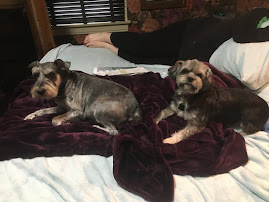
Iko pooped right on top of our bed 
He must have been out of his head 
I took him straight out 
Screamed that he was a lout 
And now we just eye him with dread 

Young Iko, a pup full of zest 
Put his owners quite fully to the test 
On the bed, soft and deep, 
While his people did sleep 
He left a brown gift, unimpressed 

         6. LEFTOVER THANKSGIVING TURKEY 
We are still eating leftover turkey 
Mixed with chicken a la king, sort of murky 
Most years turkey’s my favorite 
I've always said I savor it 
But right now I would rather have beef jerky 

I thought I would finish the bird 
Every last morsel, uncured 
My stomach then cried 
"You're quite over-plied!" 
Now I'm stuck, very groggy and blurred 

         7. GET A HAIRCUT 

My dear wife, she looked quite aghast, 
"That mop top is growing too fast! 
Like a shaggy old mutt, 
You look like a nut, 
Get a trim, before winter has passed!” 

My wife tells me, “Get a haircut” 
She claims people think I’m a nut 
But I don’t want to go 
My hair’s still so-so 
And who cares if I look like a mutt 

         8. TO THE BODY SHOP 
I’ve bashed in the blue Honda’s fender 
It looks like I’ve been on a bender 
Backed up into a wall 
Now I’m off to John Hall 
That John Hall's quite skilled, he will mend ‘er 

My blue Honda suffered a smash, 
Its front fender looked like pure trash. 
To John Hall's I drove slow, 
Where they put on a show, 
To fix up the dent in a flash! 

         9. DINNER AT THE CHART HOUSE 

The Chart House for my birthday dinner 
Holy moly, I felt like a winner 
I ordered sea bass 
Such a fish, it’s first class 
But the lava cake won’t make me thinner 

For my birthday, I went to the spot 
The Chart House, all fancy and hot 
I savored the bass 
Then ate with great class, 
The warm, gooey lava cake pot 

         10. THE WINTER SNOW STORM 

A huge storm brought snowfall so deep 
Eight cold inches started to creep 
"Dear Iko, I fear 
Will you stay warm, my dear?" 
While he snored in a comforting heap 

We’re enjoying a huge winter storm 
The whitest of white is the norm 
The snow’s eight inches deep 
Our car’s under the heap 
I just hope that our pup Iko can stay warm. 

How did you do? You might want to guess how many of the 10 pairs you got correct before reading the following answers. Here is the answer key. Give yourself one point for each pair that you got correct. KEY: 1. AI/H; 2. AI/H; 3. H/AI; 4. AI/H; 5. H/AI; 6. H/AI; 7. AI/H; 8. H/AI; 9. H/AI; 10. AI/H. 

I bet you did better than you thought. I tried this quiz out on members of my writers’ group, and they thought it was pretty hard. However, most got between six and nine pairs correct. (Because it’s a 50/50 decision, a score of 5 would be chance.). When I imagined doing the quiz, I thought odd rhymes were a cue to AI-generated poems (e.g., “unrolled” in pair 1; “wrought” in pair 3; “unimpressed” in pair 5; "pot" in pair 9). On the other hand, I thought some pairs were almost impossible to distinguish (e.g., 2, 7). 

There has been research on whether people can reliably distinguish between poems written by classic authors (e.g., Shakespeare, Emily Dickinson, Walt Whitman, T.S Eliot) and AI-generated poems (when the chatbot was instructed to write in the style of a given author). There are two main findings. (1) Participants were generally unable to distinguish the two classes of poems, sometimes more likely to judge an AI-generated poem as human-authored than a poem actually written by a human author. (2) When not told whether an author was human or AI, participants often rated AI-generated poems more favorably. The researchers have suggested that non-expert readers prefer AI-generated poems because they are generally more straightforward, grammatically correct, and easier to understand versus the complexity and ambiguity of poems written by classic human poets. 

So the big question is whether poetry writing is going to be taken over by Artificial Intelligence. I don’t think it will, though AI is getting more sophisticated, year by year. Probably the best answer was given by one of my fellow group members: “I wouldn’t have any interest in reading a poem written by a chatbot.”

Love, 
Dave

Saturday, June 14, 2025

WRITING SONNETS


Dear George, 
I just finished my OLLI class in writing sonnets. I thought this would be simple and straightforward, but the task was harder than I expected. Sonnets have so many strict rules that writing one is a real challenge. The Sicilian poet Giacomo da Lentini is believed to have invented the sonnet in the 13th century, while the Italian poet Francesco Petrarca (known as Petrarch) is given credit for bringing the sonnet to the forefront of Renaissance literature. The two main traditional types are Petrarchan and Shakespearian sonnets, although modern sonnets can depart from various aspects of these forms. 

Sonnet means “little song” in Italian, a reference the musicality in its use of rhyme and meter. Petrarchan sonnets are 14-line poems written in iambic pentameter (ta-DA ta-DA ta-DA ta-DA ta-DA). The 14 lines are divided into two sections: an octave (the first 8 lines) and a sestet (the final 6 lines). The octave is known as the Proposition (which presents a problem or question), and the sestet is the Resolution (which resolves the problem or gives a new perspective. The rhyme scheme for the octave is ABBA ABBA. The most common rhyme scheme for the sestet is CDECDE, although other variations are also used, e.g., CDCDCD or CDDCDC. Here is my attempt at writing a Petrarchan sonnet. 

THE GIRL OF MY DREAMS 
Eighteen, the college mixer, freshman year. 
I saw this sparkly girl across the way.
So filled with smiles and laughs, so pert, so gay. 
“I’ll marry her,” my impulse was sincere. 

But months went by, my shyness was so clear. 
I ran into the girl most every day 
but never spoke a word, to my dismay. 
My soul was dying from felt pain and fear. 

But just by chance, a fluke brought me to her, 
Milwaukee, we were off on coop jobs 
I went to see good friends, the girl was there 
We talked and laughed, that time is still a blur. 

You might have thought we’d always been heartthrobs 
Our wedding was a glorious affair. 

The sonnet form was adopted and enthusiastically embraced by the English in the Elizabethan period, most notably by Shakespeare who gave it the structure we commonly think of today: 14 lines of rhymed iambic pentameter. In the Shakespearean sonnet, there are three quatrains (four-line stanzas) and then a couplet (a two-line stanza). The rhyme scheme in a Shakespearian sonnet is: ABAB CDCD EFEF GG. Here is my example: 

RIVERSIDE BOULEVARD 
We moved to Riverside in forty-six 
Hardly a boulevard, a gravel road 
Occupied by chipmunks, horseflies, and ticks 
Our Norway pine house, the only abode 

The city dump, a half mile to the east 
I’d go with dad, find good stuff for our house 
Next door, the cemetery, corpses deceased 
A million times, I’ve gone there with my spouse 

The Brewery Park, a quarter mile from home. 
And Mason Park, way at the other end 
The parks were places we would often roam 
Or camp out with my brother and my friend 

Riverside Boulevard, the street of dreams 
Where life was even better than it seems 

Modern sonnets are inspired by the Shakespearian form, but they loosen up the restrictions. For example, they may or may not use iambic pentameter, and they may or many not rhyme. Most have fourteen lines, but poets occasionally depart from this rule. Here is my example of a modern sonnet: 

IKO 

Little Iko grew up in New Orleans 
The beloved pet at a Tulane Ave brothel 
But then he ran away, became a street dog 
Till the dogcatcher locked him in the kennel 

Justin and Kiersta rescued the sweet Schnauzer 
Brought him to their house on South Cortez 
When the pandemic hit, they drove to Cincy 
Before we knew it, we now owned a dog 

Iko sleeps in our bed till ten or eleven 
Then has a morning wrestle, his happiest time 
We walk around the block four times a day 
Watch TV as a family on the sofa 

We’d expected to never have another pooch 
But, thank the stars, Iko showed up at our home 

I have to write a lot more sonnets to become more proficient. If I’m successful, perhaps I’ll post a few here in the future.

Love, 
Dave

Tuesday, September 17, 2024

THE BEAT POETS


Dear George, 
Katja and I went to college in the late 1950’s, and, like most of our contemporaries, we were caught up in all sorts of new and exciting ideas. Existentialism, psychoanalysis, Zen buddhism, etc. The most powerful of all was the Beat Generation movement. Rebellion, hedonism, the search for meaning fit our life stage and circumstances, and “On the Road” became our bible. Katja took to wearing all black and scrapping makeup, while I let my hair grow long and tried (unsuccessfully) to grow a scraggly beard. When we went to co-op jobs in New York City, we hung out in Greenwich Village coffee houses and jazz clubs, hoping to catch a glimpse of Jack Kerouac. Now, some 65 years later, I’ve become immersed in reading and writing poetry, and I find myself going back to revisit the beat poets. Here’s a quick review. 

“Beat Generation” refers to a literary and cultural movement that initially formed in New York City in the late 1940’s and became influential nationally and worldwide in the 1950’s and early 1960’s. The initial core group of Beat Generation authors — Jack Kerouac, Allen Ginsberg, William Burroughs, Herbert Huncke, and Lucien Carr — met in 1944 in and around the Columbia University campus. Many of their ideas were formed in response to Columbia professors like Lionel Trilling and Mark Van Doren. Kerouac introduced the phrase “Beat Generation” in 1948. The term “Beat” is believed to have originated from the jazz term “beatnik” which referred to a group of artists and musicians who embraced a countercultural lifestyle. “Beat” was slang for “beaten down” or “downtrodden”. The Beat Generation authors often challenged societal norms and explored themes of alienation and disillusionment. In the mid-1950’s Kerouac, Ginsberg, and others moved to San Francisco’s North Beach neighborhood, drawn by the burgeoning literary scene there. 

Beat Generation poets had a major impact on American literature and society, challenging traditional values and exploring unconventional themes. The Beat poets pioneered a new literary style that emphasized spontaneity, improvisation, and personal experience, and that rejected traditional poetic forms, e.g., rhyme and meter. Often addressing social and political issues, the Beat poets explored a wide range of unconventional themes, including spirituality, free love and sexual liberation, drug use, and the search for meaning. Their emphasis on individuality, freedom, and self-expression inspired a generation of young people to question traditional values and to embrace more unconventional life styles. Major Beat poets included Jack Kerouac, Allen Ginsberg, Lawrence Ferlinghetti, William S. Burroughs, and Gregory Corso. 


Jack Kerouac. Kerouac was born into a French-Canadian family in Lowell, Massachusetts, in 1922, and he grow up in a family shaped by his father’s death and his mother’s struggle with alcoholism. He received a football scholarship to Columbia University where he met 17-year-old Allen Ginsberg and William Burroughs and became involved in the emerging Beat Generation scene. Serving in the U.S. Navy during World War II, he was honorably discharged on psychiatric grounds with a diagnosis of “schizoid personality”. Kerouac is best-known for his novel, “On the Road”, based on his cross-country road trips with his friend Neal Cassady. Kerouac’s poetry explored many of the same themes as his prose, the allure of the road, the search for meaning, and the spiritual quest. He employed a stream-of-consciousness style, and his poems often reflected the rhythms and spontaneity of jazz, creating a sense of musicality. Kerouac published three poetry collections: “Mexico City Blues” (1959), “Book of Dreams” (1962), and “Scattered Poems”, published posthumously. Despite his literary success, Kerouac struggled with alcoholism, drug addiction, and financial instability, never fully achieving the fame and fortune that he sought. He died in 1969 at age 47 from internal bleeding caused by alcoholism. 


Allen Ginsberg. Ginsburg was born in Newark, New Jersey, in 1926, growing up in a family with a history of mental illness. His mother’s struggle with schizophrenia deeply influenced his personal life and his work. Ginsberg attended Columbia University in the 1940’s where he formed a close-knit community with fellow poets like Kerouac and William Burroughs, the group striving to break free from societal constraints and to explore unconventional themes. Ginsberg’s early career involved struggles with drug addiction, mental health issues, and financial instability. His breakthrough came with the publication of “Howl” in 1956, a poem that explored alienation, conformity, and sexual liberation, and that immediately led to Ginsburg’s fame. Throughout the 1960’s and 1970’s Ginsberg was actively involved in the civil rights and anti-war movements, his poetry addressing issues such as police brutality, racism, and the Vietnam War. His main influences were William Blake and John Keats. Ginsberg won the National Book Award in 1993. He died in 1997 of liver cancer, leaving behind a legacy of poetry, activism, and cultural influence. 


Lawrence Ferlinghetti.  Ferlinghetti was born in Yonkers in 1919. His father died when he was 6 months old, and his mother was committed to an a mental institution shortly afterward. Ferlinghetti spent time with an aunt in France, an orphanage, and the mansion of a wealthy family. After serving in the U.S. Army during World War II, he earned a B.A. at North Carolina, an M.A. from Columbia, and a Ph.D. in comparative literature from the University of Paris. He moved to San Francisco in 1951, and in 1953 he and a partner opened the City Lights Bookstore, publishing the works of Kerouac, Ginsberg, and other Beat poets and becoming a West Coast hub for the beat Generation. Ferlinghetti’s poems often addressed social and political issues, criticizing conformity, materialism, and the Vietnam War. His most famous work is a collection of poems published in 1958, “A Coney island of the Mind.” He was a committed activist as well, engaging in civil rights, anti-war, and environmental protests. Ferlinghetti died peacefully at home in 2021 at the age of 101. 


William Burroughs.  Born in 1914 in St. Louis, Missouri, Burroughs attended Harvard where he studied anthropology and served in the U.S. Army during World War II. He formed a close friendship with Ginsberg and Kerouac in the 1950’s. Burroughs was a heavy drug user, and his exploration of altered states of consciousness had a profound impact on his writings. Burroughs developed a unique literary technique known as the “cut-up” in both poetry and prose which involved taking fragments of text, rearranging them randomly, and creating new, often nonsensical, narratives. Though primarily known for his prose works, Burroughs published several collections of poetry, including “The Cities of the Red Night” (1981) (a series of prose poems exploring sexuality, violence, and the occult) and “Queer” (1991) (exploring gender, sexuality, and identity). Burroughs died of a heart attack in 1997 at the age of 83. 


Gregory Corso.  The youngest of the original Beat group, Gregory Corso was born in New York City in 1930. In his early years, he spent time in foster homes and orphanages, was homeless for a period, and was imprisoned multiple times. Despite this background, Corso discovered a passion for poetry in prison and then became friends with Ginserg and Kerouac in Greenwich Village. His poetry was characterized by its simplicity, directness, themes of rebellion and spirituality, and often humorous tone. “Bomb”, one of his most famous poems whose text was shaped like a mushroom cloud, is a scathing critique of war and the destructiveness of human society. Corso was known for his unconventional lifestyle, struggled with alcohol and drugs, traveled extensively, and lived in various parts of the world. He died of prostate cancer in 2001. His ashes were deposited at the foot of Percy Bysshe Shelley’s grave. 

The beats had major influences on the culture, paving the way for the counterculture movement of the sixties. Among other bits of trivia, the Beatles spelled their name with an “a” as a reference to the Beat Generation. Other notable figures who have acknowledged the Beat’s influence on their work include Bob Dylan, David Bowie, Andy Warhol, Ken Kesey, Timothy Leary, Tom Wolfe, Quentin Tarantino, and Francis Ford Coppola. In 1982 Ginsberg published a summary of the effects of the Beat Generation. His list included: spiritual liberation, gay liberation, liberation from censorship, decriminalization of marijuana and other drugs, ecological consciousness, opposition to the military-industrial machine, and respect for land and indigenous peoples. 

When my spouse walked by and asked what I was doing the other day, I told her, “I’m writing about the Beat Generation. It takes me back to when we were Beatniks.” She laughed. “Or trying to be,” she replied. “That’s more like it.” I guess she’s right. 

Love, 
Dave 

APPENDIX: Brief excerpts from poems by Beat authors to illustrate their styles. 

How to Meditate 
by Jack Kerouac 

-lights out- 
fall, hands a-clasped, into instantaneous 

ecstasy like a shot of heroin or morphine, 

the gland inside of my brain discharging 

the good glad fluid (Holy Fluid) as 

i hap-down and hold all my body parts 

down to a deadstop trance-Healing 

all my sicknesses-erasing all-not 

even the shred of a 'I-hope-you' or a 

Loony Balloon left in it, but the mind 

blank, serene, thoughtless… 

 Howl 
by Allen Ginsberg 

I saw the best minds of my generation destroyed by madness, starving hysterical 
naked, 
dragging themselves through the negro streets at dawn looking for an angry fix, 
angelheaded hipsters burning for the ancient heavenly connection to the starry 
dynamo in the machinery of night, 
who poverty and tatters and hollow-eyed and high sat up smoking in the 
supernatural darkness of cold-water flats floating across the tops of cities 
contemplating jazz, 
who bared their brains to Heaven under the El and saw Mohammedan angels 
staggering on tenement roofs illuminated… 

The World is a Beautiful Place 
by Lawrence Ferlinghetti 

The world is a beautiful place 

to be born into 

if you don't mind happiness 

not always being 

so very much fun 

if you don't mind a touch of hell 

now and then 

just when everything is fine 

because even in heaven 

they don't sing 

all the time... 
 

Where Flesh Circulates 
by William S. Burroughs 

Its so hard to remember in the world - - Weren't you there? Dead so you 
think of ports - - Couldn't reach flesh - - Might have to reach flesh from 

anybody - - 

And i will depart under the Red Masters 

for strange dawn words of color exalting their 

falling on my face impending attack satellite in a 

Gold and perfumes of light city red stone 

shadows brick terminal time wet dream flesh creakily 
the 
the last feeble faces fountains play stale 

spit from crumpled cloth Weimar youths on my face 

bodies where flesh circulates Masters of color 

exalting their dogs impending attack of light… 
 

Bomb 
by Gregory Corso 

Budger of history Brake of time You Bomb 

Toy of universe Grandest of all snatched sky I cannot hate you 

Do I hate the mischievous thunderbolt the jawbone of an ass 

The bumpy club of One Million B.C. the mace the flail the axe 

Catapult Da Vinci tomahawk Cochise flintlock Kidd dagger Rathbone 

Ah and the sad desperate gun of Verlaine Pushkin Dillinger Bogart 

And hath not St. Michael a burning sword St. George a lance David a sling…

Friday, March 1, 2024

HOW DOES POETRY DIFFER FROM PROSE?


Dear George, 
I’ve been taking poetry classes through UC’s OLLI program for the last 5 or 6 years. I don’t know if I’m getting any better, but I am enjoying myself. Katja is a Ph.D. candidate in French literature, and, from the beginning, she’s been telling me that my poems don’t sound very poetic. I’ve come to agree. My background is in scientific writing, the very opposite of poetic writing. My OLLI teacher agrees, saying that I write “prosy poems,” though he sees no problem in that. Every class I’ve been in winds up, at some point, discussing the differences between poetry and prose. I’ve asked Google about it, and here are some of the things experts say. 

Both “prose” and “poetry,” of course, refer to written literature. Prose is what we encounter most often in everyday life. Novels, short stories, nonfiction works, essays, newspaper and magazine articles, scientific papers, emails, blogs, and so forth ad infinitum. Various commentators say that prose is “regular” writing, while poetry is a more specialized form. I’m going to hazard a guess that prose constitutes about 99.9% of the written products out there in the world, leaving poetry with about 0.1% or less. To my knowledge, prose writers never worry about how prose differs from poetry. Only poets interested in the question, perhaps because their creations are specialand unique. 

Many authors compare and contrast poetry and prose. Here I am going to describe eight distinctions that are commonly made: structure; length; capitalization; punctuation; rhyme and meter; language; understandability; and purpose.

(1) STRUCTURE. The clearest and most obvious difference between prose and poetry is how they look on the page. Prose is written in sentences that are arranged in paragraphs. A line of text begins at the left and ends at the right margin of the page, with prose text appearing as large blocks of writing. Poems, in contrast, use shorter lines that are broken before the right page margin, and the lines are organized into stanzas. Thus, the shape of a poem varies, depending on the line and stanza breaks chosen by the author.    

(2) LENGTH. Poems are relatively short, like a painting in words, while prose is usually longer (think of an article or work of fiction). 

(3) CAPITALIZATION. In prose, the first word of every sentence is capitalized. Traditionally, poets capitalize the first letter of every line whether or not it corresponds to a sentence beginning. However, many modern poets do not follow this rule. 

(4) PUNCTUATION. Prose writers follow standard grammatical rules of punctuation (e.g., periods at the end of the sentence; commas to connect independent clauses ). Poets sometimes use standard grammatical rules, but they may also break rules for creative effect or not use standard punctuation at all (relying on line breaks instead of periods, commas, etc.). 

(5) RHYME AND METER. Historians suggest that poetry existed long before written language, and used rhythm and rhyme to help people to memorize information and hence pass down knowledge. Some argue that rhyme and meter are the most importance differences between poetry and prose. However, both rhyme and meter have been on the wane in poetry for many decades, and contemporary poets show a near-universal preference for free verse. 

(6) LANGUAGE. Prose typically relies on straightforward and literal language (e.g., the current essay), while poets often use figurative language (e.g., metaphor, similes, symbols) to create images or expressive ideas. Edgar Allan Poe wrote, “Poetry is the rhythmical creation of beauty in words.” 

(7) UNDERSTANDABILITY. Prose typically aims for a relatively clear message and usually requires only a single reading. Poems often leave a lot unsaid, rely on the imagination of the reader for interpretation, and may require more than one reading. My own opinion is that a lot of contemporary poets seem to worship ambiguity or obscurity and are needlessly frustrating to the everyday reader as a consequence. 

(8) PURPOSE. A quick summary is that prose aims to convey information, tell a story, or explain a concept in a clear way, while poetry focuses on expressing emotions and ideas in an aesthetically pleasing and evocative way. 

PROSE POEMS. It’s a mistake to regard “prose” and “poetry” as mutually exclusive, binary categories. There’s a lot of overlap and a lot of variety in each category. Prose can be highly expressive and employ metaphors and symbols. Poetry can be literal and descriptive, telling a story. The prose poem is a good illustration of the fusion of the two, since it employs the structural form of prose with the expressive language of poetry. Here is an excerpt from the prose poem, “Bath”, by Amy Lowell:  
      
“Little spots of sunshine lie on the surface of the water and dance, dance, and their reflections wobble deliciously over the ceiling; a stir of my finger sets them whirring, reeling.  I move a foot and the planes of light in the water jar.  I lie back and laugh, and let the green-white water, the sun-flawed beryl water, flow over me.” 

It’s also possible to turn this around and consider poems which employ a standard poetry form but also use literal, descriptive language rather than flowery, “poetic” language. William Carlos Williams’ poem, “This Is Just to Say,” might be an example: 

I have eaten 
the plums 
that were in 
the icebox

and which 
you were probably 
saving 
for breakfast 

Forgive me 
they were delicious 
so sweet 
and so cold 

All of this points to a rather murky conclusion. It’s certainly possible to make generalizations about differences between poetry and prose, but both of these categories are so diverse that there are many exceptions to any assertion. Former U.S. Poet Laureate Howard Nemerov sums it up best when he says that distinguishing poetry from prose “is rather like distinguishing rain from snow — everyone is reasonably capable of doing so, and yet there are some weathers that are either-neither.” 
Love, 
Dave 

SOURCES: brittanica.com, “Poetry(literature). ; immerse.education, “What Is The Difference Between Prose and Poetry?”; keydifferences.com. “Difference Between Prose and Poetry”; poets.org, “Poetry”; readwritethink.org, “Poetry and Prose: What’s the Difference?”; theadvocate.org. “The Difference Between Prose And Poetry”; tiatalk.me, “What is poetry?”; twinkl.com,“What is poetry?”; writers.com; “Prose Vs. Poetry: Their Differences And Overlap.”

Thursday, September 28, 2023

POEM OF THE DAY: "MY MOTHER"


Dear George, 
I don’t know how I got started on it, but recently I’ve been working on a poem titled “My Mother”. It’s been a very engrossing task, and it’s brought back many happy memories. Here’s my current version. 
Love, 
Dave 

                         MY MOTHER 

My mother grew up in the flapper age 
The Roaring Twenties, the Charleston the rage 
Her life path was shaped by that stage 

My mother met my father in school 
She found him charming and cool 
And he felt that she was a jewel 

My mother could have been a Hollywood star 
Her beauty cream was kept in a porcelain jar 
The fairest of the P.T.A. mothers by far 

My mother birthed a girl and three boys 
The boys made commotion and noise 
But she taught the girl style and poise 

My mother was enamored of flowers 
Cultivating her garden for hours 
Her green thumb had wondersome powers 

My mother liked riding a horse 
Which gave her a sense of brute force 
When the stable shut down, much remorse 

My mother was an actress on stage 
Played a tiger who escaped from its cage 
“That’s my mom!” I yelled, three years of age 

My mother was an avid jazz fan 
For her, Louis Armstrong was the man 
Play some Louis, she’d dance the can-can 

My mother took me to my first movie 
“Meet Me in St. Louis,” so groovy 
My most exciting outing as a juvie 

My mother taught us all the birds’ names 
Bird-watching was one of our games 
Wild turkeys and pheasants, our aims 

My mother was a razzmatazz cook 
She mastered Irma’s joyous cookbook 
Broiled whitefish, fresh off the hook 

My mother did La Parlor de Beauty 
The homies, great gossip, never snooty 
Enter frazzled, walk out as a cutie 

My mother enjoyed a big party 
Hanging out with Jackie and Marty 
Costumes, poetry, oil paintings, so arty 

My mother would boat on Green Bay 
Mike and Jean, the whole gang for the day 
Fish Creek and Egg Harbor on the way 

My mother planned a Christmas Eve soiree 
All our cousins came over to play 
Uncle Karl’s fancy gifts made the day 

My mother saved our Irish Setter Mike 
Who fell through the ice on a hike 
She risked her own life for that tyke 

My mother and dad loved their Farm 
She decorated the cabin with charm 

A family escape, safe from harm 

My mother adored Lovey, her cat 
hite Angora and just a smidge fat 
Lovey’d jump on her lap for a chat 

My mother expired in Eighty-Six 
Of afflictions the docs couldn’t fix 
My plan: Meet for lunch near the Styx

Monday, January 30, 2023

WRITING CLERIHEWS: CINCINNATI CELEBRITIES


Dear George, 
A clerihew is a short funny poem about a famous person. The form was invented by poet Edmund Clerihew Bentley (1875-1956) when, at age 16, he was bored in a science class. Rules are simple. Clerihews are four lines long. The first line names a person, and the second line rhymes with the first. Also the third and fourth lines rhyme with each other (i.e., an AABB rhyme pattern). A good clerihew captures something of a person’s character or reputation. The main aim is to sum up an entire life through one incident or detail, making fun of the person. Clerihews are not intended to be rude, but rather are amusing and/or silly. Lines can be any length, and one needn’t use rhythm. W.H. Auden is among the many poets who have written clerihews. Here are some of the clerihews I’ve written about Cincinnati celebrities, current and past. 
Love, 
Dave 

The Bengals’ head coach is Zack Taylor 
Has the mindset of Vlad the Impaler 
Zack draws up the plays for Joe Burrow 
Blazing rockets shot straight down the furrow 

Chef Jean-Robert de Cavel 
Attracted a hip clientele 
The crown prince of French cuisine 
He knew what to do with a bean 

A living legend, hometown hero Pete Rose 
Had gambling debts up to his nose 
Banned for life from the Hall of Fame 
Pete fortunately is impervious to shame 

We all of us remember Nick Clooney 
A most charming man, slightly goony 
Was he likeable?, believe it, Mister 
Though less famous than his son or his sister 

Channel 5’s a.m. star was Paul Dixon 
Way back in those days of R. Nixon 
Paul teased the front row about their knees 
Gave Bonnie Lou and Colleen a squeeze 

Our Reds star these days is Joey Votto 
Hitting better is what Joey ought to 
’Twas a worse than lackluster season 
The wise guys say old age is the reason 

UC’s prez is Dr. Neville Pinto 
Engineering’s the field he’s been into 
Neville’s minions — fifty thousand young students 
All but ten are chronic impudents 

The Reds were once owned by Marge Schott 
Fans prayed that she’d sweeten the pot 
Stupid thoughts about Hitler and Blacks 
But her players soft-pedaled the attacks 

The Bearcats’ best coach was Luke Fickell 
But Luke left the team in a pickle 
Wisconsin wooed our Luke away 
Eight million, hard to say neigh 

The sheriff for years was Simon Leis 
A tough nut who ruled by caprice 
No one ever called Simon humane 
Since his treatments were spankings and pain 

The worst native son is Charlie Manson 
Who was famed at Walnut Hills for his dancin’ 
Manson ordered his groupies to kill 
And they all seemed to think it a thrill 

My first love was Miss Doris Day 
Though Rock Hudson got in my way 
Doris was guileless and pure 
Not to mention her golden coiffure 

Cincy’s cowpoke, a Rogers named Roy 
Such a hero to me as a boy 
Roy would have a shootout with some goon 
Then would croon by the light of the moon


Monday, August 29, 2022

I AM A COUNTRY BOY


Dear George, 
 I mentioned on my blog post last week that our summer poetry group took up the task of writing about “where I am from”. Katja wrote about growing up in center city Philadelphia in a poem titled “I Am a City Girl”. I wrote about growing up at our home on the Menominee River and adopted a parallel title: “I Am a Country Boy”.  It’s fun to view the two poems in comparison, and it’s hard to imagine such different backgrounds for a couple who celebrated their 62nd wedding anniversary yesterday. 
Love, 
Dave 

I AM A COUNTRY BOY

In 1946 my father returned 
from occupied Japan, 
and our family moved from town to
my grandfather’s Norway Pine cottage 
on the banks of the Menominee River, 
a mile outside the city limits, 
the first residents ever to live 
on Riverside Boulevard. 
Looking across the river from our front yard, 
we could see the local cemetery to the east, 
grand sunsets to the west,
and wild pigs on the island to the south. 
My grandfather had died in 1942, 
and the house had never been finished, 
no electricity, 
no phone, 
no indoor plumbing. 
We bathed in the river, 
used an outhouse by the garage, 
carried water to the kitchen from an outdoor pump, 
and lit kerosene lanterns at sundown. 
I was 9, Steven was 5, Peter was 1, 
and Vicki was yet to be born. 
We shared our property with native species, 
chipmunks, red and gray squirrels, 
garter snakes, grass snakes, water snakes, 
frogs and toads and box turtles, 
snapping turtles in the river, 
crayfish, bloodsuckers, mud puppies, 
Luna moths and hordes of mosquitos, 
wayward deer and wild turkeys, 
foxes, porcupines, otter, 
dead skunks flattened on the road, 
pheasants and woodpeckers, birds of all sorts, 
mice in the pantry, bats in the attic. 
Six-foot pine snakes hid underneath the house. 
In summer we children virtually lived 
in the river and the forest, 
building rafts of dead white pine logs,
camping along Little River at Mason Park,
scouring the woods for deer antlers and snakeskins. 
Our parents taught us the names
of the trees, the flowers, the birds. 
I gathered wild strawberries for breakfast, 
collected cicada skeletons from the river bank, 
made ashtrays for my mother from river bottom clay. 
We rowed our boat to Indian Island for picnics 
with our Irish Setter Mike paddling along behind. 
Steve and I had acorn fights in the autumn, 
wrote messages in ink on birch bark, 
pressed red and yellow leaves in thick books, 
and, with the first winter storm, 
held barefoot races in the snow. 
The river froze over in December 
and we ice-fished for perch, 
shoveled off a skating rink, 
hiked to Pig Island with snowshoes, 
and followed deer tracks in the snow. 
My father tied the toboggan to the Lincoln’s rear bumper 
and towed his squealing children at terrifying speeds. 
We chopped down our own Christmas tree. 
made strings of popcorn and cranberries, 
and tried to stay awake to see Santa. 
My mother cooked whitefish, 
Texas Tommies, and potato sausage. 
When the ice melted and flowed out in April, 
my father named the tinkling sounds 
“Chinese Bells Day”. 
In spring the rainfall turned the road to mud 
and some days we got free vacations from school. 
Steve and I played basketball after dark, 
lighting the hoop with a desk lamp. 
At 16 I built a hidden camp in the woods 
from the trunks of alder trees and vowed 
to live there by myself forever. 
My father gave me Thoreau’s Walden to read. 
Like Tarzan or Robinson Crusoe, 
I had become a creature of the forest.

Monday, May 23, 2022

STUFF I USED TO DO


Dear George, 
 I’ve started up again in my OLLI class in Advanced Poetry after a three-month break. This week I’ve written a poem inspired by our growing up on the Menominee River. I’ve enclosed it here with a dedication to my siblings Steven, Peter, and Vicki, with whom I shared these experiences. 
Love, 
Dave


STUFF I USED TO DO 

So many things I did in the past 
Like climb our willow tree to the top 
Cops and robbers, such a blast 
Collect the caps from bottles of pop 

Put a worm upon his hook 
Barefoot races in the snow 
Catch a tadpole in the brook 
Pull a bloodsucker off my toe 

Ride no handsies on my bike 
Find a four-leaf clover in the grass 
Toss a snowball at a girl I like 
Fish the lagoon for perch and bass 

Marbles for keepsies after school 
Trap fireflies in a Mason jar 
Wear an eye patch, that’s so cool 
Search the sky for a shooting star 

Crawl underneath a barbed wire fence 
Carve my initials in a beechwood tree 
Ice cream cones, two dips for five cents 
Take second place in the spelling bee 

Poke a stick into an ant hill 
Find new treasures at the City Dump 
Bumper car driving, such a thrill 
Stand at the pier, hold my nose and jump 

Collect nightcrawlers at the graveyard after dark 
Listen to boxing on the radio 
Pitch my tent at Mason Park 
Shoot some free throws like a pro 

Row to Pig Island in our boat 
Eat wild berries off the forest floor 
Carry a frog in the pocket of my coat 
Read Batman comics at my uncle’s store 

Battle my brothers in an acorn fight 
Skip a stone upon the lake 
Light a campfire in the dark of night 
Lift the rocks, catch a garter snake 

I miss these things from days of old 
Netflix gets boring when all is told

Wednesday, February 23, 2022

THE LIMERICK CONTEST


Dear George, 

 One of the pleasant things about my checking Google News on the computer is that the website contains a category called “For You”. Presumably based upon my prior searches and stories that I’ve opened to read, it’s remarkably on target: the Bengals, the Packers, tennis, Federer and Djokovic, poetry, HBO and Netflix offerings, Donald Trump (yes, that’s true), Cincinnati, the Bearcats, Menominee, etc. A week ago it steered me toward a story about the Saturday Evening Post Limerick Contest. Held every two months, the Post invites readers to submit limericks about a past Post cover. The current contest is about the 1924 Normal Rockwell illustration shown above. As a limerick admirer I couldn’t pass the opportunity by. One can submit as many limericks as they like, and I submitted the following five. There is a $25 prize for the winner. Please keep your fingers crossed for me. 
Love, Dave 

 I have a young neighbor named Freddie
 For amour he’s never felt ready 
 Then Cupid whispered rules 
“Buy her chocolates and jewels” 
 And now sweet Alicia’s Fred’s steady 

There was a young lad from Peoria 
Who desperately craved affection from Gloria 
Then Cupid showed up 
Brought some vim to this pup 
And now our young couple’s in euphoria 

There once was a chap from Toledo 
Who suffered a torpid libido 
 Cupid whispered in his ear 
“You can master your fear” 
And amour became his new credo 

There was a young bloke from Deer Creek 
Who was out of his mind for Monique 
This affair had no zing 
Until Cupid did his thing 
And now these two dance cheek to cheek 

There was a young dandy from Raleigh 
Whose love life aroused melancholy 
Cupid gave him advice 
“Add some sugar and spice” 
And now he is sweethearts with Molly

Wednesday, October 27, 2021

THE BEST OF TIMES


Dear George, 
 I lived in four places while growing up in Menominee between 1937 and 1955. Up until I was six my parents lived had a second floor apartment in a large white house on Ogden Avenue (now 10th Ave.) at the foot of the Interstate Bridge. My age-mate and first friend, Sally Fernstrum, and her parents lived on the first floor, and Sally and I walked four or five blocks each day to kindergarten at Boswell School. At the end of that year my family moved to Sheridan Road (now 1st St.) around Michigan Ave. (now 16th Ave.), next to the State Street neighborhood where many family friends lived (Burkes, St. Peters, Worths, Sawyers, Murphys, and others). With the U.S. entry into World War II, my dad went for officer training at the Great Lakes Naval Station and was then shipped off to the Pacific. My mother, my younger brother Steve, and I moved to a second floor apartment at the corner of Quimby (3rd Ave.) and Sheridan Road. I think the building might have been owned by my paternal grandfather, V.A. Sr. Then when my dad returned in 1946, we moved to our house on the river that had been built by my maternal grandfather, Guy Cramer. That move was monumental for our family. For us kids, we went from being town kids to country kids — entirely new lives. I wrote a poem about this some time back, and recently I’ve worked at revising it for my OLLI poetry class. Here is the current version. 
Love, Dave 

              The Best of Times 

With the war finally over  
and my father back from the Pacific, 
our family, poorer than magpies, 
moved into my dead grandpa’s cottage, 
set among the white oaks 
on the banks of the Menominee, 
the only house on River Road, 
built of Norway Pine 
and boulders from the field, 
no electricity, 
no running water, 
no indoor toilet, 
no telephone, 
six-foot pine snakes in the foundation, 
a gaggle of bats in the attic, 
porcupines nesting in the evergreens. 
We grilled hot dogs at the outdoor fireplace, 
took weekly baths in the river, 
and caught fireflies in a Mason jar. 
With big snowstorms, 
the County took half a week to plow River Road, 
giving us kids private holidays from school. 
We pioneers of the Great North Woods, 
we children of the forest. 

As the oldest I had many tasks, 
to light the kerosene lanterns at sundown, 
to keep the firewood bin stocked, 
to bring water from the outdoor pump 
for the dog’s bowl and my parents’ coffee, 
to gather wild strawberries for breakfast, 
to shovel the walk in winter, 
and, most of all, to raise Old Glory, 
then fold her up again at dusk. 

My favorite times 
were going with my father to the city dump, 
a twenty-minute trek up the road, 
pulling my red wagon 
to lug found treasures home. 
I collected bottle caps 
while Dad searched for household goods, 
a bedside table with a chipped leg, 
a discarded flower vase, 
someone’s seashell ashtray 
from their Florida vacation, 
rusty old tools or perhaps a tin bucket. 

We loved our years on the river, 
swimming from morn till dusk, 
riding our bikes down the old road, 
camping out at Brewery Park, 
shooting at beer cans with the .22, 
acorn fights with my brother Steven, 
taking our green rowboat 
with its one horsepower motor 
for picnics on Indian Island 
or into the channel with its 
family of Great Blue Herons. 

Then came the summer of 1948 
and new neighbors, the Orths and the Meads,
built houses down from ours  
and the County strung up telephone and electric lines. 
Our wilderness world would never be quite the same.


Wednesday, March 3, 2021

A Quick Chat at City Lights

DEAR GEORGE, I was saddened recently to read that Lawrence Ferlinghetti, counter-culture poet and founder of San Francisco’s City Lights Bookstore, had died at the age of 101. Ferlinghetti has always been one of my favorite poets, and, because we Antiochians regarded ourselves as fledgling beatniks, he was a significant role model in my youth. I actually met Ferlinghetti briefly when I was spending the summer of 1959 in San Francisco. I’d driven out before my final year of college to decide, once and for all, whether or not to devote my life to becoming a writer. I saw an ad for a poetry reading by Ferlinghetti at City Lights and decided to go. The Beat Generation had been around for five or six years, and San Francisco (and the City Lights Bookstore specifically) was one of its major centers, drawing icons like Jack Kerouac, Allen Ginsberg, and Gregory Corso. Ferlinghetti had recently published his first collection, “A Coney Island of the Mind”, and he was reading selections. By the time I arrived the bookstore was packed to capacity, and employees were putting the few remaining chairs up on the stage. As it turned out, I took the last seat, right next to Ferlinghetti himself who was already at the podium. Before the reading started, he turned to me and asked if I were a writer. I said that I was trying to be and explained that I’d come to the city from Antioch to devote myself to writing fiction. When I expressed dismay at the string of rejection letters I’d gotten, Ferlinghetti was encouraging and said he’d gone through the same start to his own career. That filled me with inspiration and I churned out a dozen more short stories during my remaining month in San Francisco. All of them were rejected, of course. The following summer Katja and I got married and moved to Ann Arbor for grad school, that proving to be the end of my beatnik days as well as my quasi-writing career. However, I still have good memories of my exciting encounter at the City Lights Bookstore. LOVE, DAVE

Wednesday, July 29, 2020

MEERKAT POEMS

Dear George,
The meerkats are among my favorite exhibits at the zoo.  They’re always busy and active, diving in and out of their burrows, checking out the world about them.  I think they enjoy watching the humans as much as the humans enjoy watching them.  Here are a few meerkat poems, dedicated to their happy spirit.
Love,
Dave


My Meerkat Family


Here you have my family.
Meerkat Mob Number Two Thousand Four.
That is our mother standing at the rear.  
We Meerkats are called mobs.
though the British call us gangs.   
I am right near the middle.  
They say I have a serious look.
but it doesn’t really matter 
because all Meerkats have serious looks.  
We are not separate beings  
but interchangeable pieces  
in the Great Meerkat Collective.   
We look alike
think alike
act alike.
We are not as quick as cheetahs
as majestic as lions
as strong as rhinos.
But we are brave
and determined 
and when the apocalypse arrives
as it surely will 
we will be the last remaining species on earth
because we stick together
and prize the group above the individual.  
Humans could learn a lot from Meerkats. 

                           * * *


A Meerkat Primer


Not just anyone can be a Meerkat.
You have to be tough
also smart
very quick on your feet
able to scramble through a four-inch bolt-hole.
My family has lived in the desert for eons.
In July, one hundred and twenty at high noon
so we retire to the depths of our burrow
where it’s pitch black, cooler.
We spend the remainder of our time
hunting for food.
Butterflies and beetles, moths
maybe a lizard or a baby bird
if lucky, a small snake
an egg or two, some cactus seeds 
even a scorpion.
I get new brothers and sisters four times a year 
usually after a rainy season 
sometimes six or seven pups, sometimes three or four 
We Meerkats live to age thirteen 
longer than squirrels or skunks or rabbits.
There are half a million Meerkats
in the world today
five times as many Meerkats as giraffes. 

               * * *


The Sentries 


Raza and I are sentries
posted at our station dawn to dusk 
rain or shine, dust storms, lightning.
Ever vigilant
we don’t allow ourselves to  blink. 
Meerkats have deadly ancestral enemies
the hawk-eagles
the bat-eared foxes, the jackals
the spotted snakes with their long fangs
and poisonous venom.
My responsibility is to watch to the north
where the eagles fly in 
while Raza looks south
for the foxes and jackals.
We have keen vision and keen hearing
and at our slightest warning cry 
our family members dive into their burrow holes
ready to enjoy another Meerkat day 

               * * *


What Meerkats Think


Meerkats think all the time, you know. 
Not so much about life’s meaning
but more practical stuff
like the dozens of things my mom has told me.
Keep out of the midday sun
Mark our territory
 and defend against the rival mobs
Always take care of the baby pups
Drink the water when you come across it
The juiciest beetles hide under rotten logs.
And every day, of course, I think about our enemies.
How I might snatch an eagle right out of the sky
or twist a desert snake into knots
Gang up with my sisters and brothers
to chase away a hungry jackal. 
And most of all I think about Lavinia 
the sweetest Meerkat I’ve ever seen
who lives with her sisters across the great valley
and hopefully one day will be my bride.
I wonder if Lavinia ever thinks of me.