Friday, November 11, 2011

Bits of Autumn


Dear George,
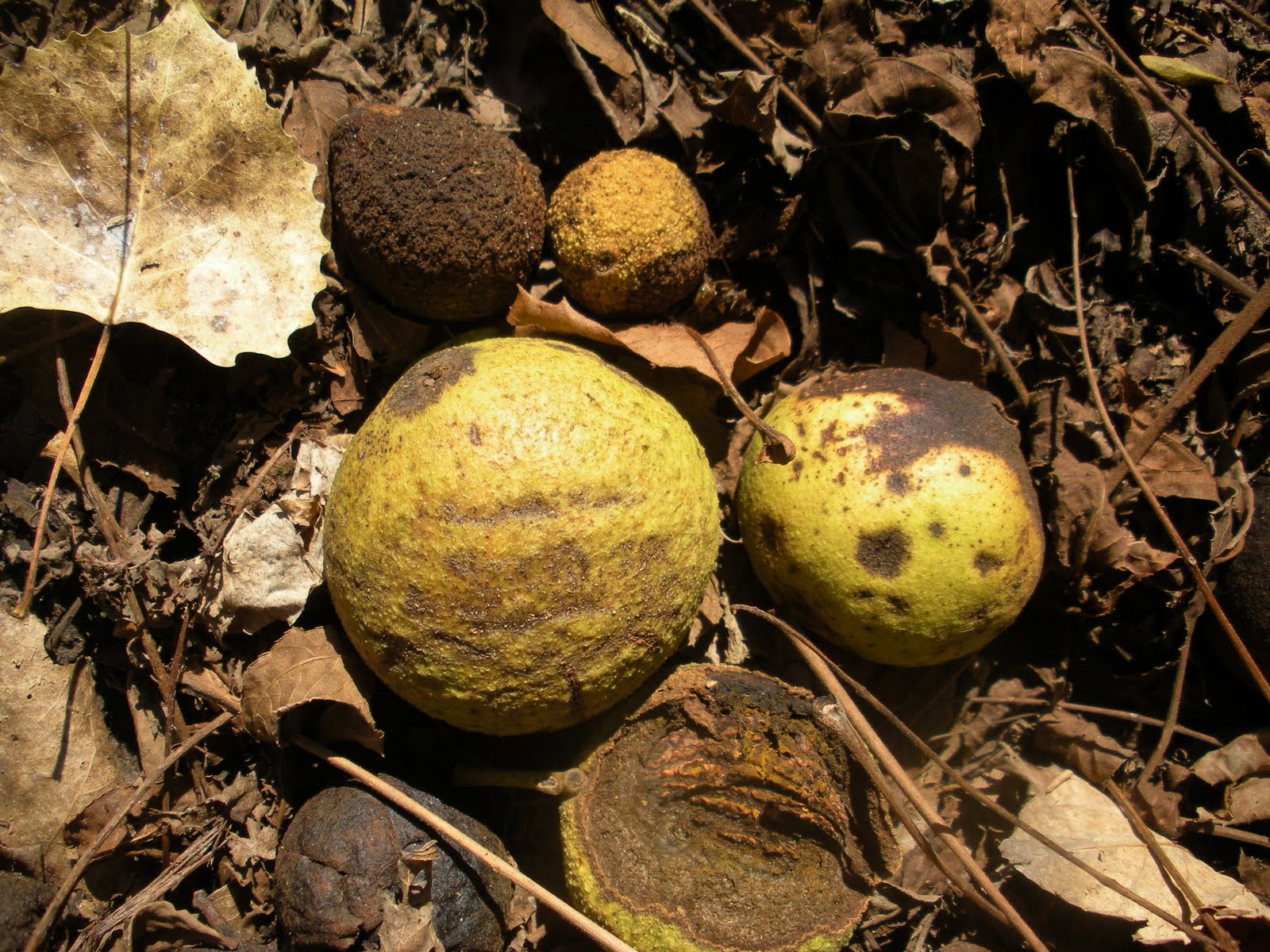
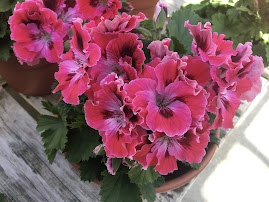
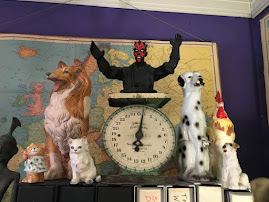
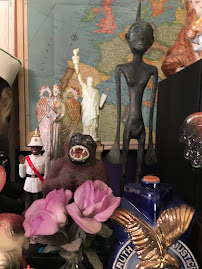
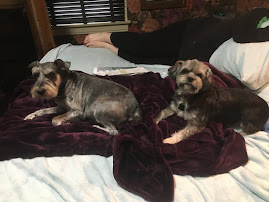
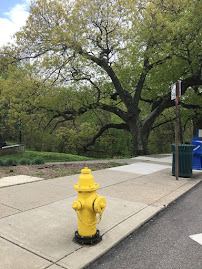
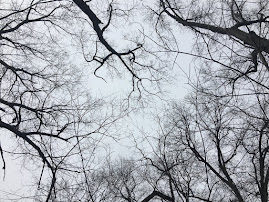
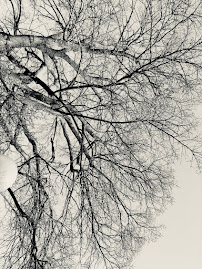
We’re approaching the tail end of Autumn and have been enjoying one of Cincinnati’s most pleasant times of the year. Our summers tend to be hot and humid; our winters, gray and slushy. Autumn (and spring) are optimal – moderate temperatures, lots of sunshine, good for outdoor outings. Our furry sheepdogs benefit most. Their energy levels pick up as the weather gets brisker, and we take longer and more pleasurable walks. The leaves have turned, acorns have fallen, and the squirrels are busy gathering up their stores for the winter. Flocks of birds have been heading south. Our neighbors’ pumpkins are out on their front stoops, getting a little saggy by now. The dogs and I went camping at Winton Woods last week, and that will probably do it for the year. Though we can see cold and snow in the offing, we’ll be enjoying this luxurious season for a couple more weeks. I’ve been trying to capture some of its flavor with my camera. Here are a few pics.
Love,
Dave


Monday, November 7, 2011

Cincinnati Artists: Jim Dine


Dear George,

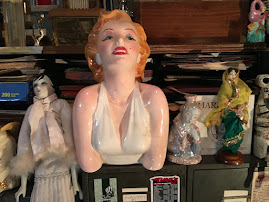
Several years ago the Cincinnati Art Museum held a retrospective of Jim Dine’s work. We found the exhibition wonderful, and we were thrilled by the artist’s use of color and symbolic themes. We were also happy to learn that this major Pop Art figure is a local native. Dine was born in Cincinnati on June 16, 1935, to Stanley Cohen and Eunice Cohen Dine, second-generation Jewish immigrants from Eastern Europe. His family owned a local hardware store (which helps explain his preoccupation with painting images of tools throughout his career). Dine began painting as early as age two and could frequently be found in his grandparents’ basement, painting on whatever surfaces he could find. While at Walnut Hills High School (our son J’s alma mater) Dine started taking art classes from local artist Vincent Taylor and attended evening classes at the Art Academy. He then worked at the Cincinnati Art Museum where he was particularly drawn to works by Cincinnati artists Frank Duveneck and John Henry Twachtman. After Walnut Hills, Dine attended the University of Cincinnati initially, but then went on to study at the Boston Museum of Fine Arts and complete his BFA degree at Ohio University in Athens. Though he began graduate study at Ohio U., the draw of New York’s art world was too strong, and he moved to the city with his wife, Nancy Minto, in 1958. The couple eventually had three sons and two daughters. Dine began teaching high school art classes and soon became involved with Claes Olderburg, Robert Rauschenberg, and Roy Lichtenstein, all of whose work was moving away from abstract expressionism and toward pop art. The Pop Artists reacted against abstraction and a refined sense of aesthetics, preferring to portray ordinary objects in ordinary life. Andy Warhol was painting soup cans; Lichtenstein, comic book images; Dine, men’s neckties. Between 1960 and 1965 Dine held various guest professorships, including positions at Yale and Oberlin.


Dine has completed over 3,000 works – paintings, prints, sculptures, performance art works -- over the course of his fifty plus year career. Many are depictions of typical everyday objects, e.g., the tools his family sold during his childhood. “I’d be fascinated by them,” Dine said. “They’re a metaphor for the hands.” In his early work Dine combined painting and found objects, salvaged from the city’s streets to create collages with highly emotional content. (My brother Peter did so too for a number of years and may well have been influenced by Jim Dine’s work.) Many of Dine’s paintings included a transparent bathrobe without a figure, interpreted by critics as a metaphor for a self-portrait. Other images include a large heart, symbolizing the artist’s emotional experiences. Dine turned to sculpture in the early 1980’s, creating works based on Venus de Milo. His recent art uses images from ancient Greek, African, and Egyptian objects.


Dine is widely recognized as one of the most innovative artists of the second half of the twentieth century. Three years ago our Art Museum presented him with its first Cincinnati Art Award which recognizes “a Cincinnatian who has had a significant impact on our culture at national and international levels through the making, collecting or promotion of visual art.” Embarrassed, Dine commented, “Aw, gee. I don’t relish these things. I’m not a politician or a public speaker. I let my work speak for me.” And so it does.

Love,

Dave


[Sources: www.artcyclopedia.com; www.books.google.com; www.globalgallery.com; www.wikipedia.org; Google Images


G-mail Comments

-Vicki L (11-15): Hi David, Thanks for expanding my world. Maybe you should send this along to Chris and Jessica? I'm struck by the contrast in Dine's work between hearts and skeletons - it resonates… Love, Vicki

-Phyllis S-S (11-10): Dave, I had no idea he was from Cincinnati. Interesting. I find his paintings colorfully insipid though. Phyllis

Thursday, November 3, 2011

Queen Marinette


Queen Marinette

Dear George,
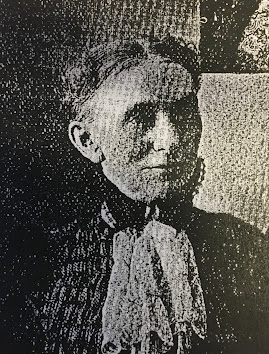
Though we lived in Menominee, our twin city of Marinette, Wisconsin, right across the river, was an important part of our lives. The town, as well as Marinette County, are named after a French and Menominee Indian woman who was known as “Queen Marinette” by the Indians and white settlers in the community. There are competing notions about the origins of her name. One often cited hypothesis is that she was named after Marie Antoinette, wife of French King Louis XVI whose tyranny led to the French Revolution and who died the year that Marinette was born. When pronouncing “Marie Antoinette”, it’s believed that the French and the Indians would shorten the name by pronouncing it “Marinette”. A second theory is that her mother’s nickname was “Manon” and that her daughter was called “Little Manon” or “Manonette”. Using the French “trilled R”, this became transformed into “Marinette”. In either case, Marinette was held in such high esteem that members of the community came to call her “Queen Marinette”. Given that women rarely occupied positions of prominence in the commercial world of the nineteenth century, Marinette was one of the most remarkable figures in the early history of the Twin Cities and the Great Lakes region.


Queen Marinette Plaque, Marinette, WI

Marguerite Chevalier was born in 1784 at Post Lake in what is now Langlade County, just west of Marinette County in northeastern Wisconsin. Her father was a French Canadian trapper named Bartland Chevalier, and her mother was a Menominee Indian woman named Louise who was the daughter of Chief Ke-Che Wauba-Shish (The Big Marten). Marguerite was educated by Jesuits at Michilimackinac. Bartland Chevalier moved to Green Bay in 1800 and went into partnership in the fur trading business with John Baptiste Jacobs, an English Canadian trapper, fur trader, and schoolteacher. Marguerite, Chevalier’s daughter, married John Jacobs when she was 15 or 16, and they had three children (John Jr., Elizabeth, Polly). He was an older man who had come from Montreal, and, according to available records, they may have had a common-in-law marriage. When fur trading slumped during the War of 1812, Jacobs started a school. In 1823 he moved to the present site of the town of Marinette and went into partnership with William Farnsworth at a trading post which had originally been established at the mouth of the Menominee River by the American Fur Co. Farnsworth successfully gained independence from John Jacob Astor’s American Fur cartel largely because of Queen Marinette’s Menominee Indian kinship ties and her skills as a trader. After a few years Marinette became almost solely responsible for the business, as Farnsworth began spending more time on other pursuits, including founding the town of Sheboygan and erecting the first dam and water-powered sawmill on the Menominee River. According to the autobiography of local lumberman Isaac Stephenson (1915, p. 145), “Later her affection for him (Jacobs) seems to have cooled, for he relinquished whatever claim he had upon her to George Farnsworth for a pipe of high wine, and shortly afterward returned to Canada.” Marinette then became the common-in-law wife of William Farnsworth, and they had two sons and a daughter (George P., Joseph, Jane).


Will Farnsworth

By 1831 Farnsworth also deserted Marinette, leaving her in order to settle in Sheboygan. He was to die years later in a steamer accident on Lake Michigan. Marinette remained and developed her Menominee River trading post into a major Great Lakes trading center. She and her son John Jacobs built the area’s first permanent dwelling, a wood frame house, near her trading post in what is now present day Marinette at 2125 Marinette Avenue. She frequently advised local Menominee Indians on dealing with the white settlers, the lumber companies, and the U.S. government. She was highly regarded for her charity work with poor and sick people in the community. She came known to the Indians and the white settlers as “Queen Marinette” and was the most important fur trader in the entire Northwest Territory. She was easily the wealthiest woman in the area, owning $1500 worth of land which was to become downtown Marinette and $400 worth of personal property. Queen Marinette is credited with helping the area prosper from a small fur trading settlement to the booming Twin Cities area.


Marinette's Trading Post


During Queen Marinette’s older years a large meteor fell along a stretch of the Menominee River in Marinette County. Members of the Menominee tribe saw it fall and regarded the stone as sacred, regularly laying offerings on it. One spring there was a major flood on the Menominee, and the stone was washed away. The Menominees interpreted it as a sign that they were in disfavor with their tribal gods. Several years before Queen Marinette’s death, the stone was washed out of the river in front of her residence. The fact that it reappeared at Queen Marinette’s home was taken as a sign that the tribe had been restored to favor by the Gods. As of 1923, the sacred stone was in the possession of Queen Marinette’s great granddaughter in Marinette.


Marinette’s Home

Queen Marinette died in Green Bay in 1865. She was originally buried in Allouez cemetery near Green Bay, but was relocated in 1987 and placed in a prominent sarcophagus in Forest Home Cemetery in Marinette. Her son, John B. Jacobs, mapped out the plan for the town of Marinette. Marinette County was incorporated in 1879 and the city of Marinette was incorporated in 1887, both taking their names from Queen Marinette. And that’s the end of the story.
Love,
Dave


G-mail Comments
-Donna D (11-5): she looked a lot like my paternal grandmother! donna

Sunday, October 30, 2011

Halloween: Did Some Kid Dream This Up?


Dear George,

Halloween is in the air. The pumpkins are on the stoop, and gravestones, witches, and spider webs have mysteriously appeared in people’s front yards. There were thousands of children in costumes at the zoo the other day. Haunted houses are open for business around town. The stores, of course, are crammed with masks and candy galore. It makes me think back to what a big event this was in our childhood. Except for Christmas and Santa, Halloween was the most thrilling time of the year. Everybody at our grade school dressed up in costumes. The greatest hilarity was reserved for boys who opted to dress up as girls, a transformation met with fascination, anxiety, and giggles by children who were otherwise busy acquiring rigidly defined gender roles. With a sense of safety deriving from almost non-existent crime rate, parents would stay at home in the evening handing out treats, while groups of kids went out and wandered around on their own. Because we lived in the country, we’d come to town to the O’Hara’s house and try to cover their entire Stephenson Avenue neighborhood. At night’s end we’d spread out large piles of goodies on the floor and eat sweets till we were feeling wobbly. A kid’s dream come true.


Halloween is special in part because of its supernatural origins. Historians trace the holiday back to the Celtic festival of Samhain in the British Isles over 2000 years ago. According to the Druid religion of the Celts, the spirits of those who died in the past year would rise and walk the earth on Halloween night. Lord Samhain, the Lord of Darkness, would arrive and take the spirits to the Underworld. In medieval times people wore masks and costumes so they wouldn’t be recognized as human beings by the ghosts and spirits who roamed the countryside. Trick-or-treating originated with poor people going door to door on Halloween eve, receiving food in return for their praying for the dead on All Souls’ Day. The people carved jack-o’-lanterns out of turnips in order to protect themselves from the evil spirits. Immigrants to America switched to pumpkins because they were more plentiful and easier to carve.


There are undoubtedly many reasons why Halloween holds so much appeal. Some that strike me are:


Community. Halloween is more of a community celebration than any other holiday. While most holidays are celebrated inside the walls of a house, major Halloween activities occur outdoors, with kids going door-to-door throughout the neighborhood, enjoying interchanges with dozens of strangers and acquaintances, and the entire community becoming a dispensary of sweets and goodies.


Costumes and altered selves. Halloween offers all the wonders of identity transformations – shedding one’s everyday self and temporarily becoming a pirate, cowboy or cowgirl, princess, even Batman or Superman. (One of our friends’ children has decided to be a red blood cell this year.) Kids don masks and become anonymous, enjoying all the feelings of liberation that come with being unidentifiable.


Group behavior. One doesn’t do Halloween alone, but rather in groups of peers, preferably in the absence of parents. Kids play off of one another, escalating their excitement and boisterousness.


Scary. Halloween maintains its ties to the evil and the undead. Thanks to the media, Halloween is peopled with ghosts and ghouls, witches, vampires, werewolves, and zombies. Despite kids’ recognition that this is fantasy, they do work at frightening one another, and going around in the dark adds a certain tension to the festivities.


Impulse gratification. One can accumulate almost endless sweets and goodies in the course of Halloween evening. And the “trick” component of trick-or-treating allows for mischievous behavior as well, a legitimized license for acting out in deviant but rewarding ways.


Most holidays – e.g., Christmas, Thanksgiving, Easter – are centered around families. Halloween is too, but it’s the most kid-centered of all. You’d think that kids had dreamed the whole thing up. That’s probably why the excitement sticks with you for a long time afterwards.

Love,

Dave


G-mail Comments

-Phyllis S-S (10-31): Dave, I especially loved the postcards and the tidbit about carving turnips first. Fascinating stuff. Phyllis

-Jennifer M (10-31): Funny to learn the origins of this holiday. And funny to see your analysis of it today. :-)

-Gayle C-L (10-31): David, A great story as usual. Your blogs are so interesting and fun that I am going to publish them once in awhile in my soon to be e newsletters My e newsletters will be Real Estate related and other cool topics. I ll send my newsletters to you as well. Ok keep up the good work . Give my love to all. Take care. X. O. G

Wednesday, October 26, 2011

Half a Ten Dollar Bill


Dear George,

Things have been pretty quiet since our family returned to New Orleans after their early summer visit. I worry about the days slipping by without much fanfare or hoopla. At the same time, there are lots of interesting little mini-dramas in daily life if you stop to pay attention to them. This past Sunday would be a good example. My day actually started out with a sort of paranormal experience. I woke up in the midst of one of my chronic academic nightmares, this time having stayed up all night to edit a grad student’s disastrous dissertation draft. Walking down a university corridor at 6 a.m. I noticed that my colleague Rebecca’s office light was on. It turned out she’d been up all night too working on graduate student stuff. I woke up in the midst of my anxiety-ridden dream and decided to take the dogs out for an early morning walk. I hadn’t gone fifty feet before I heard a car honk and pull up behind me. It was Rebecca. She had so much work to do that she was on her way to the office before 8 a.m. on Sunday morning. I laughed and told her I’d already visited with her at the office this very morning in my dream. I thought back to my brother Peter’s conviction that dreams portend the future. Very strange.


The sheepdogs, Mike and Duffy, and I proceeded on our walk, down Ludlow Ave., through Burnet Woods, around the lake, and back through the park again. Ten days ago on that very stretch I’d found the torn half of a ten dollar bill in the grass along Clifton Ave. That was unusual and exciting, though not as good as finding a full ten dollars. I’ve walked along that stretch five or six times since, and each time I’ve looked around in the grass and the shrubs for the other half of the ten dollar bill. I know my chances aren’t great, but I’m sure that the second half exists out there somewhere. I wish I’d find it. It does add some new zest to my walk with the dogs.


We crossed Clifton Avenue at the Skyline Chili corner. The Sunday newspaper vendor was peddling his wares in front of Adrian Durban Florist. I nodded hello. The newspaper guy gave a smile, waved to the dogs, then turned to hawk a paper to a passing car. I realized that the dogs and I had been saying hello to him since they were puppies. The ritual encounter gave me a comforting sense that the world was stable and predictable. That was short-lived. The very next day I read that Sunday had been the newspaper guy’s final day on his job after being on that corner for sixteen years. He was quoted in the news story as saying that he would miss the neighborhood doggies. I’ll bet Duffy and Mike were among his favorites. We’ll never go past that guy again. I’m glad we sort of said goodbye, even though I wasn’t aware of it.


Katja was having toast and coffee in the solarium and reading the New York Times. The phone rang, and she handed it to me. It was an area code from some other state, and the caller I.D. read “Private Caller.” I told Katja that it was some sort of marketing call, probably a charity. I pressed “Talk”, listened for less than half a second, then hung up. Katja suggested that I should listen a little longer to find out who it is. I explained that these firms use an automated system to call numbers at random. When nobody’s there on the line, you should just hang up. Katja reiterated that it would be better to wait a little longer to see who it is. I said, if they’re calling us at random, why would I want to talk to them. Just as we were debating this, the phone rang again. “Private Caller” had dialed us back. Annoyed, I pressed “Talk”, ready to hang up again, but a cheerful voice greeted me by name. It was my brother-in-law David calling from California -- not a telemarketer after all. I apologized for hanging up on him. He said he had heard my grumpy voice, and, before he could even say hello, he’d been cut off. I promised that next time I’ll wait longer. Katja listened and could have said “I told you so,” but she didn’t bother.


Later in the afternoon we had tickets for the Linton Chamber Music series. The lead performer was world class pianist Menahem Pressler, a refugee in his youth from Nazi Germany. Katja had seen him perform with the Philadelphia Orchestra when she was a teenager, maybe 55 or 60 years ago. Pressler is now 87, and he’s still carrying out a full performance and teaching schedule. I was a little nervous about such an elderly performer lapsing into errors, but I needn’t have been. He was brilliant and impeccable. In addition to concertos by Mozart, Turina, and Dvorak, Pressler did two encores, one of them a solo Chopin piano piece. The entire concert was intense, powerful, melodic, and, for the intricate Chopin sonata, he didn’t even look at a score. I found it inspiring that this man was capable of performng at such a superb level in his late 80’s. He seemed very gentle and humble as a person as well. I’m sure the whole audience, with lots of gray hair in the group, was impressed by this remarkable model of elderhood.


After supper Katja and I watched an episode of Boardwalk Empire on HBO. Suddenly we heard an immense crash from the bedroom next door. A split second later our sheepdog Duffy ran out of the bedroom. I’d gotten up just in time to see him race to the stairway, dive off the top step, crash down the carpeted stairs on all fours, and land on his side on the foyer floor. I ran down the stairs after him. Duffy, by that time, had struggled back onto his feet, and, though he looked dazed, all his limbs seemed to be intact. I’m sure his fall would have incapacitated a human being. When I came back up to the bedroom, our large TV had been turned around on its pedestal, and the cable box and the cassette recorder, which normally sit on top of the television set, were lying askew on the floor. I speculated that Duffy had been playing with his kong, gotten tangled up in the TV cords, and pulled the entire thing down on the floor. Skittish by nature, the crash had scared the wits out of him. We were amazed and relieved that he was o.k. When we took him in for a flu shot two days later, the vet said that a lot of older dogs would have died from such a fall.


So my Sunday started with an imaginary nightmare, ended with an actual nightmare, and had a bunch of quirky odds and ends in between. A pretty good day, though not the best of all times. It’s sort of like finding half of a ten dollar bill. It’s novel and surprising, there’s a mysterious story, and it gives you some hope for the future. On the other hand, when I find the second half of the ten dollar bill, that will be even better.

Love,

Dave


G-mail Comments

-Jennifer M (10-26): :-)

Saturday, October 22, 2011

Googling Stuff: Amazing But True Facts About My Home Town


Dear George,

When I went off to college, my new classmates were from New York/New Jersey, Chicago, Cleveland, Baltimore, Buffalo, Pittsburgh, and other metropolitan centers. Most didn’t even know there was an Upper Peninsula in Michigan, much less ever hearing of Menominee. One of my roommates joked that I seemed to have come from Menominee, Mishigas, substituting the Yiddish word for “craziness”. To my knowledge, I was the first and only kid to come from the U.P. to Antioch College, one of the country’s most innovative liberal arts colleges. I decided that my background was different from everybody else’s and that being from Menominee was a mark of distinction.


All this came back to me the other day when I was fiddling around on the Internet. There are, of course, hundreds of millions of web-sites one can go to. If you do a Google search of my home town “Menominee, MI”, you turn up with 980,000 hits. That’s quite a bit of information to digest. I decided to search as much of this as possible, so I started combining “Menominee” with a lot of other search terms, e.g, “Menominee & automobiles,” “Menominee & giraffes,” “Menominee & shipwrecks,” etc. As it turns out, there’s an endless amount to be learned about Menominee, most of which I didn’t even know. I haven’t gotten to all 980,000 websites yet, but here are a few of the things that I’ve uncovered so far. Some of them might seem a little astonishing, e.g., Vampires, but they are on the Internet and consequently are probably true.

Love,

Dave


Automobiles: The “Menominee” was an electric automobile built by the Menominee Electric Manufacturing Company in Menominee in 1915. It sold for $1,250. (www.encyclo.co.uk)


Banana Belt: Menominee, Escanaba, and Manistique are said to be in the “banana belt” of the U.P. because their winter temperatures are warmer than the region as a whole. (www.wikipedia.org)


Bats: The biggest bat in Menominee County is the hoary bat, which has a wing span of 15”. Hoary bats live in trees and are usually found by themselves. (www.probatcontrol.com)


Bears: While chopping corn, a custom harvester mowed down a huge, 660-lb. bear in mid-Menominee County on Sept. 10, 2010. (www.michigan-sportsman,com, 9-11-10)


Bigfoot: A couple in Bark River in Menominee County were watching deer out of their living room window when a 7-foot tall, dark brown, hairy creature, walking upright, passed slowly through their field, pausing to stoop and pick up things to eat. It was the homeowners’ second Bigfoot sighting in their front yard in five years. (www.gunsnet.net, 2008)


Blizzards: In Menominee’s ‘Worst Storm,’ the Washington Day Blizzard of 1922, two feet of snow fell on the Twin Cities in a single day, blown into 10 foot drifts by northeasterly winds as high as 50 miles per hour. (www.menomineehistoricalsociety.org, 4-08)


Cougars: The Michigan Dept. of Natural Resources confirms that hair samples retrieved from a car bumper, after a motorist reported hitting a “large cat” in Menominee County, came from a cougar. (www.michigan-sportsman, 2-18-05)


Crop Circles: Two 125 feet diameter crop circles were found in a cornfield in Menominee County in October, 2011. (www.eparanomrla.net, 10-17-11)


Deer Hunting: Menominee County has the largest deer population in the U.P. , with a herd of about 45,000. Approximately 8-9000 deer licenses are sold in Menominee County each fall, and an average of about 5900 deer are killed in the county each year. (www.dnr.state.mi.us, 2010)


Fish: The lower Menominee River near the mouth of Green Bay is one of the best walleye pike fisheries in the U.S., as well as offering northern pike, sturgeon, muskellunge, jumbo perch, trout, salmon, and World Class smallmouth bass. (www.therealnorth.com)


Ghosts: A Menominee informant reports: “Riverside Cemetery is very haunted. Every time I’ve gone there be it day or afternoon I have heard and seen strange things. Lots of paranormal activity, and one time I heard a bagpiper playing the song, “Abide with me,” when no one was around in the early a.m. … It’s too creepy for words.” (www.ghostsofamerica.com)


Halfway: A small plaque on the north side of Menominee near 48th Ave. indicates that Menominee is exactly halfway between the Equator and the North Pole (which is probably why it sometimes seems very hot and sometimes very cold). (www.roadsideamerica.com)


Ice Boating: The first regatta in history of the Northwest Ice Yacht Association was held in Menominee in the winter of 1913. (www.iceboat.org, 2-19-07)


Lynching: Michigan’s last lynching occurred in Menominee in 1881 when townsfolk hanged Canadian lumberjacks Jack and Frank McDonald who had been involved in a fatal street brawl. (www.chs.jrn.msu.edu, 3-28-08)


Maroons: The Menominee H.S. Maroons won the state championships in their division for basketball in 1967 and football in 1998, 2006 and 2007. In the 2006 season the football team scored 513 points but only allowed 38 points scored against them. (www.wikipedia.org)


Miracles: Menominee native Diana J. reports visiting the Miracle of Life Tent at the U.P. State Fair in Escanaba, where she saw three sows farrowing, 15 piglets already born, four lambs arriving, 11 calves born to Holstein cows, and 34 chickens hatching. (www.michiganfarmbureau,com, 10-15-11)


Monsters: According to his journal (May, 1673), Father Jacques Marquette was told by the Menominee Indians that the great river was very dangerous, full of horrible monsters which devour men and canoes and even a demon who swallows up all who ventured to approach him. (www.wisconsinhistory,org)


Moose Testicles: In the play Escanaba in da Moonlight, Menominee native Jimmy “the Jimmer” Negamanee becomes possessed by spirits and is treated with a drink made of moose testicles and porcupine urine. (www.wikipedia.org)


Mysteries: The sudden appearance of a 150-foot, 4-foot-deep crevice in Menominee Township, heard after a loud boom and shaking ground, remains a mystery and is causing a great deal of speculation. (www.daily.press, net, 10-7-10)


Packers: The Green Bay Packers played their first game in history against the Menominee North End A.C. in September 1919. Green Bay won 53-0 and went on to outscore their opponents 565-6 during the 10-game season. (www.fortunecity.com)


Psychic Investigations: When Duncan McGregor of Peshtigo disappeared without a trace in July 1905, his distraught wife turned to psychic detective Doc Roberts for help. Roberts went into a trance-like state and told Mrs. McGregor exactly where her husband’s body was trapped under sunken logs in the Menominee River. (www.jcs-group.com)


Pumpkins: The first annual Giant Pumpkin Festival was held at Marina Park in downtown Menominee on Oct. 21, 2011. (www.google.com, Oct. 2011)


Rabbis: Abraham I. Shinedling was born in Menominee, MI, on Sept. 8, 1897, to Moses and Dora Shinedling; received an A.B. Degree from the University of Cincinnati in 1919; and was ordained rabbi by the Hebrew Union College in Cincinnati in 1920. (www.americanjewisharchives.org)


Stagecoaches: On Mar. 17, 1892, stagecoach driver Henry Spencer lost his way coming across Green Bay from Sturgeon Bay to Menominee, and the stage and its horses, with five men, one woman, and one girl on board, began to sink through the ice. Luckily, the party found a fishing shanty and huddled together through the night until Spencer rode one of the horses two miles to the Menominee shore to get help. (www.menomineehistoricalsociety.org, 4/08)


Surprise: The Surprise Party was created in 1940 when comedian Gracie Allen, the wife of George Burns, ran for President as a media stunt. Allen went on a whistle-stop around the country appearing with a live kangaroo named Laura. Her campaign came to a head when she was unexpectedly elected mayor of Menominee (although she didn’t accept the position). (www.toptenz.net)


Swedish: Menominee County has Swedish cemeteries at Carney, Daggett, and Nadeau. (www.uproc.lib.mi.us)


UFOs: On July 6, 2000 a man and his wife on Chambers Island in Green Bay watched a bright, wingless, cylinder-shaped object descend at sunset at the mouth of the Menominee River, eventually disappearing north of the city of Menominee 30 minutes later. (www.ufospottings.com)


Vacations: “This summer my family again vacationed on the N.W. shores of the Lake…Up through Wisconsin, over the State line and through one of the loveliest streets in all of America – First Street in Menominee, Michigan.” (www.brookfieldnow.com, 8-14-11)


Vampires: According to the Ghosts of America website, a vampire apparition has been spotted several times on the corner of Dunlap Street and Madison Avenue in Marinette, Menominee’s twin city across the river. (www.ghostsofamerica.com)


Walleye Pike Cakes: From Stacy and Adam’s wedding: “I ordered a walleye cake for my husband for his groom’s cake and it turned out amazing!! No one could believe it was a cake because it looked so real!” (www.weddingmapper.com, 5/10)


War Casualties: Sixty-one Army and Air Force men from Menominee County were killed in World War II. (www.accessgenealogy.com)