Tuesday, June 11, 2013

Cincy Places: Mt. Storm Park


The Mill Creek Valley from the Pavilion (DCL photos) 

Dear George,
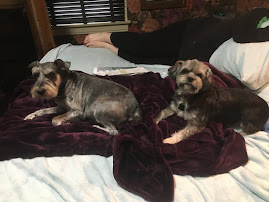
Each year we seem to spend more and more time in the city’s parks.  In my mind, they’re Cincinnati’s greatest asset.  Our Clifton neighborhood has two major parks: Burnet Woods, which is four blocks down the street from us on Ludlow Avenue, and Mt. Storm which is about 1.5 miles northwest of our house at the end of Lafayette Avenue.  Mt. Storm is one of our neighborhood destinations for hikes with the sheepdogs, and we take our grandkids there to play whenever they come to town.  When our son J was a kid, it was a frequent spot for family outings.  We’d grill out there on weekend picnics with friends.  On Memorial Day J would ride on an antique fire truck in the Clifton parade, winding up at Mt. Storm for a community gathering.  In the winter time it offered the best spot in the city for sledding, and we’d take our toboggan there as soon as the first big snowfall came. 


The Clifton skyline in the distance

Mt. Storm is at the top of a hill in north Clifton.  It overlooks Clifton’s skyline in the university area to the east, the Mill Creek valley to the south and west, and Cincinnati’s western hills on the horizon.  In the 19th century the current 59-acre park location was the site of a large estate belonging to Robert Bonner Bowler, a wealthy dry goods businessman and a mayor of the village of Clifton.  Bowler bought the land in 1845 to build a summer residence for his family "in the country."  Bowler’s mansion, with its marble floors and wrought iron curved staircases, turned out to be one of the most elegant homes in America.  Edward, Prince of Wales – later the King of England -- was a visitor to Bowler’s estate.  So were Charles Dickens and numerous other celebrities of the era. 


The Temple of Love

On a trip to Austria Bowler met Adolph Strauch, superintendent of the Vienna Imperial Gardens, and invited him to visit Cincinnati.  When Strauch came to the U.S., Bowler persuaded him to develop his estate.  The Temple of Love, the sole landmark from the original estate that still exists today, was designed by Strauch in 1845.  It once covered a reservoir that supplied water to the estate's orchards, seventeen greenhouses, gardens, and the swan lake.  Strauch later designed Spring Grove Cemetery and became superintendent of Cincinnati Parks.  Bowler's heirs sold the estate to the city of Cincinnati in 1911, and it was officially turned into a public park in 1917.  Though Bowler's house was torn down in 1917, the Temple of Love and Adolph Stauch's landscape designs have been maintained in the park to the present day. The Temple of Love was restored by the Clifton Garden Club in 1938, then again in 1985. 


The Pavilion

The stone Pavilion which overlooks the Mill Creek was designed by Samuel Hannaford and Sons in a "Depression Modern" style and was built in 1935. 


Flower beds

The Clifton Garden Club planted and maintains the flower beds near the Pavilion.  


The wine cellar

Other than the Temple of Love, the only other remaining artifact from Bowler’s estate is this cave and former wine cellar, now filled with cement.  


Mt. Storm woods

There’s a walking trail which descends through the woods on Mt. Storm’s western hillside down to Ludlow Avenue near the police station.    


Mt. Storm playground

Mt. Storm Park today includes a playground and a soccer field.  Our grandson L is coming to town in a week or so with his dad.  We’ll definitely spend some time at Mt. Storm.
Love,
Dave

SOURCES:  www.books.google.com (N. A. Recchie & J T. Darbee, "Cincinnati Parks and Parkways," 2010); www.diggingcincinnati.blogspot.com, "Mount Storm estate and park"; www.dynamic.cinci-parks.org, "Mt. Storm Park"; www.examiner.com, "Mt. Storm Park offers expansive views of the west side"; www.wikipedia.org, "Mount Storm Park"

Thursday, June 6, 2013

Marie Laveau and New Orleans Voodoo


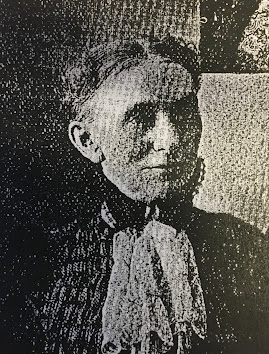
Marie Laveau, Voodoo Queen


Dear George,
Whenever we’re in the French Quarter, we stop in at Marie LaVeau’s House of Voodo on Bourbon St. near St. Ann.  Because of its tawdry location in the midst of stripper bars, etc., some might think of it as a tourist trap.  But, as a visitor to New Orleans from the Great Midwest, I regard it as mostly authentic  – a curious repository of a world that’s far removed from my knowledge and experience.  Marie LaVeau’s is full of otherworldly things – voodoo dolls, amulets, books galore, shrunken heads, good luck charms, tarot cards, candles, etc.  They offer Psychic Services on the spot, and you can arrange for a Voodoo Tour of the French Quarter.  After my most recent visit, I decided I need to get in better touch with the voodoo world.     

Voodoo was imported to New Orleans and Louisiana from Africa, as well as from Haiti following the revolution there.  In the early 1700's most African slaves came to Louisiana from what is now Benin in West Africa.  They brought with them their cultural practices, language, and religious beliefs.  Their knowledge of herbs, poisons, and the ritual creation of charms and amulets became key elements of Louisiana Voodoo.  The ratio of African slaves to European settlers in Louisiana in the 1730's was two to one and the concentration of slave ownership in the hands of a relatively small number of white settlers facilitated the preservation of African culture.  Consequently, African rituals and spirituality did not die out, but instead thrived and merged with the local French Creole culture. 

Belief in spirits is central to Louisiana Voodoo.  Originally the spirits were called by their African names, but, once native languages were replaced by French Creole, the names of Catholic saints were given to the spirits.  African beliefs were very open, and adoption of Catholic practices became central to what is known today as New Orleans Voodoo.  This includes Hail Mary and the Lord's Prayer, baptism, and the sign of the cross.  Early Voodoo frequently involved making and wearing charms for protection, healing, or the harm of others, and rituals frequently invoked protection from Allah, the Christian God, and Jesus Christ.  Voodoo's core beliefs include the recognition of a single God who does not intervene in people's daily lives, combined with a collection of spirits that do preside over everyday events.  The spirits can be kind or they can be mischievous.  Connection with them can be achieved through music, singing, dance, and the use of snakes.  Unlike Judeo-Christian imagery, the serpent in Voodoo represents “healing knowledge and the connection between Heaven and Earth.”  One's deceased ancestors can also affect Voodoo followers’ lives.  

In the 19th century Voodoo queens became central to Louisiana Voodoo.  They presided over ceremonial meetings and ritual dances and earned income by administrating charms, amulets, and magical powers which were guaranteed to cure ailments, grant wishes, or destroy one's enemies.  In the 1830s the most famous of the Voodoo queens was Marie Laveau, who overthrew the other Voodoo queens of New Orleans.  Marie Laveau began as a hairdresser, then became a nurse during the Yellow Fever epidemics.  Consequently she was skilled in medical practice and knowledgeable about the healing properties of herbs.  Specializing in romance and finance, she conducted private rituals at her cottage on St. Ann St. in the French Quarter, performed exorcisms, and offered sacrifices to spirits.  As a devout Catholic, she encouraged her followers to attend Mass.  Even today, thousands of people visit Marie Laveau's tomb in St. Louis Cemetery No. 1 to ask favors and leave offerings.  Her grave has more annual visitors than does Elvis Presley's, and there is a strong movement to have her canonized as a saint.

When New Orleans became a major tourist destination in the 1930s, Voodoo went underground.  So many tourists were asking favors of Voodoo practitioners that the latter withdrew from the public eye.  Others, however, took financial advantage of the situation, charging money, as true Voodoo followers never would, for fake potions, powders, and gris-gris.  Nowadays genuine Voodoo rituals are held behind closed doors and include readings, spiritual baths, special diets, prayer, and personal ceremony.  Voodoo is used to cure anxiety, loneliness, depression, addictions, and other distressing conditions.  Like Marie Laveau once did, Voodoo practitioners today seek to help the hungry, the poor, and the sick. 

There are many superstitions associated with Louisiana Voodoo.  A few of these are:
  • Having a woman visit you the first thing on Monday mornings means bad luck for the rest of the week.
  • If you sweep trash out of the house after dark, you will sweep away your luck.
  • If a woman wants her husband to stay away from other women, she should put a little of her blood in his coffee, and he will never leave her. 
  • You can give someone a headache by taking their picture and then turning the picture upside down. 
On my recent visit to the House of Voodoo I bought an authentic copy of Marie Laveau’s death certificate, dated June 16, 1881.  The President of the Board of Health, Joseph Jones, M.D. certifies that Marie Laveau (Maaries Glafasiasse born Laveau) died at age 98 at her home at 152 St. Ann St. on June 15, 1881, of diarrhea.  When I’m next in New Orleans I plan to find out some more and add to my collection. 
Love,
Dave   

Sources: www.voodooneworleans.com; www.voodooonthebayou.net; www.wikipedia.org ("Louisiana Voodoo", "Gris-gris")

Saturday, June 1, 2013

V and L in the Land of the Dinosaurs


Dear George,
Once upon a time, not that long ago, V and L were playing together at their kitchen table. Everything seemed like a normal day.  But it definitely wasn’t normal.  When they went out to play in the back yard, what did they find but a magical time machine.


L and V sat down in the time machine, and they pressed the button.  In less than the blink of an eye they went back in time two hundred million years.  They were not in New Orleans any more or even in America.  They were back in the Land of the Dinosaurs.


Everything looked different.  The trees were different.  The shrubs were different.  There were many strange animals the children had never seen before.  And there were no other human beings. 


L pointed up in the air.  “Look at that, V,” he said.  


There were gigantic birds flying around.  They were Jurassic birds, and they were almost as big as the children’s house.


V poked her stick into the lake to see what was under the water.


“Oh my gosh!” V said.  “Look at that.”  It was a prehistoric Pacoderm fish.  It was bigger than a hippopotamus.  V pulled her stick out of the water.  She didn’t want to catch that Pacoderm.


Just then a giant dinosaur came up to the children.  Her name was Mrs. Brontosaurus.  Everybody called her Brontie for short.  She said, “Oh children.  Perhaps you can help me.  I have lost the egg that contains my baby.  I am so afraid that the bad Tyrannosaurus will find it and eat it up.  There he is now.”  And she pointed over to the woods.


Tyrannousaurus was a giant dinosaur with very large sharp teeth.  He looked very scary, and he seemed to be searching for something.


V and L were scared of Tyrannosaurus.  But they said to Brontie, “We will help you, Mrs. Brontosaurus.  We will try to find your egg.”  


V and L began looking all around in the fields and the trees and the hedges.


All of a sudden V said, “I’ve found it.  I’ve found Brontie’s egg.”  


The children took the egg and put it on top of a big rock where it would be safe.  Then they went to tell Brontie.


V actually knew some dinosaur language.  So she said to Brontie, “Gesoop klumpowitz brack-brack kebong.”  In dinosaur language this meant: “L and I have found your egg.  It’s over here on this big rock.”


Brontie was completely thrilled.  She said, “You children are so wonderful.  I am so grateful.”


L said, “I am going to sit on this egg until it hatches.”  And that’s just what he did.


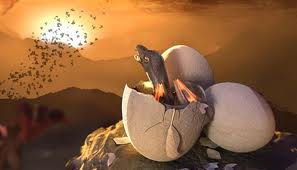
Minutes later the egg cracked open, and out came a baby dinosaur.


Just then who came rushing up but Tyrannosaurus.  He was very hungry, and he was looking for a baby dinosaur to eat.


V pulled out her blowgun and blew darts at Tyrannosaurus.


The darts just made Tyrannosaurus angry, and he charged up and knocked V down with his big nose.


V lay on the ground unconscious.


Just as Tyrannosaurus was about to pick V up with his sharp teeth, L pulled out his magic ray gun.  Pow!  Pow!  Zap!  Zap!  “Take that, you bad dinosaur!” he yelled.


L’s magic bullets knocked Tyrannosaurus out, and he fell to the ground unconscious.


L woke V up, and together they put Tyrannosaurus in a spaceship.  They sent him off to the moon where he could never threaten anyone again.


“We did it!” said L.  “We did it!” said V.  And the children were happy and proud.


V and L watched as Brontie and her baby walked off into the sunset.


Then they got back in the time machine, and – “Whoosh” – they were back home again in New Orleans.


Their mom and dad took L and V to Theo’s for pizza.  They were very amazed to hear about the children’s adventures in the Land of the Dinosaurs.  And they were very happy that they had come back home safely.

And that’s the end of the story.
Love,
“Grandpa” 


G-mail Comments
-Terry O-S (6-7):  Hi David, Just checking to see that this new address is working; I never trust these things!!! I believe smoke signals were probably much more reliable.  Loved reading about your time in New Orleans and your grandchildren adventures.
-Phyllis S (6-3):  Dear Dave,  Charming story.  Loved the photos too. Especially the one of the dinosaur on his/her back.  Ready for June 15th Belleve sale?  Phyllis
-J.M.L. (6-3): That was great dad. Thank you a ton
-Linda C (6-1):  Fabulous David, really fabulous.
-Jennifer M (6-1): That's great.  :-)