Friday, December 5, 2014

Menominee River Pantoums


Dear George,
In our poetry writing class we learned about a type of poem called a pantoum.  Pantoums are based on a Malayan form that goes back to the fifteenth century.  They’re composed in a series of four-line stanzas.  Lines 2 and 4 of the first stanza become lines 1 and 3 in the second stanza, and so on.  At the end of the poem lines 1 and 3 are repeated in the final stanza.  The lines may or may not rhyme.  The format for a five-stanza pantoum would look like this: ABCD BEDF EGFH GIHJ IAJC.  Baudelaire and Victor Hugo were among writers who popularized the pantoum in the nineteenth century, and Anne Waldman and Donald Justice are among contemporary American poets who have written pantoums.  Pantoums move along slowly, and, because of their interlocking pattern, the lines seem to fill the poem with echoes.

I tried writing a couple of pantoums, and it’s not easy.  Lines not only need to rhyme and connect with one another within a stanza, but they also have to then fit with new lines in the next stanza, and finally come together at the end.  For pantoum topics, I picked my childhood experiences growing up on the Menominee River in Michigan’s Upper Peninsula.  I’ve written various stories about my Menominee childhood before, but putting these experiences in pantoum form gives them a distinct flavor.  Here’s how my Menominee River pantoums are coming along.  (As far as I can tell, one never actually finishes a pantoum.)
Love,
Dave  


1.  River House

We moved to the river in forty-six
There were no other children nearby
The field was home to horseflies and ticks
At dusk we could hear the loon cry

There were no other children nearby
We lived on a long gravel road           
At dusk we could hear the loon cry
My grandfather built our abode

We lived on a long gravel road
The oaks were sixty feet high
My grandfather built our abode 
It opened to the river and the sky

The oaks were sixty feet high
Our house was of Norway pine
It opened to the river and the sky
Close friends came to talk and to dine

Our house was of Norway pine
My mother cooked whitefish and liver
Close friends came to talk and to dine
Mallard ducks flew in on the river

My mother cooked whitefish and liver
We had no locks on our doors
Mallard ducks flew in on the river
Four foot snakes lived under our floors

We had no locks on our doors
We climbed on the willow tree
Four foot snakes lived under our floors
My sister got stung by a bee

We climbed on the willow tree
We played on our basketball court
My sister got stung by a bee
In the woods we built our own fort

We played on our basketball court
We had acorn fights in the yard
In the woods we built our own fort
Swimming the river was hard

We had acorn fights in the yard
We shot cans with the twenty-two
Swimming the river was hard
The dogs got raw bones to chew

We shot cans with the twenty-two
My mother grew violets and lilies
The dogs got raw bones to chew
We children fell prey to the willies

My mother grew violets and lilies
The trillium bloomed in the spring
We children fell prey to the willies
My dad built my sister a swing

The trillium bloomed in the spring
The field was home to horseflies and ticks
My dad built my sister a swing
We moved to the river in forty-six


2.  The River

We lived far out on the River Road
Pig Island was across the way
Down the river the flotsam flowed
We swam from our yard every day

Pig Island was across the way
We took like fish to the water
We swam from our yard every day
My brother trapped muskrats and otter

We took like fish to the water
Our mother watched from the lawn
My brother trapped muskrats and otter
We might spot a doe or a fawn

Our mother watched from the lawn
Fishermen passed by the shore
We might spot a doe or a fawn
At sundown the herons would soar

Fishermen passed by the shore
The bloodsuckers stuck to our toes
At sundown the herons would soar
I sprayed my brother with the hose

The bloodsuckers stuck to our toes
We'd wade near the bank with our dogs
I sprayed my brother with the hose
We built a crude raft from dry logs

We'd wade near the bank with our dogs
Indian Island was our family trip
We built a crude raft from dry logs
We sailed forth in our pirate ship

Indian Island was our family trip
Dragonflies rode on our boat
We sailed forth in our pirate ship
We'd jump into the water and float

Dragonflies rode on our boat
The snapping turtles made us wary
We'd jump into the water and float
The river was thrilling but scary

The snapping turtles made us wary
Great hawks swooped down from the sky
The river was thrilling but scary
We feared there was quicksand nearby

Great hawks swooped down from the sky
Down the river the flotsam flowed
We feared there was quicksand nearby
We lived far out on the River Road


3.  Winter

Chipmunks gathered nuts from the cedar
The north winds blew in with a squall
My mother fed birds at her feeder
The snowdrifts grew massive and tall

The north winds blew in with a squall
The deer came to munch the dried weeds
The snowdrifts grew massive and tall
Tiny chickadees searched for their seeds

The deer came to munch the dried weeds
The whole of the forest seemed dead
Tiny chickadees searched for their seeds
I tramped through the woods with my sled

The whole of the forest seemed dead
We fished through the ice on the river
I tramped through the woods with my sled
The wind from the bay made us shiver

We fished through the ice on the river
The icicles stretched to the ground
The wind from the bay made us shiver
The night sky was black with no sound

The icicles stretched to the ground
Dad cut down a tall Christmas spruce
The night sky was black with no sound
My mother made ham and a goose

Dad cut down a tall Christmas spruce
Our cousins arrived Christmas eve
My mother made ham and a goose
I played checkers with Peter and Steve

Our cousins arrived Christmas eve
We followed deer tracks in the snow
I played checkers with Peter and Steve
The fireplace gave off its glow

We followed deer tracks in the snow
By March the ice started to melt
The fireplace gave off its glow
The river was teeming with smelt

By March the ice started to melt
We called it Chinese Bells Day
The river was teeming with smelt
The skies were milky and gray

We called it Chinese Bells Day
A robin appeared on the lawn
The skies were milky and gray
Spring opened her eyes with a yawn

A robin appeared on the lawn
Chipmunks gathered nuts from the cedar
Spring opened her eyes with a yawn
My mother fed birds at her feeder


Sunday, November 30, 2014

Happy Thanksgiving


Dear George,
We have lots of things to be thankful for this Thanksgiving holiday season, but none moreso than our sweet NOLA family: our son J, our daughter-in-law K, and our granddaughter V and grandson L, both now six and first-graders in their Spanish immersion school.  This year K was out of the country over Thanksgiving, and J drove up with the kids for the holiday.  They were here from Sunday afternoon to Saturday morning, and we did lots of the kid/family stuff available in the city.  Here’s a photo montage.


We spent much of the day on Monday at the Children’s Museum at the Union Terminal Museum Center. The Children’s Museum is always astonishing to me.  Hundreds – maybe thousands – of three to seven-year-olds running about madly and  engaging in one pursuit after the next.  V and L have seemingly endless energy.  They climbed in caves, slid down slides, made simulated meals, shot balls up air pipes, scooped up plastic blocks, splashed in the water, built towers and arches, and did umpteen other enjoyable activities.  At the end of the day we saw an IMAX movie on Jerusalem before heading home for Katja’s dinner.  


On Tuesday morning Katja took V to the nail salon in Oakley where V had her nails done in shellac (so they’ll last a long time).  It was exciting for V and her grandma.  Meanwhile, J, L, and I went to the Goodwill and got L some winter clothes to counteract our thirty degree temperatures.


Tuesday afternoon we went to the zoo.  L liked the diamond-backed rattlesnake the best; V liked the fennec fox; J admired the alligators; I was partial to the fruit bats.  Everyone enjoyed the manatees, the insectarium, the black bear, and the elephants.    


On Wednesday we went back to the Museum Center for opening day of the Mummies of the World exhibition.  Billed as the world’s largest exhibit of mummies, it was absorbing.  They had mummies of cats, rabbits, ancient Egyptians, nineteenth century Hungarians, medical specimens, people who died in bogs or deserts or hot attics, and many others.  It was very unique and eerie, and the children were fearless.    


After lunch on Wednesday we went over to the Eden Park Overlook.  Lots of play on the playground, checking out the ducks and the statues, climbing on rocks and up the ruins of the reservoir.  The Romulous and Remus statue was J’s favorite in his childhood, and now it’s his kids’ too.  


I guess the children don’t have infinite energy.  After five or six hours of running and jumping around, exhaustion sets in.  That’s when good dads carry about a hundred and ten pounds of children across the field at the Eden Park reservoir.  


We stopped at Target on the way home where J treated each of the kids to their choice of a fancy Lego product.  Katja was fascinated with how focused and industrious the children were in working on their respective projects, and how they were able to do their complicated tasks with a minimum of adult assistance.  


Sam and Ellie Minkarah and Donna Durham and her daughter Rebekah joined us for Thanksgiving dinner.  Donna and Rebekah brought a beautiful poinsettia, and the Minkarahs brought a wonderful piano for the children that gets spread on the floor and plays notes when stepped upon.  The children were engrossed.   


I helped the children put on their annual three-act play about the first Thanksgiving.  V and L chose their own Indian names this year: Princess Bunny and Growling Lion.  As pilgrims they starred in their roles as Miles Standish and Priscilla Mullins.  The actors took a bow, and the audience was very appreciative.  


On Friday we took the children on a snow tubing expedition at the Beach Waterpark.  They’d used manufactured snow to create a 400-foot run.  V and her dad tubed down the hill for at least an hour while L and I retired to the car and talked about childhood and life.  


A product of his Cincinnati upbringing, J is still a Skyline Chili addict, and he is teaching his children about our local cuisine.  L prefers a three-way of chili, spaghetti, and beans, while V like the Skyline hot dog in a bun with grated cheese.  


Friday night we returned to the zoo for the annual Festival of Lights.  It’s a true extravaganza.  It must take a hundred thousand hours to set up the entire zoo with strings of lights.  The kids had pizza, followed by S’mores, and we were just in time for a truly remarkable holiday puppet show in the darkened amphitheater.  


Katja made Swedish pancakes and bacon on Saturday morning to give everyone strength for their two-day journey home.


The children held their last light saber duel as Star Wars battlers. 


Then it was time for a family photos and a teary-eyed departure. We talked about doing a new play next year and writing a story book together too.  The children are more grownup and more fun every time we see them.  Things are quieter at our house, but there’s a lump in my throat from a vacuum that won’t be filled again for some months.  Fortunately, we have lots of memories to enjoy.
Love,
Dave


G-mail Comments
-Gayle C-L (12-1):  Dave,  What a beautiful family !! The children have grown up !!!  Nice to see... Feels like I was there:))  Glad you all had a great Thanksgiving...  Love to all.....    G
-Jennifer M (12-1): You did so many things! What a wonderful trip! I look forward to talking soon.


Sunday, November 23, 2014

Menominee's Infamous Baroness

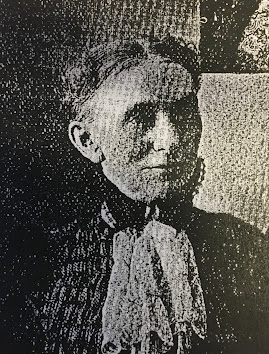
Baroness May Dugas de Pallandt van Eerde (1901)

Dear George,
My hometown of Menominee, Michigan, has a remarkable history, and a surprising amount of information is available online.  For some time I’ve been interested in reading about various Menominee citizens dating back to the lumber boom era of the late 1800’s.  None is more colorful and intriguing than the story of May Dugas, later the Baroness de Pallandt van Erde.  She was described by a Pinkerton detective as “the most dangerous woman in the world.”  (1) [note: numbers in parentheses refer to sources at end.]  The Baroness’s life history was recorded in a series of Chicago Tribune newspaper stories written by reporter Lloyd Wendt and published in 1946 and 1947.  My summary here draws primarily from the Tribune articles, supplemented by other sources given at the end. 
  
May Dugas was born in Eau Claire, Wisconsin, on May 23, 1869.  Her parents, Eugene and Sophie Dugas, were French--Canadian immigrants, and they had two sons in addition to May, Paul and Eugene.   By 1880 the family had moved to Muskegon, Mich., where May’s father was a saloonkeeper.  He died about 1884, and May then moved with her family to Menominee.  May reportedly was strictly reared and was known as an excellent student at Menominee High School.  After graduating she left her family and moved on her own to Chicago.  Nothing is known of May's first months in Chicago, but she soon became a prostitute in Carrie Watson's bordello in Chicago’s levee district, taking the name of Pauline Davidson.   (1, 13)

In the late 1800’s Watson’s brothel at 441 S. Clark St. in Chicago was one of the best known houses of ill repute in the world.  The establishment was famous for its trained parrot who greeted incoming patrons at the front door by saying, “Carrie Watson – come in, gentlemen.”   Watson typically employed about 25 well-dressed, well-mannered, and highly attractive ladies of the night who catered to an upper-class clientele.  The house featured a bowling alley, a billiard room, five parlors, and a three-piece orchestra.  (11)

"Pauline" was beautiful and enticing to men, and, with the collaboration of a piano player friend in the brothel, she began blackmailing some of her wealthy clients in exchange for her silence about their activities.  In a short time she had accumulated enough money to buy a business in Menominee.  She sent her pianist accomplice there to establish himself as a legitimate businessman.  He quickly became successful and wellknown throughout the U.P.  Pauline, meanwhile, was taking university courses in psychology, French, and business law, to enhance her abilities to attract rich and powerful men.  She was considered a brilliant student in her studies.  (1)

By all accounts, May Dugas was intelligent, beautiful, polished, and had a remarkable ability for entrancing and entrapping upper class men.  Her long-time friend, Miss Frank Gray Shaver, gave this description: "She was a woman of beautiful face and figure, attractive and charming, always well and becomingly attired.  She had much ability and great magnetic power, a strong will and keen wit.  She was a delightful entertainer."  (1)   

Pauline soon became a favorite at society balls and parties in Chicago.  She was accepted by the city’s young wealthy social set, and two daughters of an automobile manufacturer sponsored her wherever she went.  A young man from a very rich family fell in love with Pauline and proposed marriage, but his father hired a Pinkerton detective, Joe Edwards, to investigate her.  Edwards set up a scam to trap her into illegal dealings, and, when Pauline fell for the trick, he ordered her to leave town.  Pauline did so, but not before securing $20,000 from her potential fiance's father to insure her silence.  Changing her name to Pauline Townsend, she left for New York City and then to brothels in Portland and San Francisco.  Arrested for attempting to rob a rich suitor in San Francisco, Pauline seduced a jailer and escaped after a single night in jail, setting off by ocean liner for China.  (1, 3)  

In Shanghai Dugas had a love affair with a British mining executive and blackmailed him for $25,000.  Then she took up an affair with a young American in Tokyo who spent enormous sums on her.  When Joe Edwards, the Pinkerton detective, discovered her and intervened, she left the young American.  He died several months later, presumably of suicide resulting from heartbreak, though one of the coroners concluded he had been murdered.   (14)

In about 1891 May Dugas met Baron Rudolph van Eerde in London, and they married in 1892 at his estate in the Netherlands.  May Dugas was now a Baroness at age 23.  The couple divided their time between Castle Eerde in Holland and London, where the Baroness enjoyed life in the royal and high society circles.  Tiring after several years from her long absences, the Baron eventually pressed for a divorce, and, though the Baroness would not agree to a divorce, they signed a deed of separation in 1899 which provided for her annual support.  When the Baron died, the Baroness inherited his fortune.  She also inherited a family fortune from her sister-in-law, the Baroness Groeninx van Zoelen of Amsterdam.  From all her various blackmail, fraud, extortion, inheritance, and business ventures the Baroness earned $2 million over the course of her career (about $12 million in today’s currency).  She owned property in England, Australia, and the United States, as well as country places in southern France, in Algeria, and near Paris.  Menominee remained her U.S. home.  (7)

Around the turn of the century, May Dugas’ brother Gene arrived in Menominee.  According to a New York Herald article (12), Gene was a handsome dark haired young man who wore big city clothes and an elegant assortment of diamonds.  “He didn’t seem to have anything to do particularly, except ramble around, which he did to a vivid perfection.”  About a year later, his sister – the Baroness de Pallandt – arrived on the Copper Country Limited 10:42 A.M. train.  The Herald wrote, “She was dressed as they do not dress ordinarily in Menominee, and she carried a few jewels that made the collection worn by Mr. Dugas, who met her, look like a modest shroud.”  Her brother was waiting her at the Menominee depot in the Baroness’ shiny Renault, driven by her liveried chauffeur who she had sent ahead.  The Baroness declined social invitations except for a few from the city’s elite.  Menominee women were thrilled by the arrival of nobility to their town, though “they quickly discovered that the Baroness regarded them as mere peasantry” (5)  Every day she walked down Ogden Avenue, through the Courthouse park and to Main St. (now First St.), wearing different Parisian dresses and new jewels.  She regularly spent time in Menominee for the next ten to fifteen years, living with her family and looking increasingly elegant.  When she was in town, local dressmakers gathered around the Courthouse and in front of a nearby furniture store in the morning so they could get fashion ideas when the Baroness walked by.  (12)

The Baroness had bought a large home in Menominee for her mother at the corner of Stephenson Ave. and State St. (now 14th Ave. and 7th St.) and had had it rebuilt and furnished at a cost of $30,000 (about $230,000 in today’s dollars).  The house was known locally as the “mystery palace” or the “house of mystery.”  Her brothers Paul and Gene lived there as well as her mother and an older man named Joseph King who later claimed to be Mrs. Dugas’ common law husband, and it was the Baroness’ home when she was in the United States.  The house reportedly had secret passageways and panels, was filled with exotic artifacts from around the world, and had a tunnel that connected the house with the servants’ quarters and stables in the rear.  (8) (4)  The Baroness hired a Menominee lawyer, Miss Frank Gray Shaver, to represent her American interests, and she also enlisted a young woman named Belle (Daisy) Andrews in Chicago to be her companion.  Miss Frank Gray Shaver moved into the Dugas home on Stephenson Avenue where she assisted members of the family in whatever they needed.  (5, 9) 

Though there was considerable wealth in Menominee due to the lumber boom, the Baroness confided to a friend that she found the town stuffy.  When a high school acquaintance mentioned her early boyfriend, Fred Stephenson, who was an heir to the Stephenson lumber fortune, the Baroness replied, “Poor Fred, he couldn’t buy my shoes.”  (5)  After her arrival in Menominee she bought an automobile agency for her brother Paul, a quiet man who preferred hunting and fishing to business.  For her favorite brother Gene, she bought a resort hotel in Hot Springs, Arkansas.

Rumors about the Baroness circulated in Menominee.  Some wondered if she were really a baroness.  Though her brother had an apparent local accent, the Baroness spoke with a European accent which intimated nobility.  On one occasion a visitor from Chicago told several prominent people that May Dugas had been a prostitute in the Carrie Watson house in Chicago.  (8)

When May learned that Miss Frank Gray Shaver was about to inherit $375,000 from her Pittsburgh father’s estate, she invited Frank to accompany her on a world tour, and Frank, thrilled by the Baroness’ attention, signed over 200 shares of Westinghouse stock to her and made the Baroness the beneficiary of her will.  According to Lloyd Wendt, when May left for Hot Springs “the Menominee housewives sighed their relief.  At least they could cease watching their husbands and get some attention from the dressmakers the Baroness had been monopolizing.”  (5)     

Eventually trouble for the Baroness developed in Menominee.  Miss Frank Gray Shaver had spent most of her $375,000 fortune on her, and she finally began to realize that she had been swindled by the woman she had adored for years.  She told a Menominee friend, “The Baroness de Pallandt is nothing but a street walker.”   Miss Shaver employed Menominee attorney Alvah Littlefield Sawyer and his son, Meredith P. Sawyer, as her counsel in a lawsuit in Menominee’s circuit court.  (8)

Miss Frank Gray Shaver had come to Menominee in 1902 after completing her law degree at the University of Michigan.  She selected Menominee because she enjoyed hunting and fishing.  According to Lloyd Wendt, she was "a big, hearty, masculine sort of woman, affable and outspoken, fond of outdoor sports" (9).  She was very popular in Menominee’s social circles.  Though it was extremely rare for women at that time, she had run for political office a few years before the trial and had nearly won.  She proclaimed in her campaign speeches that she was "all wool and a yard wide."  (9)

The Baroness' trial was held on a snowy day in January 1917 in the Menominee courtroom of Judge Richard C. Flannigan.  The courtroom was packed with big city newsmen and women from Menominee and Marinette.  The Baroness who had traveled from California a few days earlier brought along her pet bulldog, Tokyo, who wore a red coat with a fur trimmed collar.  The Baroness wore a Scottish tweed suit and a heavy veil "to keep the vulgar people from looking at me" (9). 

Miss Shaver testified that she had paid the household expenses for the Dugas family in Menominee and, to save the Baroness from being victimized by unscrupulous males, had bought her numerous jewels: a string of pearls ($15,000), a diamond ring ($6,000), a 17 carat white diamond ($12,000), a diamond pendant ($8,000), a platinum neckpiece containing 688 tiny diamonds ($12,000), and a black pearl worth $50,000.  When Miss Shaver accompanied the Baroness on her tours, she paid all the bills for the two, and she signed over stock shares to provide the Baroness with annual dividends.  Despite these and many more gifts and financial contributions, Miss Shaver testified that she was treated atrociously by the Baroness's brothers and was eventually forced out of the Stephenson Avenue household.   Miss Shaver, however, hadn't blamed the Baroness and, in fact, continued to travel with her and provide gifts and pay expenses.  Ultimately Miss Shaver determined that the Baroness had acted in bad faith, and she had brought her lawsuit to recoup a portion of her losses.  (9)

When the Baroness took the stand at the trial she admitted receiving many gifts from Miss Shaver, but she denied that any fraud had been involved or that she owed Miss Shaver any money.  In his cross-examination attorney A.L. Sawyer brought up her many romantic trysts with wealthy men and her association with the brothel in San Francisco.  Overwrought, the Baroness collapsed on the stand, and the trial was temporarily halted.  The Baroness never did return to the stand, and the jury found in favor of Miss Shaver, awarding her a $70,000 judgment.  To avoid paying, the Baroness attempted to take an oath of poverty, but she eventually repaid $13,515.  (9)

After the Menominee trial, the Baroness renewed a romance with Lord Powerscourt Allen, a member of a prominent Irish family, and she returned to Europe where she was welcomed by royal society.  Less is known of the Baroness’s later years.  She adopted a baby boy in 1917, naming him John Andrew van Eerde, and he traveled with her in summers in Europe, graduated from Harvard, and became a Professor of Romance Languages at Lehigh University.  The Baroness returned from Europe to seek medical treatment for cancer in New York City, and she died there on March 10, 1937.   She is buried in the Celebrity Catholic Cemetery in Westchester County.  (14)

My dad was a young kid and my grandparents were in their early 40’s at the time of the Baroness’s trial.  Living there, I’m sure they were well aware of the Baroness, and, who knows, they might even have met her.  In any case, it’s quite astonishing how May Dugas proceeded from her humble background in Menominee to the social circles of the royalty and high society in Europe and Asia.  Her methods may have not been conventional, but she was clearly one of the most extraordinary people to have come from our town.  
Love,
Dave

Sources: (1) www.archives.chicagotribute.com, "Queen of the Blackmailers" (11-10-46, pp. 8, 21; by Lloyd Wendt); (2) www.archives.chicagotribute.com, “Siren’s Song: Blackmail” (11-24-46, pp. 12, 21); (3) www.archives.chicagotribune.com, “Most Dangerous Woman in the world” (12-1-46, pp. 7, 22); (4) www.archives.chicagotribune.com, “The Pearls of Pauline” (12-8-46, pp. 8, 21); (5) www.archives.chicagotribune.com, “Blackmail and the Baroness” (12-15-46, pp. 9); (6) www.archives.chicagotribune.com, “Siren South of the Border” (12-29-46, p. 69); (7) www.archives.chicagotribune.com, “The Baroness’ past is presented” (1-5-47, p. 11);  (8) www.archives.chicagotribune.com, “Pretty Petty Swindler” (1-12-47, pp. 10, 23); (9) www.archives.chicagotribune.com, “Curtains for a Con Woman” (1-19-47, pp. 9, 20); (10)  www.archives.chicagotribune.com “Syndicate of Sinners” (1-26-47, p. 10);
(11) www.chicagocrimescenes.blogspot.com, “Carrie Watson – come in, Gentlemen”; (12) www.fultonhistory.com, “Menominee gasps as its Baroness mystery clears” (NY Herald, 1-22-14, p. 22); (13) www.goodreads.com, Photo of Baroness de Pallandt from “The Commercial Advertiser,” New York, Aug. 10, 1901; photographer: Alme Dupont; (14) www.wikipedia.org, “May Dugas de Pallandt van Erde”