Friday, June 26, 2020

Embracing Dementia


Dear George,
Another of my early-eighties birthdays is coming up soon.  I don’t look forward to it that much.  When I was a kid between eight and twelve, I was always excited about becoming a year older.  Nowadays I wish I were going in the opposite direction.  The two birthday aging things on my mind are death and dementia.  Neither are popular with the general public.  Death sounds the worst, but, when you think about it, it has its advantages.  You’ll definitely never be bored or irritated again.  I think that dementia gets a particularly bad rap.  I’ve been mulling it over ever since Katja asked me to bring the laundry downstairs and I brought down two pillows instead. 

My main thought is that dementia is not unique to old age, but really it’s around from the very beginning and persists throughout most of life.   You can see this immediately by going to the zoo and looking at babies in strollers. We all, of course, begin life as babies, and it’s interesting to note that they have practically no minds at all.  They gurgle, drool, pass gas, suck their thumbs, scream, cry, and poop and pee.  That’s about it.   When we think of the so-called symptoms of dementia (e.g., confusion, inability to comprehend things, difficulty learning new tasks, mood swings, poor judgment, disorientation, inability to concentrate, difficulty of thinking of words, risk of falling down, etc.), we are essentially describing what babies and toddlers are like for the first several years of life.   This suggests to me that dementia is elemental human nature.  On a 0-100% scale, I would say that babies get a dementia score of 98%.

Children, of course, are taught a lot of things as they grow older.  They still, though, remain mostly demented.  When I think of the highlights of my childhood from, say, ages five to twelve, what comes to mind is praying that the Easter bunny and the Tooth Fairy will come, not stepping on cracks which would break my mother’s back, setting the living room curtains on fire, and stealing my brother’s Halloween candy.  Based on such experiences, I’d estimate that school-age children are about 80% demented.
Teenagers aren’t much better.  They’re taller and possess better verbal skills, but they’re not much oriented than 7 or 8-year-olds.  As an adolescent, I mainly remember being overwhelmed by social anxiety, alienated from my parents, subject to mood swings, perplexed in relationships with peers, beset by fantasies, obsessed with trivialities, and worried about psychic survival.  Dementia level?  Maybe 70%. 
Adulthood is usually seen as the peak of mature mental functioning, but that’s a myth.  Society demands a certain amount of rationality and logic in the workplace, but, below that surface level of conformity, we remain largely motivated by impulse and craziness.  This is what Freud meant by the primacy of the Id.  We just keep our real selves hidden away, though our demented selves regularly break through.  At work, dementia = 45%.  The rest of the time, 60%.    
All of this changes in our older years when society kicks us out of the workplace.  Rules, roles, and social expectations gradually recede, and we become free for our real selves to emerge – silly, confused, emotional, and bumbling.  Though we get distressed about this, we could also think about it as a normal and liberating state of affairs.  Dementia, creeping up to 75% or even more.      
The conclusion seems clear.  Rather than resisting or denying dementia, we ought to recognize that it’s actually our natural state throughout our lives and embrace its presence.  Being demented, from this perspective, is the ultimate form of self-realization.  Having resolved this in my mind, now I have to think a little further about death.  Given my demented mind, that shouldn’t prove difficult. 
Love,
Dave


Wednesday, June 3, 2020

Excerpts From My Coronavirus Journal


Dear George, 
I’ve had lots of time on my hands since retiring, but now, because of the pandemic and stay at home orders from the governor, it is virtually endless.  One of the things I’ve done to keep productive is to start a daily Covid-19 journal.  Here are some excerpts.
Love,
Dave


Thurs., Apr. 16, 2020.
It’s been 45 days since Governor DeWine ordered schools closed and 25 days since the Ohio Board of Health issued a stay-at-home order.  Job losses in the state have surpassed 855,000, and, as of today, there’ve been 389 reported deaths (an under-estimate of unknown magnitude).  As retirees, Katja’s and my situation is not nearly as catastrophic as that of millions of others.  We’ve pretty much stuck to the stay at home rule and have lost, at least temporarily, most of our main life pleasures: OLLI courses at the university, eating out, movies, concerts, art museums, the zoo, library visits, sports events (NBA, NCAA, French Open, Wimbledon), my line dancing and zumba classes, Katja’s shopping expeditions, our respective writing groups, and social gatherings of all sorts.  We cancelled a family trip to New Orleans and will almost surely miss a long-expected July trip to visit loved ones in California.  It’s unknown when we will be able to see family members again.  Perhaps most of all, it’s unclear when our community and society might return to any semblance of normality, or whether this will even happen at all during our lifetimes.  Too much to contemplate. 

Sun., Apr. 19, 2020
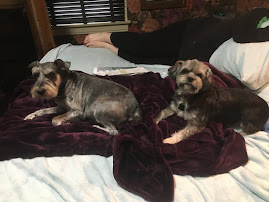
We and the doggies, Iko and Li’l Paws, actually slept in till 11 a.m. this morning.  Iko had climbed onto my chest and was sleeping there, while Li’l Paws cuddled next to my rib-cage.  J brought the dogs up from New Orleans one month ago and left them in our care while he and his family are in northern California.  It’s been a blessing for us.  The dogs fit right in, and Katja and I are happy to have them.  Something brand new at a time when the pandemic has taken so many things away.  I do four walks and 12,000 steps a day with Iko and Li’l Paws, plus lots of rough-housing and petting.  An unexpected benefit is that my blood pressure has dropped from 140/85 to under 120/80.   

Wed., Apr. 22, 2020 
More people in our Ludlow Ave. business district are wearing masks.  I’m going to guess 50%, more for solo walkers, less for couples.  I’ve taken to wearing my blue bandana when I go into stores, but pull it down when I’m out on the sidewalk where I maintain physical distance.  I find all of this distressing.  In the beginning days of the pandemic, my sense was that strangers were being more friendly to one another, exchanging smiles and hellos, encouraging words.  Now people spread as far apart as possible and avert their eyes.  We are all turning into alien beings. 

Wed., Apr. 29, 2020 
It’s well-known that the novel coronavirus is much more lethal for elderly people.  Age, however, factors in beyond the prospect of dying from the virus.  At age 82 we might have up to ten years or more left to live (if we’re lucky).  However, are our lives going to be radically diminished because of the lingering pandemic?  Will we be wearing masks and keeping away from others in public for the rest of our years?  Avoiding stores and restaurants?  Right out our quality of life is seriously diminished.  I’m hopeful we’ll be able to recover some portion of it without having to risk illness and death.   

Fri., May 1, 2020
I woke up this morning with a feeling of dread.  Laying there, it dawned on me that it had to do with social isolation.  Up until recently I’ve been active member of five groups that met weekly: a writer’s group, two writing classes, two group exercise classes.  Plus going to a variety of events when we were part of big groups, e.g., concerts, musical theater, opera, art exhibitions, the zoo, etc.  Now all of that’s gone, at least for the foreseeable future, and Katja and I spend nearly all of our time by ourselves.  I never think of myself as a particularly social person, but now even I am feeling socially deprived.  

Tues., May 5, 2020
Katja’s crown on a front tooth came out, and the dentist’s office, just reopened, was able to see her the next morning.  New age dentistry was upon us.  We waited in the car, rather than the waiting room, till a masked staff member came out to escort Katja in while maintaining a six-foot distance.  Katja wore her mask too.  They took her temperature, asked her questions, and she cleaned her hands with Purell, washed her hands in the sink, and soaked them in Lysol for 30 seconds.  The dentist in his protective equipment fixed her up in half an hour.  We headed for home, nervous about having been out in the contaminated world.  

Thurs., May 7, 2020
What groups are experiencing disproportionate deaths during the pandemic?  People over 65, particularly those with underlying medical conditions like heart disease or cancer.  Health care workers.  African-Americans, Hispanics, Native Americans.  People in nursing homes, prisons, group homes, immigrant detention centers.  Lower income people and/or those lacking health insurance.  The homeless.  Meat-packing employees.  People who live or work in crowded, high-density locations.  For the most part, the disenfranchised members of our society.  

Sat., May 9, 2020
Usually I try to find something humorous when I meditate on life, but, along with climate change and the Trump presidency, I can’t find anything amusing about the pandemic.  I googled “COVID-19 jokes” and was surprised to get a number of hits.  Most of the jokes were mildly humorous at best.  Here is my favorite”  “So far my self-isolation life is remarkably similar to my normal life.”  (Too true.)  

Tues., May 12, 2020
Katja is off to her doctor’s appointment to check out severe pains in her hand.  She was excited about going, and I was mostly nervous.  Katja said she would wear her gloves and mask and would be fine.  She said the doctor’s office wouldn’t be open if it wasn’t safe.  I thought to myself that the doctor’s office is opening even though it isn’t safe.  Perhaps I’m overly cautious.  Or maybe Katja is overly risky.  Or some combination of the two.  

Wed., May 13, 2020
Our local newspaper carried the stupidest article about pets and the coronavirus today.  The general theme was that the coronavirus is very upsetting to dogs and cats.  They’re not used to having humans home all day, and it messes up their routines, especially sleep patterns.  Also getting petted so much is stressful and makes pets cranky.  They can get injured from jumping around and playing so much.  Because they’re not confined, dogs and cats are getting into more fights.  I say all this is hogwash.  Our visiting dogs love having the humans with them all day, and they can’t get petted enough.  They don’t get injured jumping and playing (though their humans are more likely to).  All in all, the pandemic is like utopia for pets.  

Mon., May 18, 2020
Today Katja and I took a trip to the Party Source in Northern Kentucky, billed as the nation’s largest liquor store.  It is big, like a Kroger super-store.  But talk about nonessential trips.  We only had three bottles of expensive whiskey left in the house, so that was a seemingly good reason to go.  Sort of.  I picked up a cart at the entrance, and then an employee wiped down the handle with disinfectant.  A stupid system since I was already infected from touching the cart.  I bought more whiskey than usual, either to delay a next trip or to drink more whiskey because of the pandemic.  If we wind up infected, at least we can stay in a stupor.   

Sun., May 24, 2020 
So, does the coronavirus have a silver lining?  I’ve been trying to think of positives that have resulted.  The most obvious is that we have gotten to have two sweet dogs in the house that otherwise wouldn’t be here.  Katja and I necessarily spend more time together, and I think we’re more positive to one another as a consequence.  I’m more in touch by phone and text with several loved ones.  I watch more funny sitcoms on Netflix.  Katja has been cooking up a storm, lots of delicious meals.  I’m more careful about staying well.  On the other hand…   

Tues., May 26, 2020
Our streets have been near-empty at night since the pandemic started, and I walk the dogs in the business district because at least it is well-lighted.  Tonight Lil Paws barked at an apparent homeless man who stepped out of an alley, and he started following us, screaming gibberish at the dogs and waving his arms.  Both dogs started barking wildly and strained at the leash to get at him, which only made the homeless man more agitated as he followed us.  I pulled the dogs into the street and over to the opposite sidewalk.  The homeless man stayed on his own side, but continued to shout obscenities at the top of his voice.  The near-violent episode still makes me uncomfortable.  

Mon., June 1, 2020
Kroger is having its current Lean Cuisine sale (5/$10), so I decided to stock up.  I skipped our nearby Clifton store because I read that three employees had the coronavirus, and I skipped the second closest store in Corryville because Katja said hardly any of the customers wear masks there.  Instead I drove 10 miles to the Harrison Avenue Kroger store on the West side.  About half the customers were wearing masks, and half weren’t.  As an in-store mask wearer myself, I identified with the former group and looked somewhat askance at the latter group.  Though I wasn’t fanatic about it, I think wearing masks when in close proximity indoors is  considerate.  So it was easy to tell the good guys from the bad guys.  In my mind, I imagined that the non-mask-wearers were Trump voters.  Just another example of our society becoming polarized.        

Wed., June 3, 2020 
I can’t believe that it’s already June.  Dr. Amy Acton issued a stay at home order for Ohio on March 23, and we haven’t eaten out or gone to any sort of event since that time.  72 days of “sheltering in place.”  All these days run together, and, even though the reopening process has begun, it’s going to be some time before we’re comfortable venturing out.  


Saturday, May 23, 2020

Shadormas For Our Times

Dear George,
I don’t intend to make this a coronavirus blog, but it’s all that’s on my mind these days.   Mostly I’ve been working on a series of shadormas about the pandemic.  A shadorma is allegedly a medieval Spanish poetic form that consists of 6 lines with 3/5/3/3/7/5 syllables per line.  One shadorma can be a short poem, or you can string a series together as I’ve done here.  I say allegedly Spanish because “shadorma” is not a Spanish word, and no one has ever discovered a Spanish poem from the Middle Ages that was written in this form.  One skeptic speculates that shadormas were invented in recent years by a postal clerk who had too much time on his or her hands.  Anyway, they are enjoyable to work on.  Usually I prefer to write light, airy poems, but the dark side prevailed this time.  It is what it is.  I wonder if this is how others feel.   
Love,
Dave 

Shadormas For Our Times 

Nasty beast
This COVID-19
Satan’s spawn
Spread by wind  
Racing through the populace
Hunting you and me 

Wuhan first
And then Seattle
World on fire 
Lethal scourge 
A lucky few will escape
A roll of the dice   

Job losses
Businesses kaput
Store meltdowns
Bankruptcy
Recovery takes ten years 
Most will not survive 

Stick to rules
We’ll flatten the curve
Hospitals
In distress
Doctors, nurses lacking gear
Medical war zones 

The elders
Nursing home patrons
Prisoners
Hispanics
African-Americans
COVID’s after them 

Stay at home
The world is closed down  
Malls shuttered
No pro sports
Large gatherings illegal 
Cities are ghost towns
  
Keep apart
Six feet, maybe twelve
Handshakes out
No more hugs 
In this disconnected age
Friends cannot be friends

Don our masks 
Cover up the smiles 
Faces veiled
Muffled breath
Neighbors look like terrorists 
I avert my eyes 
    
Will we die? 
Maybe, we’ll know soon    
Eighty-two 
Weakened lungs 
A profile the virus craves
Hide in the bedroom 

At the store
Peril from all sides 
Crowded aisles 
Few wear masks  
Surfaces are festering
Illness resting there 

Flawed leaders
Failure at the top 
Denial
Nonstop lies
No regard for human life
Politics, that’s it 

Drink Chlorox 
Bleach will kill the germs 
Shrinks them up 
Roasts their skin 
Covid Nineteen turns to ash 
Sadly so will you

This lockdown
My spouse won’t have it
Rambunctious
Unrestrained 
Off she goes to Fresh Market
Picking out new germs  

Years to go 
For this pandemic 
Dastardly
Worse than SARS 
Worst of all for folks like us 
Will our lives come back?    


Saturday, May 16, 2020

COVID-19 Q's and A's


Dear George,
Everyone is inundated with news about the coronavirus pandemic, and it sometimes seems like that’s all that we ever hear, think, or talk about.  This is a switch from news about Trump although almost as depressing.  Caught up in the new collective obsession, I decided to compile  information from sources on the Internet and post some of it here in the form of questions and answers.  These are either things that I didn’t know, thought I should remind myself about, and/or wanted to share with family and friends.  Here are some of the things I found out. 
Love,
Dave  

Are “coronavirus” and “COVID-19” the same thing?
No, although the terms are often used interchangeably.  The novel coronavirus (scientific name, SARS-CoV-2) is a virus named for the crown-like spikes on its surface.  There have been six other coronaviruses known to infect humans in the past.  Most have spread from animals to humans.  COVID-19 is the disease caused by the novel coronavirus (its name derived from Coronavirus disease 2019).  (cnn2)  (note: letters in parentheses refer to sources at end) 

How do COVID-19 and influenza differ?  
COVID-19 kills more people.  According to the CDEC, between 24,000 and 62,000 Americans died from the flu between Oct. 1 and Apr. 4 this past season.  In contrast, over 87,600 people died from COVID19 between February and May 15.  Coronavirus is twice as contagious as the flu, can spread unknowingly for many more days than the flu, more often results in severe illness, and, in contrast to the flu, there is no vaccine available.  The number of reported deaths divided by the number of reported cases is 3-4% for COVID-19 (although the actual percent is lower because many cases go untested and unreported).  Mortality for seasonal influence of the flu is usually well below 0.1%.  (cnn2) (who) 

Why do we have to shut down businesses for COVID-19 when we didn’t during the SARS and swine flu epidemics?
The novel coronavirus is different because it is both very contagious and far more lethal than the flu.  SARS infected 8,000 people around the world, but caused only about 800 deaths.  The swine flu infected 60 million people in the U.S. but with a very low fatality rate (1/3 as lethal as the flu).  (wik)

How is COVID-19 transmitted?
Like the flu, COVID-19 can be spread from person to person through droplets in the air from an infected person coughing, sneezing, or talking.  In addition, COVID-19 might be spread through the airborne route in which tiny droplets remaining in the air cause disease even after the ill person is no longer near.  Recent research suggest that just breathing or talking may be enough to spread COVID-19.  Airborne transmission of COVID-19 via small droplets is most likely in healthcare settings. (astho) (hop) 


If they’re not coughing or sneezing, how can people infect others?
By speaking or by touching one’s mouth, nose, or eyes and then touching other surfaces.  (cnn2) 

How many people with COVID-19 show no symptoms?
CNN states that possibly up to 50% of infected people have no symptoms at all.  One study reported in Science of coronavirus cases in China found that about 80% were infected by someone who didn’t know they had it.  (cnn2) 

How deadly is COVID-19?
Fatality rates vary widely, from 12% in Italy to less than 3% in the U.S. to less than 1% in Iceland.  80% of deaths have occurred to persons 60 years or older.  The director of the National Institute of Allergy and Infectious Diseases estimates that the death rate is “about 2%.”  (ast) (cnn2)

What states have had the most and least COVID-19 deaths?
According to the CDC (Center for Disease Control and Prevention) update on May 15, 2020, states with the most reported COVID-19 deaths were New York (22,707), New Jersey (7,237, Massachusetts (4,108), Michigan (3,361), Pennsylvania (2,819), Illinois (2,245), and California (1,904).  States with the least COVID-19 deaths were Wyoming (7), Alaska (10), Hawaii (15), Montana (15), North Dakota (17), South Dakota (21), and Nebraska (42).  The Upper Peninsula of Michigan has had 15 deaths, and Menominee County (Michigan) has had 8 cases and 0 deaths.  (cdc) 

Are non-medical masks effective?
According to the World Health Organization, evidence is limited and it’s unknown whether non-medical masks protect the wearer.  However, they may protect others if the wearer is a pre-symptomatic or asymptomatic carrier of the virus.  CNN suggests that masks won’t necessarily protect you because contaminated surfaces are a significant risk factor and infect those who touch those surfaces and later touch their eyes, nose, or mouth.  (cnn2) (who) 

Does the World Health Organization recommend the use of gloves? 
No.  WHO suggests that wearing gloves may increase risks since it can lead to self-infection or transition to others through touching contaminated surfaces which is not followed by removal of gloves and hand hygiene.  Instead of gloves, WHO recommends public hand hygiene stations in stores and other locations.  (who) 

Is washing your hands with water as effective as washing with soap?
No.  Washing with water alone doesn’t really help.  You need soap or alcohol to dissolve the greasy liquid coating of the virus.  (cnn2) 

How do death rates from COVID-19 compare to other major diseases? 
Compiling data from the CDC and other government sources, Business Insider concluded that deaths from COVID-19 recently surpassed past weekly averages for deaths from heart disease and cancer.  From April 9 to 15, at least 13,613 people in the U.S. died from COVID-19, compared to weekly averages of 12,451 for heart disease and 11,521 from cancer.  At the height of a recent flu season, 7,119 people died from the flu or pneumonia in a single week.  (bus) 

Why are older adults at greater risk?
People’s immune systems grow weaker as they age which makes it more difficult to fight off infectious diseases.  And chronic health conditions like heart disease, cancer,  hypertension, and diabetes, more common with age, can compromise the immune system.  (nfid) 

Why are rates of severe illness and death from COVID-19 higher among African-Americans and Hispanic-Americans? 
The Association of State and Territorial Health Officials identifies numerous factors: densely populated housing, employment in essential or service industries, limited opportunities for working remotely, less access to paid sick leave, limited health insurance coverage, language barriers, and financial factors.  (ast)

Will the COVID-19 outbreak stop during warm weather?
The CDC states: “It is not yet known whether weather and temperature affect the spread of COVID-109.  Some other viruses, like those the cause the common cold and flu, spread more during cold weather months but that does not mean it is impossible to become sick with these viruses during other months.”  The fact that the virus keeps spreading in the Southern Hemisphere during its summer months suggests it might not succumb to warmer temperatures.   (cdc) (cnn2)

Can coronavirus live on clothes?
Available evidence suggests that the virus doesn’t survive as well on a soft surface (such as fabric) as it does on frequently touched hard surfaces (e.g., door handles).  (hop) 

Can the virus stay in a beard?
Coronavirus can stick to hair, and it is wise for beard-wearers to wash at least daily if not more often, depending on how often they touch their face.  (cnn2)

Can people get COVID-19 from their pets?
According to the CDC, “At this time, there is no evidence that animals play a significant role in spreading the virus that causes COVID-19.”  Pets can have a variety of canine and feline coronaviruses that can make them sick, and a small number have been reported to be infected with the COVID-19 virus, mostly after contact with people with the illness.  The CDC recommends not letting other people pet your dog when out on a walk.  (cdc) 

Is one immune to COVID-19 if they have had the disease and recovered from it?
Health experts don’t yet know the answer to this.  Scientists are currently investigating this question, and it is unclear to date whether one can become re-infected.  (cdc) 

When can we go to the symphony or to the pro tennis tournament?  
The Association of State and Territorial Health Officials concludes that a return to everyday life is unlikely until the coronavirus is controlled through vaccines, preventive medicines, treatments, and widespread testing.  “Experts are uncertain as to when it would be safe to allow large gathering and crowds…without careful social distancing.” (ast)

Is a vaccine in the offing?
Most experts say that the virus won’t stop spreading until 60-70% of the population is immune.  Vaccines are the only way to reach that level without a monumental death toll.  According to experts cited by NBC News, the National Institutes of Health is planning to begin large-scale testing of several promising vaccine candidates this summer. However, developing, testing, and production of vaccine for the public is still at least 12 to 18 months away.  Most vaccines take 10-15 years to develop, and the fastest vaccine on record, the mumps vaccine, took four years.  The longer we go without a vaccine, the more likely that focus will shift toward therapeutic drug treatments.  
(cne) (nbc)   

Could herd immunity eventually prevent COVID-19? 
Herd immunity happens when so many people in a community or society become immune that it stops the disease from spreading, either through vaccination or through contracting the disease and building up natural immunity.  For most diseases, 80- to 95 percent of the population must be immune to the disease to stop its spread.  In the U.S. this would mean up to 3 million deaths in the absence of an effective vaccine.  Healthline.com concludes: “Herd immunity isn’t the answer to stopping the spread of SARS-CoV-2.”  (atl) (hea)  

SOURCES:
(acl) acl.gov, “Coronavirus Disease 2019 (COVID-19)”; 
(ama) ama-assn.org, “COVID-19: Frequently asked questions” (Apr. 30, 2020); 
(ast) astho.org, “COVID-19: Simple Answers to Top Questions” (Association of State and Territorial Health Officials); 
(atl) the atlantic.com, “No Testing, No Treatment, No Herd Immunity, No Easy Way Out” (Yascha Mounk, Apr. 28, 2020); 
(bus) businessinsider.com, “One chart shows how many Americans are dying from the coronavirus…” (Apr. 17, 2020).  
(cdc) cdc.gov, “Coronavirus Disease 2019 (COVID-19); ADD DATES FOR BELOW IF AVAILABLE
(cin) cincinnati.com, “Simply talking in confined spaces may spread the coronavirus” (USA Today, May 13, 2020); 
(cne) cnet.com, “Coronavirus vaccine”; 
(cnn) cnn.com, “Men in low-skilled jobs are dying from coronavirus at a higher rate…” (May 11, 2020); 
(cnn2) cnn.com, “You asked, we’re answering: Your top coronavirus questions”; 
(cor2) coronavirus.jhu.edu, “Mortality Analyses”; 
(cor1) coronavirus.ohio.gov, “Coronavirus (COVID-19)”;
(faq) faqcoronavirus.gov, “About COVID-19”; 
(fda) fda.gov,  “Coronavirus Disease 22019: Frequently Asked Questions” (U.S. Food and Drug Administration); 
(hea) healthline.com, “What Is Herd Immunity and Could It Help Prevent COvID-19?”; 
(hop) hopkinsmedicine.org, “Coronavirus (COVID-19): Frequently Asked Questions”;
(nbc) nbcnews.com, “Coronavirus live updates”; 
(nfid) noid.org, “Common Questions and Answers About COVID-19 for Older Adults” (National Foundation for Infectious Diseases);   
(sta) statista.com, “Number of COVID-19 deaths worldwide by country”; 
(who) who.int, “Q&A on coronaviruses (COVID-19)” (World Health Organization);  
(wik) wikipedia.org, “COVID-19 pandemic” 


Tuesday, May 5, 2020

Our Street During the Pandemic


Dear George, 
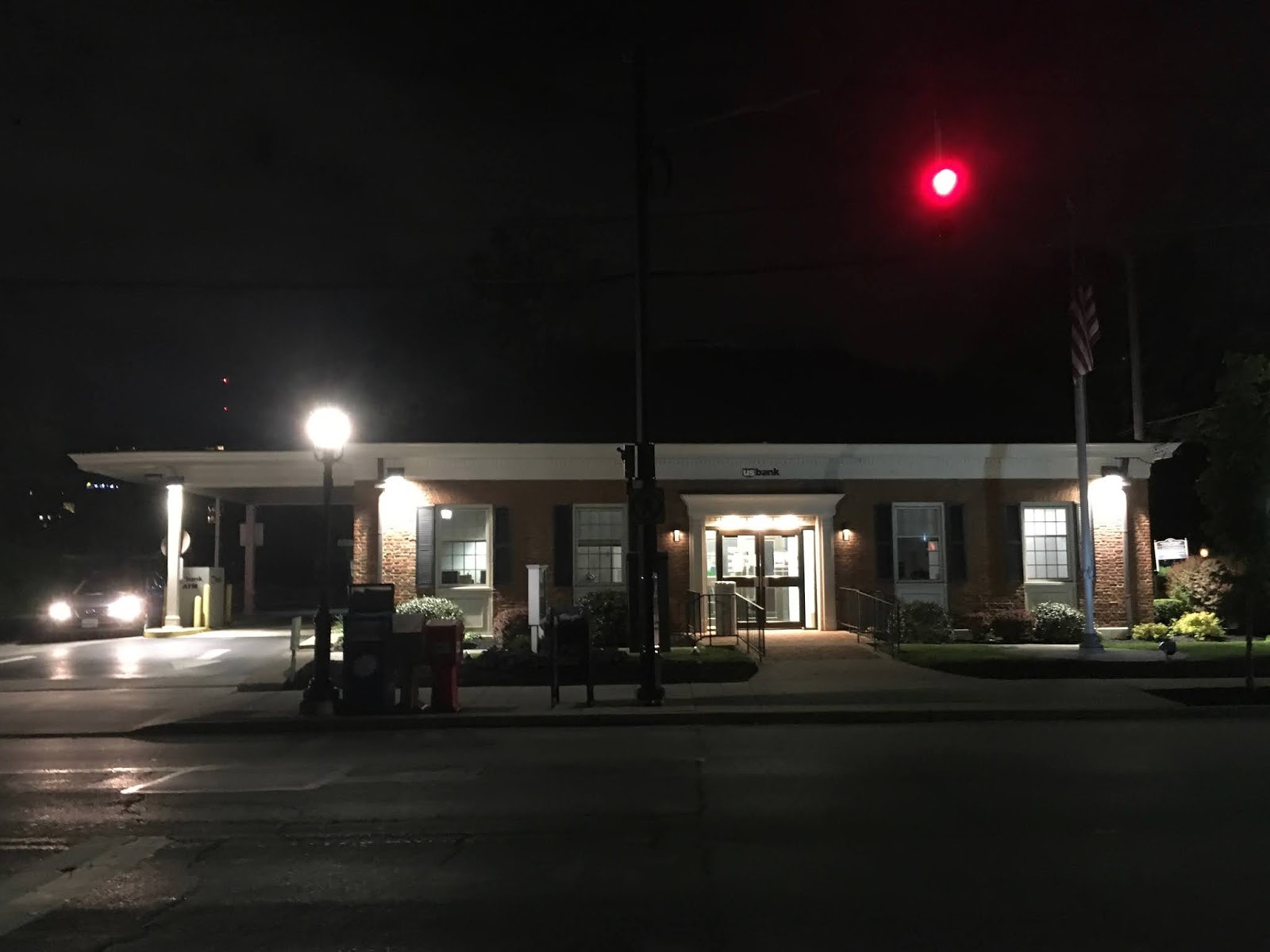
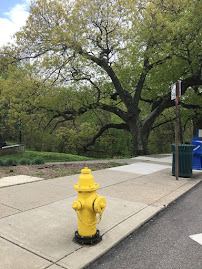
The bustling night life is one of our pleasures in living next door to the Ludlow Avenue business district.  Arlin’s Bar is always full of patrons, crowds are coming and going at the Esquire Theater, people are getting ice cream cones at Graeters, late shoppers are at the Clifton Market, and the street’s many restaurants are thriving.  Now, with the city and state under stay at home orders, Ludlow looks like a scene out of one of those apocalypse movies where there’s only one human left on earth.  I walk the dogs there every night, but always with a sense of isolation, loss of community, and vulnerability.  Perhaps from fantasized muggers, perhaps from deadly germs in the air.  Taking some night photos helped my mood a bit.  Here’s how our favorite street is looking nowadays.
Love,
Dave


Monday, April 27, 2020

Deathly Musings: Four Poems


Dear George, 
Love and death.  My teacher said these are poets’ two favorite topics.  I’ve tried writing about love, but it’s too sticky and I’ve been more enthusiastic about death.   Now with the pandemic raging, my obsession seems even more pertinent.  I actually don’t expect to fall prey to the coronavirus, but I will probably expire from something or other in the not-distant-enough future.  Some think that death is an unnerving matter, but, looking these poems over, I find it’s not as bad as they say.    
Love,
Dave 

Death on the Front Lawn 

I happened upon death when I was just four
Lying flat on our lawn, a dead crow
My sitter informed me I too would be dead
Much more than a small kid should know

Then I was eight and in the third grade
Mr. Elmquist, our crossing guard, died
We stared at his corpse at the funeral home
Couldn’t wake him as hard as we tried

I asked my dad, “What happens when we die?”
He explained that they don’t know for sure
Skipper told me I’d get eaten by worms
And then I’d turn into manure

Frankie said no, you’ll float up to Heaven
Dead ancestors will wait there to greet you
That could be exciting, it could be bad
I did have this aunt who’d mistreat you

I never believed in an afterlife
We’re like bugs, we just die and that’s that
Though my mother imagined us all together
Four kids, her husband, her cat

Death, in my mind, is not like a party
Nor is it a trip to Cancun
It’s probably more like an empty black hole
Or an unending Philip Glass tune

My demise gets more ominous the older I get
Some days it seems right around the corner
The funeral is actually what bothers me most
Embarrassing when I don’t have a mourner

And it’s not even death by itself that’s so bad
It’s the dying that’s the real bummer
Sometimes it’s quick and sometimes it’s slow
My advice, don’t take the whole summer

In truth, you get perks for being dead
You are done with the shots and the pills
No chance you’ll get stuck in a traffic jam
And Visa stops sending their bills

A whole lot more could be said about death
Like pandemics and nuclear war
But I think I will look on the bright side
Make a list of life’s pleasures galore


* * *

Touring the Hereafter 

Our Triple-A branch, I was pleased to learn,
Offers tours of Heaven and Hell
Since one day soon I’ll be ashes in an urn
I thought I’d see which rings my bell

Heaven throughout is a pristine place
Cozy cottages with white picket fences
Adults wear gowns that are trimmed in fine lace
Best of all, there’s no charge for expenses

The first day in Heaven one is given their harp
Lawrence Welk composed all of the tunes
Cous-cous and kale at six p.m. sharp
For breakfast, poached eggs and dried prunes 

All the radios in Heaven play NPR
People meditate and then do Tai Chi
Ambrosial melodies float from afar
Tiny toddlers take naps on your knee  

I wrapped up my tour, Hell was soon my next stop  
The dwellings, less comfy, I’d say
Residents eat Big Macs, drink sugary pop
Then torture newcomers all day

Most inmates of Hell play poker at night
And do other stuff we’d call risky
Write poems that usually are boring or trite
While besot with too much Irish whiskey
           
All the TVs in Hell are set to play porn
Strangers dance the Charleston while nude 
I didn’t see a demon who looked forlorn
It’s hard to be glum when you’re lewd

Now I’m having trouble making up my mind
Of course Heaven can be seamlessly nice 
But Hell, I found out, is unfairly maligned
It’s hard to pass by such fine vice 


* * *

The Pearly Gates

I dreamt I was standing at the Pearly Gates
So many in line, the longest wait
Tens of thousands arrive every hour
Such a chore to decide each one’s fate

I wasn’t quite sure of procedures
But from everything I could tell
St. Peter inspects you and he decides
If you’re headed for Heaven or Hell

When I got to the gate I pressed the buzzer  
Beaming angels welcomed me in
They gave me a ten-page form on which 
To list all my good deeds and sin

I ran into trouble with the Good Deeds part
Even though I scanned all of my life
I take out the garbage on Monday nights
But the big stuff I leave to my wife

I had more success when I got to Part Two
A list of my sins filled twelve pages
I teased and tortured my brother for years
And told naughty lies at all ages

St. Peter arrived as I finished page twelve 
I would say that he stands six feet two
With a long white beard, a halo, a robe
And a frilly bedraggled hairdo

I watched St. Peter as he scoured my list
Each page led to more of a frown
He looked toward the sky and he shook his head
My heart stopped as he pointed straight down

Your score, said St. Peter, is a minus ten
But for Heaven you need a plus six
He led me to an elevator next to the door
Pressed the button for the River Styx

As the elevator dropped, I woke from my dream
Relieved that I still have some time
I’ll start my good deeds in a week or two
And be sure to record each in rhyme


* * *

Crossing the Styx

The moment my funeral came to its end
I awoke on the bank of the underground river
Bleary-eyed, disoriented, I knew immediately
the River Styx, the notorious river of hate
The passageway from Earth to the Underworld
A journey I always knew I would pursue one day

Charon, the ancient boatman, stretched out his gnarled hand
Yellowed skin, brown-stained teeth, an unkempt beard
An emaciated man, filthy, with blazing dark eyes
The very image of Death himself
Repelled though I was, I handed the boatman the silver coin
that my spouse had carefully tucked in my vest
Charon nodded, beckoned me to join my fellow travelers
Three old men, a young mother, a newborn babe
Strangers all but comrades on our final journey

The Styx was black as coal, bitterly cold
Putrid odors seeped from its surface
A toxic mix that singed my nostrils
My eyes were drawn to the river’s flotsam
Bloated corpses of vengeful sinners
bobbing along, limbs akimbo
grotesque grins etched into their faces
Along the riverbank we spotted hundreds of Wraiths
wretched spirits who couldn’t afford Charon’s fee
destined to wander for a hundred years
I felt sympathy for the lost souls but also relief

We heard Cerberus before we could see him
Thunderous roars echoing throughout the valley 
His form slowly emerged from the mist
and a shudder ran down my spine
A gigantic three-headed dog
snakes bristling around his neck
eels bulging from his torso
Razor-like claws, matted fur, the tail of a dragon
Snarling, prowling, circling, growling
Guarding the river’s edge, barring the dead
from any hope of return to Earth

Charon’s boat bumped against the shore
The fog so thick, my eyes were squinting
Small fires flickered here and there, a bitter smoke smell
Undulating screams and cries from all directions
Naked adults roamed aimlessly
Children curled into fetal positions
sobbing and wailing for lost mothers
Milling about in the meadow
the Gorgons, the Centaurs, the Harpies
No scene in my past life on earth had been this compelling
I stepped ashore from the boat, my curiosity peaking
A tinge of excitement in anticipation of this new world