Thursday, October 29, 2020

November


Dear George, 

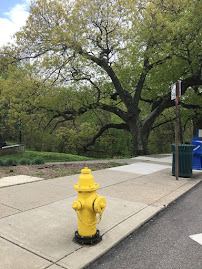
November is such a momentous month.  The end of the warm season, the start of the cold, a period of major transition.  As a kid on the Menominee River, our grass had stopped growing by November, and my irksome lawn-mowing task came to its end.  My dad’s birthday was on November 5th, but he said that birthdays were for kids and not to get him a present.  (I did anyway, using most of my 25 cent allowance.)  We hauled the green rowboat out of the river and stored it upside down on two wooden horses near the birch grove.  My dad and I installed the insulated panels in our high ceilinged living room, and we cleaned the fallen oak leaves out of the gutters on our roof.  My mother got our winter clothes out: coats, knit caps, scarves, mittens, corduroy trousers, warm socks, rubber boots.  Steven and I had endless acorn fights on the front lawn, dodging behind the trees.  


We got our first big snowfall of the year in November though the river hadn’t yet frozen over.  If we were lucky we might get two or three snow days off from school since Riverside Boulevard with its three or four families had lowest priority for the county’s plow trucks.  At my grandfather’s insistence, I joined the Washington Grade School basketball team in the November  of my sixth grade year, beginning an obsession with basketball that lasted for a decade or more.  Steve and I set up a portable desk lamp outside the garage so we could practice at night, even when the driveway was coated with ice.  


Sixth graders at Washington School did a Thanksgiving play for the P.T.A., and my mother made a big Thanksgiving dinner for the family: turkey and stuffing, brussel sprouts, sweet potatoes, and Schaum Torte for dessert.  The biggest local event of the year occurred in late November:  the M&M football game between the Menominee Maroons and the Marinette Marines, the oldest public high school rivalry in the country.  As teens we were cautioned not to drive across the river to Marinette during M&M week because they’d vandalize our cars or worse.   


When I turned sixteen the fathers in my parents’ group took their oldest sons, including Frank St. Peter, Skipper Burke, Bill Caley, and myself, to Jean Worth’s Cedar River camp during deer hunting season.  It was an exciting rite of passage, though nobody spotted a deer.  My November memories after turning eighteen and leaving Menominee are blurrier because I became less in touch with nature and the out of doors.  However, I have a vivid recollection of newlyweds Katja and I voting in Ann Arbor for John F. Kennedy in our first election in November 1960.  Now, of course, another huge presidential election is imminent.  Here are a few other November items of interest.

Love,

Dave 


NOVEMBER QUOTES:

"November always seemed to me the Norway of the year.”  (Emily Dickinson) 

“It is the first day of November and so, today, someone will die.”  (Maggie Stiefvater)

“And we will serenade and make love to the passion of November!”   (Avijeet Das) 

“The house was very quiet, and the fog—we are in November now—pressed against the windows like an excluded ghost.”  (E.M. Forster) 

“November at its best - with a sort of delightful menace in the air.”  (Anne Bosworth Greene) 

“Yes. Not winter, not fall. I’ve always liked November in Corot country.”  (AndrĂ© Aciman)

"The gloomy months of November, when the people of England hang and drown themselves.”  (Joseph Addison) 

 “Welcome sweet November, the season of senses and my favorite month of all.”  (Gregory F. Lenz)   (4, 6) 


NOVEMBER WEATHER IN SELECTED PLACES: 

Menominee, MI:  ave. hi, 41; ave low, 26; 2.7 in. rain; 5.3 in. snow; 37% sunny

Seattle, WA:    ave. hi, 51; ave low, 39; 5.4 in. rain; 1.5 in. snow; 22% sunny

Cincinnati, OH: ave. hi, 53; ave low, 35; 3.7 in. rain; 2.0 in. snow; 35% sunny 

Princeton, NJ:  ave. hi, 53; ave low, 35; 3.8 in. rain; 1.0 in. snow; 50% sunny 

New York, NY:   ave. hi, 54; ave low, 40; 3.9 in. rain; 1.0 in. snow; 52% sunny 

Sacramento, CA: ave. hi, 64; ave low, 43; 2.5 in. rain; 0.0 in. snow; 65% sunny

Santa Cruz, CA: ave. hi, 65; ave low, 42; 4.5 in. rain; 0.0 in. snow; 65% sunny  

New Orleans LA: ave. hi, 71; ave low, 51; 4.8 in. rain; 0.0 in. snow; 53% sunny 

(3)


NOVEMBER BIRTHDAYS 

Some of my favorite people born in November include:  Winston Churchill (11/30/1874); Rene Magritte (11/21/1898); Roy Rogers (11/5/1911); Hedy Lamarr (11/9/1914); Robert F. Kennedy (11/20/25); Grace Kelly (11/12/29); Joe Biden (11/20/42); Billie Jean King (11/22/43); Goldie Hawn (11/21/45); Mandy Patinkin (11/30/52); Howie Mandel 11/29/55); Scarlet Johannson (11/22/64)  (13) 


CURIOUS NOVEMBER FACTS:

Anglo-Saxons called November “Blotmonath” (“Blood month”) after the blood of slaughtered animals.  (9)  

In Finland November is called “marraskuu”, meaning “month of the dead.”  (10) 

November is called “ngeyeNkanga” in Xhosa, meaning “month of the small yellow daisies”.  (10) 

November’s full Moon is traditionally called the Beaver Moon.  In the Colonial Era, this was the month in which to set one’s beaver traps before the swamps froze over to ensure a supply of warm winter furs.  (1)

More serial killers have been born in November than any other month.  (2) 

Shakespeare did not mention the month of November in any of his 37 plays and 154 sonnets.  (9) 

More Spaniards tweet “Te Amo” (“I love you”) in November than in any other month.  (9) 

In recent years November has been renamed “Movember”, a time when men grow mustaches for charitable causes.  (12) 

If you were born in the middle of November there’s a good chance you were conceived on Valentine’s Day.  (12) 

Plumbers receive more calls the day after Thanksgiving than any other day of the year.  (5) 


SOURCES:

(1) almanac.com, “The Month of November 2020”; 

(2) cashkaro.com, “7 Interesting Facts About November…”; 

(3) citydata.com, “Menominee MI”, etc.; 

(4) egreenway.com, “November”; 

(5) good housekeeping.com, “10 Fascinating Facts About November Babies”; 

(6) goodreads.com, “November Quotes”; 

(7) greenblue.org, “Top Five Fun Facts” November”; 

(8) history.com, “Thanksgiving Trivia”; 

(9) nobelcom.com, “Fun Facts about the Month of November”; 

(10) popculturemadness.com, “November History, Trivia, And Fun Facts”; 

(11) projectbritain.com, “Facts about November”; 

(12) seaside magazine.ca, “This Month in History: A Little November Trivia…”; 

(13) thefamouspeople.com “Famous People Born In November”; 

(14) wikipedia.org, “November”; 


Monday, October 19, 2020

The Battleground Picture


Dear George,

Fifteen days to go.  That’s so hard to believe.  Joe Biden has a sizable lead in the national polls, but, as you know, that doesn’t mean much.  Because the election will be decided in the Electoral College, it’s really the outcomes in the battleground states with their close races that matter.  The table below, taken today from the sources listed at the end, show state-by-state 2016 Clinton-Trump election results and 2020 recent polling results for Biden and Trump.  They are ordered by the margin of difference in the 2020 polls.  The 2016 state election winner and the 2020 polling leader are highlighted in bold print.     


Michigan (2016)          Michigan (2020) 

Clinton      47.3%       Biden         50.2%

Trump        47.6%       Trump         42.6%

Difference   -0.3%       Difference    +7.6%


Wisconsin (2016)         Wisconsin (2020) 

Clinton      46.9%       Biden         50.6%

Trump        47.9%       Trump         43.5%

Difference   -0.8%       Difference    +7.1%


Pennsylvania (2016)      Pennsylvania (2020)

Clinton      47.6%       Biden         50.3%

Trump        48.8%       Trump         44.2%

Difference   -1.2%       Difference    +6.1%


North Carolina (2016     North Carolina (2020) 

Clinton      46.7%       Biden         49.3%

Trump        50.5%       Trump         45.6%

Difference   -3.8%       Difference    +3.7%


Arizona (2016)           Arizona (2020) 

Clinton      45.4%       Biden         48.4%

Trump        49.5%       Trump         44.8%

Difference   -4.1%       Difference    +3.6%


Florida (2016)           Florida (2020) 

Clinton      47.8%       Biden         49.0%

Trump        49.1%       Trump         46.7%

Difference   -1.3%       Difference    +2.3%


Georgia (2016)           Georgia (2020) 

Clinton      45.6%       Biden         47.8%

Trump        51.3%       Trump         46.6%

Difference   -5.7%       Difference    +1.2%  


Iowa (2016)              Iowa (2020) 

Clinton      42.2%       Biden         47.3%

Trump        51.8%       Trump         48.5%

Difference   -9.6%       Difference    -1.2%


Ohio (2016)              Ohio (2020) 

Clinton      43.5%       Biden         46.1%

Trump        52.1%       Trump         47.8%

Difference   -8.6%       Difference    -1.7%


Texas (2016)             Texas (2020) 

Clinton      43.4%       Biden         49.2%

Trump        52.6%       Trump         44.8%

Difference   -9.2%       Difference    -4.4% 


- - - - - - - - - - - - - - - - - - - - - - -


National (2016)          National (2020) 

Clinton      48.2%       Biden         52.4%

Trump        46.1%       Trump         41.6%

Difference   +2.1%       Difference   +10.8%


As is shown in the table, Trump won in 10 of the 10 battleground states in 2016, although he had less of the popular vote nationally than did Clinton. Recent battleground state polls indicate that voters have moved toward the Democratic candidate in all of these states.  Biden leads in 7 of the 10 states, decisively in several cases.   


These results, of course, provide a very positive picture for Biden and supporters.  If the current poll results hold up on Nov. 3, Biden will be the winner by a large margin.  On the other hand, many commentators point out that Hillary Clinton led decisively in the pools throughout the entire 2016 election campaign, yet lost in the electoral college.  Trump supporters were apparently under-counted during the 2016 campaign, and current polls may be over-counting support for Biden.


I was positive that the Green Bay Packers and Aaron Rodgers would crush the Tampa Bay Buccaneers and Tom Brady last Sunday.  The Packers, to our sorrow, lost 38-10.  I’m not making any predictions about anything else.

Love,

Dave  


SOURCES: 

270towin.com, “2020  Presidential Election Polls”; accessed Oct. 19, 2020;  

cbsnews.com, “Battleground Tracker,” Oct. 18, 2020; 

politico.com, “2016 Presidential Election”, Dec. 13, 2016; 

realclearpolitics.com, “Key 2020 Races”, Oct. 19, 2020; 

the guardian.com, “US election polls tracker,” Oct. 19, 2020; 


Thursday, October 8, 2020

Found Money


Dear George, 

Yesterday Iko and I took Katja to the Blue Ash Nail Salon to get her nails done.  As we took our walk around the strip mall parking lot, what did I run across on the ground but a twenty dollar bill.  Needless to say, this made my day.  I don’t plan to spend the twenty dollars, at least not in the near future.  Rather I added it to my collection of “found money” that I keep under a magnet on my file cabinet. 


For many years I’ve collected a lot of paper ephemera: antique postcards, old photos, prayer cards, rock and roll promotion photos, calendar pics, greeting cards, etc.  My favorite collection, though, is paper money.  I got interested in pursuing this from my son J when he was 5 or 6 years old.  We usually went as a family to do our grocery shopping at Keller’s Market, and, each time we left the store, J showed me the money that he’d found on the floor,  He never failed to find some cash.  Sometimes just a single coin, but more often two or three or four.  J said that he found all that money because he was just a kid and consequently closer to the floor than were the adults.  Eventually I figured out that he was finding the money by crawling underneath the checkout counter where the cashiers didn’t bother picking up dropped change until the end of the day.  In any case, J taught me that it was a good idea to keep an eye on the ground because you never know what you’ll come up with.  That was 45 years ago, and I’ve been keeping my eye out for money ever since.  Here is what my collection looks like to date:  


Twenty dollar bills, of course, are exciting.  My best find, though, is the two dollar bill at the middle of the array.  If you set out with the goal of finding a two dollar bill on the street, I think it would take you at least a hundred years.  Probably more like five hundred or a thousand.   Generally, finding lost money is not a project that is conducive to intentional action.  It would be very frustrating if you set out in the morning to find some money on the ground (mainly because it takes forever).  Although I’m very pleased with my collection.  my best estimate is that I’ve found one bill about every one or two years at best.  Give my long-term efforts, I have seventy-five dollars so far.  My aim is to reach a hundred dollars.  Then I will give the money to my grandchildren as a present (which hopefully they will use to start their own collections).  However, I’d better start walking about two or three times as much as I currently do if I have any hope of reaching this goal.

Love,

Dave 


Tuesday, September 29, 2020

Death Stats and Factoids


Dear George,

Death is on my mind a lot these days.  It’s because of the pandemic.  I wind up thinking, ‘Every day is going to be the same, and then I will die.”  So I’ve been looking into death lately.  It’s definitely more interesting than I thought.  Though I’m still not enthusiastic, I can see it is one of life’s really big events.

Love,

Dave  


How many people born in Sweden in 1875 (my grandfather’s year of birth) went on to die?

There were 135,558 births in Sweden in 1875, and 135,558 of those Swedes are now dead.  No slippage.  (17) 


Altogether how many people have died in human history?

Roughly 100 billion deaths since Homo Sapiens appeared over 200,000 years ago.  (9) 


Nowadays how many people die each year?

According to the Population Reference Bureau, about 8 out of every 1,000 people die each year.  (4)   Globally that’s about 150,000 per day.  (24) 


What are the main causes of death in the U.S.?  

2,839,205 people died in the U.S. in 2018 (the most recent year for which data is available).  About 74% of these deaths occurred as a result of 10 causes (which have remained fairly constant in recent years).

1.  Heart disease: 655,381 (23.1%)

2. Cancer: 599,274 (21.1%)

3. Accidents: 167,5.9%)

4. Chronic low respiratory disease (lung diseases): 159,486 (5.6%)

5. Stroke and cerebrovascular diseases: 147,810 (5.2%)

6. Alzheimer’s disease: 122,019 (4.3%)

7. Diabetes: 84,946 (3%) 

8. Influenza and pneumonia: 59,120 (2.1%) 

9. Kidney disease: 51,386 (1.8%)

10. Suicide: 48,344 (1.7%)   (14) 


What is the worst way to die?

According to ranker.com, one of the worst ways is being trapped in a falling elevator.  Because your internal organs tend to keep moving upon impact, they can tear out from the bottom of your body.  Your head, however, remains farthest away from the point of impact, meaning you may survive long enough to see your insides make their way outside.  (16)


What are the most common methods of suicide?

Worldwide, the most common methods are hanging, poisoning by pesticides, and firearms.  Other common methods are jumping from a height, drug overdoses, and drowning.  (25) 


How painful is death typically?

Thanks to palliative care, pain and other symptoms (e.g., fatigue, insomnia, breathing issues) actually improve as people move closer to death.  Over 85% of palliative care patients have no severe symptoms by the time that they die.  (20)  


Can doctors help one to die?

Assisted suicide is legal in Washington, Oregon, California, Vermont, and Montana.   (9)


How many people die because of medical errors?

About 440,000 people die every years from preventable medical mistakes.  (15) 


What is your life expectancy if you are 70 years old?  80 years old?

Life expectancy in the U.S. at age 70 in 14.4 years for males and 16.6 years for females. At age 80, life expectancy is 8.3 years for males and 9.7 years for females.  (19)  


Will I live longer because I am left-handed?  

Left handed people die 3 years earlier than right handed people.  (18)   


How many people live to age 116?

About one out of every two billion people live to 116 or older.  (8) 


How has the lifespan changed in the U.S.?

In 1900 people lived to an average of 47 years; this increased to age 68 by 1950 and 77 in 2000.  (24) 


What is the strangest death of a famous historical figure?

The ancient Greek philosopher Chrysippus died in a fit of laughter when he saw a drunken donkey try to eat some figs.  (3) 


How many people die from smoking?

According to the CDC, cigarette smoking kills over 480,000 Americans each year.  (5)


How many people die from drug overdoses? 

Overdose death rates in the U.S. have steadily increased from 38,329 in 2010 to 67,367 in 2018.  (7) 


How many Americans die from dog bites?

There are about 4.7 million dog bite victims annually in the U.S.; about 365,000 are treated in emergency rooms; and 34 die, most of them children who were bitten in the face.  (13) 


How many people die from falling out of bed?

About 600 Americans die each year from falling out of bed.  (6) 


Are icicles dangerous?

About 100 Russians are killed each year when sharp icicles fall from rooftops and land on pedestrians.  (13) 


Does texting while driving kill people?

About 6,000 Americans die each year in accidents in which they are texting while driving.  (13) 


How many Americans die from lightning strikes?

An average of 49 people die from lightening each year in the U.S.  (23) 


How many  die from shark attacks?

On average twelve people die worldwide from a shark attack each year.  (By way of comparison, humans kill about 100 million sharks and rays each year, mostly through commercial fishing).  (22) 


How many people are killed by hippopotamuses?

Hippos, who are aggressive and unpredictable creatures, kill 2,900 people per year in Africa.  (13) 


What about roller coasters?

Americans take about 900 million rides a year.  About 4 people die annually.  (13) 


What is the deadliest war battle in history?

1,971,000 casualties occurred in the Battle of Stalingrad (1942-43) between Nazi Germany and the Soviet Union.  (92)  


Are there dead bodies on Mount Everest?

There are over 200 corpses of failed climbers frozen on Mount Everest.  (12) 


How many people go to Heaven after they die? 

89% of women and 69% of men think they will go to Heaven.  (2)  However, based on clues in the Bible, the website 88c.com estimates that only 2.5% of deceased people will go to Heaven, while 97.5% will go somewhere else.  (1)


Are there any living organisms that are immortal?

There is a type of jellyfish (turritopsis nutricula) that lives forever by reverting back to the polyp stage after reaching maturity.  (11) 


SOURCES: 

(1)  888c.com, “How Many Will Be in Heaven?”; 

(2) abcnews.com,  “Poll: Elbow Room No Problem in Heaven”; 
(3) allthatsinteresting.com, “The strange deaths of 16 historic and famous figures”; 

(4) buzzfeed.com, “31 Strange and Disturbing Facts About Death”; 

(5) cdc.gov, “Burden of Cigarette Use in the U.S.”; 

(6) content.time.com, “How Americans are Living Dangerously”; 

(7) drugabuse.gov, “Overdose Death Rates”; 

(8) dyingmatters.org, “Interesting facts about dying”; 

(9) fact slides.com, “Death Facts”; 

(10) factretriever.com, “61 Grave Death Facts”; 

(11) guff.com, “45 Insane Facts About Death”; 

(12) mentalfloss.com, “30 Astonishig Facts About Death”; 

(13) odd.com, “10 Incredibly Bizarre Death Statistics”; 

(14) MDlinx.com, “Top 10 causes of death in the US” in 2020;

(15) msn.com, “The most interesting facts about death”; 

(16) ranker.com, “Science Has Finally Determined The Most Gruesome Ways to Die”; 

(17) scb.se, “Population and Population Changes 1749-2019); 

(18) scoop whoop.com, “15 Srange &n scary Facts About Death”; 

(19)  ssa.com, “Actuarial Life Table”; 

(20)  theconversation.com, “No, most people aren’t in severe pain when they die”; 

(21) usafacts.org, “Number of Deaths in the United States between February 1 and September 19;  

(22) usatoday.com, “Shark attacks 2019”; 

(23) weather.gov, “Lightning Victims”; 

(24) wikipedia.org, “Death”; 

(25) wikipedia.org, “Suicide methods”;


Thursday, September 17, 2020

Favorite Things


Dear George,

The other day I decided to make a list of my favorite things in life.  I’m not sure what prompted this.  Perhaps a gloomy sense that our current lives are routine and unexciting.  In any case, I found it easy to make a lengthy list, and doing the task lifted my spirits.  The original entries spanned my whole life history from early childhood to the present, so I broke the items down into three separate time periods:  1949 (age 12, grade school); 1957 (age 20, 3rd year of college); and 2020 (age 83, the present).  Out of curiosity I asked my wife Katja to make the same three lists of her favorite things.  Our respective responses are given below.  I recommend this as a useful exercise for anybody who wants to remind themselves of some of the wonders that life has to offer. 

Love,

Dave


KATJA          1949 (Sixth grade)    1957 (College)     2020 (Current)  


Author         Robt Louis Stevenson  Herman Melville    Hilary Mantel 

Book           Nancy Drew Mysteries  Moby Dick          The Odyssey

Movie          Gone w/ the Wind      Gone  w/ the Wind  Lawrence of Arabia 

Actress        Elizabeth Taylor      Elizabeth Taylor   Charlize Theron

Actor          Randolph Scott        Montgomery Clift   Bradley Cooper 

Music          Country Western       Folk Music         Classical

Musician       Harry Belafonte       Odetta             Andre Watts   

Radio/TV       The Shadow            Your Show of Shows Downton Abbey 

Comedian       Danny Kay             Peter Sellers      Joan Rivers

Play           Romeo and Juliet      Richard III        Richard III 

Musical        (None)                West Side Story    Fiddler on Roof  

Sport          Baseball              Baseball           Tennis 

Athlete        Richie Ashburn        Richie Ashburn     Roger Federer 

School         History               Literature         Literature

Leisure        Reading               Traveling          Reading/music/TV 

Politician     (None)                (None)             Barack Obama 

Food           Chicken a la King     Chicken a la King  Raw oysters

Collectible    Baseball pics         Stuffed animals    Table linens

Place to shop  (None)                Wanamakers         Nordstrom’s 

Breed of dog   Scotties              Standard poodle    Old English Sheepdog

Vacation       Jersey shore          France             France  


DAVID          1949 (Sixth grade)    1957 (College)     2020 (Current)   


Author         Mark Twain            Bernard Malamud    David Sedaris

Book           Huckleberry Finn      On the Road        Me Talk Pretty…

Movie          Roy Rogers movies     The Seventh Seal   Casablanca

Actress        Dale Evans            Marilyn Monroe     Helen Mirren

Actor          Roy Rogers            Humphrey Bogart    John Malkovich

Music          Pop music             Jazz               Country Western 

Musician       Spike Jones           Thelonius Monk     Patsy Cline

Radio/TV show  The Jack Benny Show   I Love Lucy        Ray Donovan

Comedian       Groucho Marx          Jackie Gleason     Steve Carell              

Play           (None)                The Iceman Cometh  August: Osage Cty

Musical        (None)                Threepenny Opera   Sweeney Todd 

Sport          Golf                  Tennis             NFL football

Athlete        Joe Louis (boxing)    Wilt Chamberlain   Aaron Rodgers

School         Spelling              Creative writing   Poetry writing

Leisure        Comic books            Com’s Tavern      Poetry writing

Politician     Pres. Harry Truman     Hubert Humphrey   Barack Obama

Food           Ice cream              Pizza             Cheeseburgers

Collectible    Baseball cards         Jazz records      Antique postcards

Place to shop  G.I. Surplus Store     Strand Bookstore  St. Vincent de Paul

Breed of dog   Irish setter           Irish setter      Old English Sheepdg

Vacation       Chicago                New York City      New Orleans  


Saturday, September 5, 2020

Where I've Gone To


Dear George,

I can’t remember the exact date, but it appears that I died in my sleep about six months ago.  When I woke I found myself in Purgatory, and I’ve been here ever since.  This is a curious place.  For one thing, my new domicile is an exact replica of my former house on earth, right down to the dustballs on the dining room floor.  When I take a walk outside, the streets also look exactly the same, and there are other dead souls walking about, some with dogs on leashes.  We all cover our faces with masks to avoid revealing our earthly identities, and we maximize our distance so that we don’t contaminate one another’s souls.  


Purgatory, of course, is the temporary stopover for purification of the soul before one potentially enters The Good Place.  Suffering, it’s believed, is the very heart of the purification process.  Here in Purgatory suffering is mainly caused by the elimination of all worldly pleasures and pursuits.  Theater, art, music, museums, restaurants, sports, social gatherings, etc., etc.  The older one is, the more deprivation is called for.  Locked in social isolation, one is forced to focus on their personal history of misdeeds and indiscretions.  In my case suffering is further enhanced by something called Polymyalgia Rheumatica.  This is a condition in which I wake each morning with every muscle in my body stiff and aching.  The pain gradually dissipates over the course of the day, but then it begins all over again the next morning.  Unpleasant as it sounds, this clearly aids in purification.  


I will be staying here in Purgatory until it’s time for The Final Judgment.  My chances of The Good Place vs. The Bad Place are about 50-50.  While Purgatory is not that desirable, I hope to stick with it for a while.  it may prove to be better than the alternative.

Love,

Dave   


Friday, August 28, 2020

Number Sixty -- That's Amazing!


Dear George; 

Katja and I are celebrating our sixtieth wedding anniversary today.  We were married on August 28, 1960, in the Quaker Chapel on the Antioch College campus in Yellow Springs.  I remember that day better than any other day in the past sixty years.  Among other things I went to the local drugstore to see if I could get  some pills to stop sweating.  (There aren’t any pills to stop  sweating.)  Katja looked very beautiful, and we were overjoyed about the occasion.  After a one-night honeymoon in Dayton; we set off for graduate school in Ann Arbor.  


The next sixty years, in hindsight, have passed by much too quickly.  What pops into my mind includes our both getting graduate degrees; my mentor recommending me for a faculty job in Cincinnati; Katja giving birth to our son J (which was to lead to the most meaningful and ; rewarding part of our marriage); buying our house on Ludlow Avenue; Katja teaching French at UC and then getting her Social Work degree and working at the Cincinnati Association for the Blind; lots of tennis; camping trips with Katja and J; J going to Columbia, marrying K, and then off to med school; our annual family reunions at Farm in Birch Creek; Xmas trips to New York City to visit Ami and Bruce; Beach Haven with Buck and Helen in late summer; California expeditions to see Vicki, David, and families; our many dogs (especially sheepdogs Mike and Duffy); rabbits as well (e.g., Thumper); our many good friends over the decades; CCM, the symphony, and Linton concerts; becoming grandparents; and our golden retirement years with classes at OLLI.  


This time around we are sheltering in place, a disappointing restriction given the significance of the occasion.  However, it does provide for a celebration in which our being together is first and foremost.  If I had to pick someone with whom to sit out the pandemic, Katja is the perfect choice.  Yesterday she bought filet mignon at Fresh Market and a chocolate cheesecake at the Cheesecake Factory, so we are due for a feast this evening.  We’ll be thinking of all our beloved family and friends.

Love,

Dave


Thursday, August 20, 2020

A Coronavirus I Ching Reading


Dear George, 

Having drifted into a state of total lethargy,  I haven’t checked the I Ching even once since the pandemic began.  That’s ridiculous.  The I Ching, of course, is the ancient Chinese Book of Changes.  Drawing from Confucianism and Buddhism, it provides guidance for moral decision-making and action.  One typically consults the I Ching by asking a question and then tossing three coins six times in a row.  The pattern of heads and tails for each coin toss results in either a solid or broken line (see citations at the end for details), and the six lines are arranged vertically in a stacked hexagram as in this example:   


Hexagram 43: Kuai - Breakthrough (Resoluteness)


Each possible hexagram, subdivided into an upper trigram and a lower trigram, represents a  specific life situation.  With six coin tosses, there are 8 trigrams possible and 64 (8 x 8) hexagrams possible.  The 8 trigrams represent heaven, lake, fire, thunder, wind, water, mountain, and earth.  The I Ching provides an interpretation for each of the 64 hexagrams.  Each interpretation includes an Image (the state of mind a superior man would adapt under the circumstances) and a Judgement (the best strategy for action under the circumstances). 


I asked the I Ching, “How can I best cope with the pandemic?”  Like Michelle Obama, I find myself increasingly experiencing “low-grade depression”.   Most of our major pleasures in life have been closed off, and I wake each morning with a sense of dread and an expectation that there is nothing to look forward to.  I tossed the coins six times and recorded each solid and broken line.  My hexagram (shown above) is titled Kuai (Breakthrough [Resoluteness]).  The upper trigram is Tui (The Joyous, The Lake), and the lower trigram is Ch’ien (The Creative, Heaven).  The hexagram suggests that the lake has evaporated and ascended to the sky where it will discharge itself as a cloudburst, hence the imagery of a breakthrough.    


Richard Wilhelm’s commentary.  In the most highly regarded rendition of the I Ching, translator Richard Wilhelm writes:  “This hexagram signifies on the one hand a break-through after a long accumulation of tension, as a swollen river breaks through its dikes, or in the manner of a cloudburst. On the other hand, applied to human conditions, it refers to the time when inferior people gradually begin to disappear. Their influence is on the wane; as a result of resolute action, a change in conditions occurs, a break-through. The hexagram is linked with the third month (April-May).”


My comments.   As usual, the I Ching is uncannily on target.  April-May, of course, is when the coronavirus’s major surge began in the U.S., including a sharp increase in hospitalizations and  deaths, shelter in place mandates, the prohibition of large public gatherings, and the closing of restaurants, bars, and many retail establishments.  Like most people, I’ve experienced more and more tension since that time, and my mode of coping, frankly, has been that of an “inferior person”.  Morose, passive, self-pitying, hopeless. 


How can one break through the paralyzing funk that the pandemic produces?  First, it’s helpful to recognize that there are wide differences in how people respond to the situation and that depression isn’t an inevitable alternative.  Many people, of course, experience catastrophic personal losses — of loved ones, of jobs and income, of their businesses or families.  People in our age group are likely to feel particularly vulnerable to the virus and may fear the prospect of an imminent death.  At the opposite extreme, some regard the pandemic as a complete hoax and adopt a far more cavalier attitude.  Or persons may not let themselves be overwhelmed by the situation.  In occasional instances, the pandemic provides a desirable opportunity for financial profit (e.g., pharmaceutical companies).  Likewise, there are divergent ways of viewing the pandemic.  Probably a majority dwell on the fact that 1 of 60 Americans have been infected by the virus, while others are reassured that 59 of 60 haven’t been.  Experts estimate that 1% or fewer of infected persons are likely to die (though, on the other hand, 99% or more will not).  


It seems to me that two things are required for a breakthrough.  The first is to adopt a less exaggerated and more realistic view of the pandemic.  I spend endless hours soaking in frightening information from the media (which concentrates almost entirely on death rates and largely ignores rates of recovery).  In looking at relevant statistics, our odds, in fact, are pretty good.  Second, I think a breakthrough occurs which one engages in meaningful, rewarding activities that provide a renewed sense of mission.  Something beyond watching Netflix and taking naps.   A lot of my own gloomy state is linked to the loss of so many activities in our community.  I have lost my poetry classes, but I can still write tons of poems.  The gym has been shut down, but I can do a challenging exercise program at home.  The same for blogging, reading, art, music, photography, and playing cards and Trivial Pursuit with Katja.  I’ve been a slug-a-bed for much too long.  Hopefully finishing this blog post will be the first step in a personal breakthrough.  Time will tell. 

Love,

Dave 


SOURCES: 

Wilhelm, Richard.  (1950). The I Ching or Book of Changes. Cary Baynes, trans. Bollingen Series 19. Introduction by Carl G. Jung. New York: Pantheon Books. 3rd edition (1967), Princeton: Princeton University Press.

mindsports.ni, “Interpreting the I Ching” 

taopage.org, “Content of the I-ching” 

the-iching.com, “43. Parting (guĂ i). Breakthrough”