Sunday, June 27, 2021

Wimbledon Eve

DEAR GEORGE, Wimbledon is the world’s oldest tennis tournament, dating back to 1877 at the All England Club in suburban London. It has the distinction of being the only Grand Slam tournament played on grass courts. (There are four Grand Slams: the Australian Open, the French Open, Wimbledon, and the US Open.) This year’s Wimbledon has special significance since the tournament was cancelled in 2020 because of the pandemic, its only cancellation since World War II. Americans aren’t as dominant as they were years ago. There are no American men seeded in the top 25, and only 3 seeded at all — Reilly Opelka at 27; John Isner, 28; and Taylor Fritz, 31. American women did better: Sofia Kenin, 4; Serena Williams, 6; Coco Gauff, 20; Jessica Pegula, 22; Madison Keys, 23; and Allson Riske, 28.
Two legendary players, members of the old guard, are seeking to add to their remarkable Wimbledon records. With 8 previous tournament victories, Roger Federer, age 39, has the best Wimbledon record of any man in the open era, and a ninth title this year would tie him with Martina Navratilova for the most of all times. However, no man over age 35 has ever won Wimbledon. Despite his two knee surgeries and a year of rehabilitation, fellow players and tennis experts aren’t counting Federer out. Second seed Daniil Medvedev observed, “I think Wimbledon is always — even when he will be 50 years old — a great chance for him.” The tournament also has historical implications for American super-star, Serena Williams. With her formidable serve and powerful groundstrokes, Williams’ game is perfectly suited for grass-court tennis, and she has won Wimbledon 14 times in singles, doubles, and mixed doubles. At age 39 and seeded 6th, she needs one more victory to tie her with Margaret Court for the all-time Grand Slam victory total of 24, and she’s been pursuing that milestone since coming back from childbirth in 2017.
Novak Djokovic is the clear men’s favorite this year. A five-time Wimbledon winner, if he wins the tournament this year, it will be his 20th Grand Slam title and put him in a three-way tie with Federer and Rafael Nadal. Djokovic’s aspirations are entirely clear. After the French Open in May he commented, “I don’t have an issue to say that I’m going for the title in Wimbledon. Of course, I am.” Having already won the Australian Open and the French Open this year, Djokovic is in a position to win a calendar Grand Slam of all four major tournaments (if he wins at Wimbledon and the US Open), a feat no male player has accomplished in the last 51 years.
Not all the top players are playing. Rafael Nadal, currently number three in the world and a member of the Big Three who have dominated men’s tennis since 2003 (Federer, Nadal, Djokovic), recently withdrew from Wimbledon A two-time winner on Wimbledon’s grass courts, Nadal lost in a thrilling five-set French Open finals last month to Novak Djokovic, and, at age 34, he said he was “listening to his body” and forgoing Wimbledon to “prolong my career and continue to do what makes me happy.” Another of my favorites, Naomi Osaka, the No. 2 ranked women’s tennis player in the world, announced on June 17 that she was withdrawing from Wimbledon. According to a statement released by her agent, “She is taking some personal time with friends and family She will be ready for the Olympics and is excited to play in front of her home fans [in Japan].” At the recent French Open Osaka withdrew after the first round during controversy regarding her decision to skip required post match news interviews. Osaka revealed that she had been dealing with anxiety and depression issues since winning the US Open in 2018. I hope she’ll be back for the US Open at the end of August.
We also have our eye on Coco Gauff, the 17-year-old American who is partnering in Ladies’ Doubles with Cincinnati native, Caty McNally, and who captured fans’ attention by reaching the fourth round at Wimbledon in 2019. Gauff reached the quarterfinals at the French Open last month, and she won the singles and doubles titles on clay courts at the 2021 Emilia-Romagna Open at Parma, Italy.
The only other man to win two Wimbledon titles in the last 20 years, Scotland’s Andy Murray is a dark horse at Wimbledon. After two hip surgeries and recurrent injuries, Murray has returned to the singles draw at Wimbledon for the first time since 2017. A British crowd favorite, Murray has said that his prospects at Wimbledon this year are unknown.
It seems like the Big Three have dominated men’s tennis forever, but the younger generation, now in their mid-twenties, are nipping at their heels, and it wouldn’t be surprising if one of them captured the title this year. The top contenders are: Daniel Medvedev (Russia, seeded 2nd), Stefanos Tsitsipas (Greece, seeded 3rd), Alexander Zverev (Germany, seeded 4), Andrey Rublev (Russian, seeded 5th), and Matteo Berrettini (Italy, seeded 7th). Tsitsipas nearly upset Djokovic in a five-set thriller at the French Open final, Berrettini also pushed Djokovic to the limit in the French quarter-finals, and Medvedev is a two-time Grand Slam finalist and winner of the 2021 ATP Finals. The other top-ranked younger player, Austrian Dominic Thiem, who won the 2020 US Open, had to withdraw from Wimbledon because of injuries.
After a two-year wait, we are eager to watch lots of this year’s Wimbledon. Our hearts are with Roger Federer and Serena Williams, but we’re prepared for other more likely outcomes too. It’s at times like this that we appreciate what a miracle television is. In some ways it’s almost as good as being on the scene. Coverage on ESPN of Round 1 starts at 6 a.m. tomorrow. We’ll probably tune in a little bit later. LOVE, DAVE

Sunday, June 20, 2021

Father's Day Musings

DEAR GEORGE, My dad always asked us not to bother with Father’s Day, claiming that holidays and presents were only for children. The four of us bought gifts for him anyway, spending 10 or 15 cents apiece at the Five and Dime. Parental roles and parent-child relations were vastly different back then. When I was a toddler behaviorist John B. Watson wrote in the most popular child-rearing book of the day, “Never hug and kiss them, never let them sit on your lap. If you must, kiss them once on the forehead when they say good night. Shake hands with them in the morning…If you expected a dog to grow up and be useful as a watch dog, a bird dog, a fox hound, useful for anything except a lap dog, you wouldn’t dare treat it the way you treat your child.”
Most families we knew in our hometown had 3 or 4 kids, and mothers almost never worked outside the home. Father was the breadwinner, mother the homemaker. We learned from many sources that men were ideally strong, hard-working, and nonemotional, while women were warm, nurturing, and instinctively suited to be mothers. These stereotypes played out in my family. My father, while an exceptional and admirable person in many respects, could be emotionally distant and authoritarian. Having served as an officer in the Navy in World War II, he brought his military experience home with him. Children were of the “lower orders”, and we were instructed to obey orders to the letter and not question parental decisions. My father encouraged achievement in many domains, holding his kids to high standards and demanding perfection, so much so that my younger sister defensively prefaced any performance by saying, “This is not my best.” I should admit, though, that we all turned out well.
By 1969, when Katja and I had a son of our own, (J), it was a new and different era for fathers and mothers. Traditional gender roles were on the way out, it was commonplace for women to work outside the home, and fathers were expected to play an active role in childcare. In addition, there were major differences in our situation simply as a function of family size. In my four-child family of origin daily life was more complex and more chaotic. Parents and children constituted two distinct subgroups. The children spent most of their time playing with one another, often engaging in dysfunctional behavior which called for parental intervention and sometimes a spanking. In J’s case, virtually all of his household transactions were with adults (i.e., Katja and myself), more grown-up, more reasonable, and he became a mature kid as a consequence. With no brothers or sisters in sight, I was J’s primary playmate at home. I found that role completely enjoyable, a chance to live out childhood over again. As J grew older, we went to thrift stores together, visited the art museum and the zoo, took the dog for walks in the forest, played tennis, watched TV, went to the movies, and ate out as a family at Skyline Chili. Instead of a big group with a rigid parent-child hierarchy, we operated pretty much as a close, egalitarian threesome.
We were thrilled last week when J, about to celebrate his 52nd birthday, visited us from New Orleans for a long weekend. J and I went to three thrift shops and found amazing treasures. Despite a relatively high income, J remains a thrift store addict. He reveled in the used 99-cent Sohio T-shirt he found at St. Vincent de Paul and worried that he’d paid too much for his brand-new Calvin Klein pants ($12.79). He and I took the dog for long outings in Burnet Woods and our Clifton neighborhood, and we did an art museum tour. Our best stop was the 21C Museum Hotel on Walnut Street downtown which was displaying wonderful contemporary art. The Contemporary Art Center, on the other hand, was a complete bust. We felt sad for the little children whose parents had to lead them through four floors of dull and meaningless displays (and also for the young couple who appeared to be struggling through a failed first date). Katja joined us for an outing at the Cincinnati Art Museum, and we lingered over a garden lunch at the Museum Cafe. This was French Open week and we were thrilled to watch the semi-final clash between Novak Djokovic and Rafael Nadal. Then J went out to play tennis with a local nationally ranked junior player. Since we’d been a tennis family throughout J’s teenage years, his mom and I were happy for his renewed interest in the sport. We ate at Skyline Chili twice, had our fanciest meal at the Dusmesh Indian restaurant near Cincinnati State, and indulged ourselves at Dewey’s Pizza. Most of all, we shared lots of laughs and happy memories. Then it was over, and we couldn’t have asked for a more perfect visit. It’s when J comes home that our little family seems whole again. Thinking about our time together, it dawned on me that our family routines have been much the same as they were forty years ago.
What also strikes me is that there are many ways to be a good father. What worked for my parents fit who they were and the world they lived in, as did Katja’s and my parenting approach. Now J and K are parents to two preteens of their own, and their family patterns are once again different. The children are immersed in the digital world, the family is more attentive to social justice issues, and they take full advantage of New Orleans music and culture. In some ways child-rearing nowadays is more challenging than ours was, and J is a terrific father. There’s a lot to be thankful for this Father’s Day. LOVE, DAVE

Friday, June 4, 2021

The Outing

DEAR GEORGE: Katja and I have enjoyed Sunday brunches at the Broadway Cafe for at least thirty years. We bring along the Sunday Enquirer, and Katja does the Jumble while I scan the TV Week and read the sports pages. The Broadway chefs are breakfast masters. Perfect fried eggs or French toast, delicious hash browns, crispy bacon. A delightful end of the week for families and retired folk.
All this, of course, came to an abrupt halt with the arrival of the pandemic. The Broadway closed its doors to indoor dining, and we stopped going to restaurants altogether. We finally got vaccinated this past March, and we’ve been thinking about going out for breakfast ever since. It took a while, but we made the big decision this past weekend.
We arrived about eleven a.m. There were fewer cars in the parking lot than I remembered, and we found a spot in the front row. The front lobby was empty, and we stood by the hostess’ stand for a few minutes. Restaurant staff flitted by. Finally a masked waitress came out of the kitchen. I couldn’t tell if we knew her or not. She handed us a couple of disposable paper menus (clearly intended for one use only) and asked for our drink orders. Katja said water and black coffee, and I said the same. She pointed toward the dining area and said we could sit anywhere we wanted. There was one couple seated on the north wall and a family of five in the opposite corner. Most of the booths and tables were walled off with cellophane tape and had “Closed” signs. We found a booth far away from the other diners.
As we sat down I noticed a QR code on the wall just above our tabletop (one of those square bar codes with lots of squiggly black lines and white spaces). A small sign just below it said “You can place your order and pay your bill here.” I pushed on the bar code two times with my thumb, but it didn’t do anything. When the waitress came I asked her how to order with the bar code. She said I could take a picture of it with my smart phone, then follow the prompts and email my information to the kitchen. “But,” she added, “I can take your order in person.” Katja ordered two eggs over lightly, whole wheat toast with butter on the side, and bacon. I ordered the same except for link sausage. Normally the waitress would bring a little tray with a variety of jams and jellies, but instead she asked if we wanted grape or strawberry. Apparently offering a tray that other customers had used meant danger. Katja chose strawberry, and I chose grape.
Fifteen minutes later the waitress returned with our order, just as Katja was finishing the Jumble. She gave each of us a cellophane wrapped package containing black plastic silverware and one napkin. The silverware wasn’t the more expensive sturdy grade that we get at the Party Source but small-ish bendable utensils that might come with a McDonald’s Fun Meal. There were no salt and pepper shakers on the table (also to avoid contamination), and the waitress brought little packets at Katja’s request. The food tasted as good as we remembered it, and we ate it up more quickly than usual. Katja complained that the coffee was horrible, but I reminded her that it’s always been horrible. The waitress didn’t return to ask how we were doing but she did finally bring the check. As we left the dining room was empty.
We waited quite a while at the cash register. I joked that we could just walk out without paying, and my evil self wanted to do so. Finally a kitchen worker came out. The bill was $18.50, about three dollars higher than it used to be. The kitchen guy didn’t ask how our meal was, but he did say, “Have a nice day.” To commemorate this historic event, I took a selfie of us standing outside the front door. We had taken the big step of re-entering the world. Unfortunately the world wasn’t quite ready. LOVE, DAVE

Wednesday, May 19, 2021

1960

DEAR GEORGE, 1960 was a momentous year. The Cold War was in full sway; France tested its first atomic bomb; Fidel Castro declared allegiance to communist Russia, nationalizing American oil and sugar companies; the Soviet Union downed a U-2 reconnaissance plane and imprisoned American pilot Francis Gary Powers. In my Upper Peninsula home town rumors circulated that Menominee could be mistaken for the Soo Locks from the air and become the target of a nuclear attack by Russian bombers. My father and my uncle Ralph converted a room in the basement of our family drugstore to an atom bomb shelter, stocking it with canned goods, barrels of water, a radio, magazines, and a portable toilet.
Katja and I were busy finishing our fifth and final year at Antioch College in Yellow Springs. She was the T.A. for Romance Languages, and I had the same job in the Psychology Department. My friend John N. and I both put off our year-long senior year projects till the last night and nearly flunked out. The entire campus was overjoyed when President Eisenhower signed the Civil Rights Act of 1960 to prevent voter disenfranchisement in the South. Antioch students had carried out one of the nation’s first sit-ins to protest discrimination at a local segregated barber shop. Because Katja’s parents were unhappy about our pending marriage, we held our wedding at the Quaker chapel on the Antioch campus in August. My future father-in-law told my father he was certain we would be divorced within a year, and my dad took us aside the night before the ceremony and told us in no uncertain terms that Lundgrens never get divorced. We’re sure it’s one of the reasons that we stuck together for the next sixty years.
On September 1st we moved to Ann Arbor for graduate school, Katja in French and me in Social Psychology. We found a second-floor apartment at Mrs. Quackenbush’s house on Brookwood St., a five-minute walk from campus. Having come from a small liberal arts college, we were very skeptical (and snooty) about going to a huge public university. However, we immediately discovered that the U. of M. was amazing and Ann Arbor was a wonderful college town. Much to our surprise, we started going to all of Michigan’s home football games (we lost to Ohio State in 1960, 7-0). Katja bought a German Shepherd puppy who we named Heather, and she got a job at Faber’s Fabrics to help keep us a step ahead of poverty. We opened our first checking account and were called in by the bank and told not to cash a separate check for every $2.00 purchase that we made. The FDA had approved the pill as an oral contraceptive in the summer of 1960, and the Ann Arbor Planned Parenthood was made one of the first distribution sites. Katja signed up on the first day, and we fantasized that she might have been the first woman in America to be on the pill.
The war in Viet Nam was growing, and, with 900 military advisers already in South Viet Nam, President Eisenhower announced that the U.S. would be sending an additional 3,500 troops. Michigan, along with Berkeley and Columbia, was soon to become the site of massive anti-war protests. Home on vacation, I visited my local draft board which assured me that my graduate school enrollment would prevent my being drafted in the near future. John F. Kennedy and Richard Nixon were running for president, squaring off in the first televised presidential debates, and, along with millions in our generation, we became fervent Kennedy supporters. In October JFK came to Ann Arbor for a major speech (in which he introduced his idea for the Peace Corps), and Katja and I joined the huge crowd in front of the Michigan Student Union. Kennedy was several hours late, and around ten o’clock, when somebody accidentally stepped on our puppy Heather’s front foot, we decided not to stay for the historic address.
We voted in our first presidential election, and Kennedy won by a narrow margin of 112 thousand votes out of 68 million cast. Kennedy carried Menominee County, 5,857 to 5,064. On the home front, we went to the movies most Saturday nights at the Michigan or the State Theater: Ben-Hur, Psycho, The Apartment, Exodus, La Dolce Vita, Spartacus, etc. Charlton Heston and Simone Signoret won the best acting Oscars. Many other notable things happened in 1960. Elvis came back from his two years of military service in Germany, and Chubby Checker introduced The Twist on the Dick Clark Show. “Its Bitsy Teenie Weenie Yellow Polkadot Bikini” reached #1 on the Billboard charts. The Anne Frank House opened in Amsterdam. The Flintstones premiered on ABC. Wilt Chamberlain set an NBA playoff record, scoring 53 points against the Syracuse Nationals. Lew Burdette of the Milwaukee Braves pitched a perfect game against the Phillies (just 27 pitches). Hugh Hefner opened the first Playboy Club in Chicago. Adolph Eichmann was captured by the Israelis in Argentina and later hanged for his role in the Holocaust. The Surgeon General reported the initial findings that smoking causes lung cancer (launching my twenty-year struggle to quit). The Philadelphia Eagles beat Vince Lombardi’s Packers, 17-13, in the NFL championship game. Ted Williams hit his 500th home run, Cassius Clay (a.k.a. Muhammad Ali) won his first professional fight against Tunney Hunsaker, and the U.S. hosted the Winter Olympics in Squaw Valley, California. Grandma Moses turned 100. The Beatles had their first public gig in Hamburg, Germany. All in all, a year to remember. LOVE, DAVE

Saturday, May 8, 2021

What I've Learned From The Pandemic

DEAR GEORGE, Our lives have been significantly altered for over a year because of the coronavirus pandemic. With growing hope that we might return to normal in the foreseeable future, I find myself trying to figure out what it has all meant to me. Here are my thoughts so far. LOVE, DAVE.
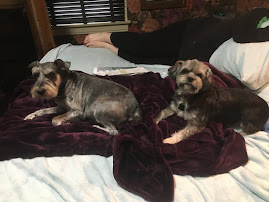
(1) The pandemic is like prison. The pandemic means different things to different people. One of my acquaintances loves working at home and dreads returning to the office. Another is mourning the loss of both of his parents to the virus. For Katja and myself it’s been mostly a matter of home imprisonment — confined to the house, cut off from contact with friends, most of our normal world inaccessible. Life’s pleasures typically involve going places and doing things, and fourteen months of restrictiveness have resulted in a felt loss of control and bouts of boredom and hopelessness. (2) My wife is a pretty good cell-mate. Despite divorce filings rising 34% during the pandemic, I’d say that we fellow prisoners have actually been more mutually supportive than we normally are. Together in the same boat, we’ve managed to share a few laughs every day. (3) The pandemic is a major test. In the most dire circumstances the pandemic has meant coping with the death of loved ones, job losses, business failures, neighborhood decay. In my own case it’s been more a question of resourcefulness — how to restructure my life in meaningful ways, given the loss of so many options. (4) My grade is a C-. A year ago I made a list of things I could do more of. Start a new home exercise program, read more books, do an art project, study Spanish, write more poetry. As with my New Year’s resolutions, I failed at all of these. Personal change is difficult to bring about. My only significant adjustment has been to watch more TV. That’s o.k. — I enjoy watching TV and it’s entertaining. But it’s also lazy and nonproductive. (5) Others are alien beings (and so are we). Out on the street most of us wear masks, concealing our faces, smiles, and nonverbal expressions. When passing on the sidewalk people move as far apart as possible, sometimes stepping into the gutter or onto an adjacent lawn. We now live in a world where everyone else is a potential threat to one’s well-being (and we ourselves are threats to others). How alienated can the populace be? (6) The pandemic is politicized. One might think the pandemic to be a public health matter, but, thanks to an unnamed former president, it’s a political monstrosity as well. Half the country (the other half) is the enemy. I feel angry when I see people in indoor spaces who refuse to wear masks; resent the millions who choose not to be vaccinated; and, with the exception of Gov. Dewine, am generally disgusted with the actions of red-state governors. It’s amazing that we can’t find more common ground since everyone faces the same global disaster. (7) Social isolation isn’t all bad. Some people have prospered during the pandemic. The takeout restaurant down the street is doing a whopping business. For myself I find that my faulty hearing has been largely “cured” during the pandemic (thanks to TV closed captions and lack of conversations). I also suffer much less from social anxiety (given minimal social contact). Much of the time I feel more at peace than I did before the pandemic. (8) One solution is a sense of mission. After months of stagnation, I rediscovered a major task that I’d put off for years and years. We have an upstairs room that I regard as my “junk room”. It’s filled with stuff that I’ve accumulated over forty plus years — treasures from yard sales, antique stores, flea markets, etc. The piles of stuff grew out of control a decade or two ago, and I’ve long been thinking about cleaning it up. With so much new free time, it seemed like my chance had come. The job took about a month, but I was totally engrossed and managed to create order out of chaos. This was my most satisfying accomplishment during the past year. (9) Family is the bulwark. We would have had a much harder time, were it not for the support of our sweet family in New Orleans. J, K, and the kids flew up last month, and, with all of the adults vaccinated, we did a lot of activities that we’d foregone for a year: the zoo, out to eat at a fancy restaurant, multiple thrift shops, Findlay Market and Jungle Jim’s, three-ways at Skyline Chili. They gave us concrete hope that our lives were changing for the better. (10) Dogs help too. Dogs don’t worry at all about the pandemic. If anything, they appreciate getting petted and walked more. My son J. drove up from New Orleans in March 2020 on his way to California and left their miniature schnauzer, Iko, with us. Having this furry bundle of energy in the house has made our lives much more lively and enjoyable. (11) Returning to “normal” is a challenge. With the exception of our recent family visit, Katja and I continue to pretty much shelter in place. Keeping isolated seems to have become our fixed pattern, and sometimes I worry it will go on forever. We need to take some more baby steps to break free.

Wednesday, April 14, 2021

BAD HEARING FOLLIES

DEAR GEORGE, As you know, my hearing isn’t a hundred percent. Actually it’s improved a lot during the pandemic (since I rarely talk to anyone), but it’s still shaky enough that it can leave me muddling through public situations. For the most part, these are harmless but amusing encounters. I try to keep track of examples in my daily diary. Here are a few. LOVE, DAVE
HELPING OUT A STRANGER. Sometimes I’ll ask people to repeat what they said when I don’t get it. Other times, when it’s less important, I just fake it. The other day, for example, I was taking photos of the flowering trees on Ludlow Ave. A middle-aged man approached me on the sidewalk and said something like,“Is grat houch dooling arn the narket?” “Yes,” I said confidently. “I knew it,” he said, shaking his head vigorously. Then, double-checking, he asked, “That one?” and pointed to the house directly in front of us.“No,” I said cluelessly, “that one down there”, and I pointed in the general direction of the house next door. Suddenly it dawned on me that he’d asked me if the house we were in front of was going on the market. Too embarrassed to correct my misinformation, I sped up my walking pace, leaving my innocent victim in a state of befuddlement.
MY ERRONEOUS MEDICAL RECORD. When I went in recently for a medical checkup, the nurse went over my recent history, going through her list to see whether I’d been experiencing various symptoms (e.g., unexpected weight gain, chest pains, dizziness, medication allergies, etc.). As she read through the list, I said “no” for most of them. Sometimes, though, I didn’t quite hear what she said, so I just said “no” to those too. Later I decided that that might not be the best way of going about it since incorrect information could affect my treatment. I have survived so far though.
MYSTERY LUNCH. Returning from the dentist, I came upon a Long John Silver’s. I looked over the drive-through menu and decided on the two-piece fish lunch. The woman over the staticky loudspeaker said, “Would you like to try a kkrccash mnintrop vrvv? It’s $5.99.” She had a high-pitched voice which always gives me trouble, so I asked her to repeat it. She said, “Would you like to try a ppraavckr menffllk fibber? Only $5.99.” So I said, “Yes, that’s what I want.” She asked if I would like some Krrmlkfszces with that, and I said no thank you. It only took a minute or two to get my order, and I pulled into a space in their parking lot to eat. I was curious about my mystery lunch. Actually it turned out well: one piece of fish, one crabcake, four fried shrimp, French fries, and coleslaw. I’d order it again next time but I don’t know what to ask for.
MY FAVORITE SUPPER. The other night Katja brought in a delicious meal to the table. “What’s this?” I asked. “Chicken pot pie,” I heard her say. “Oh great, my favorite, chicken pot pie.” “No,” Katja replied, “chicken pot pie.” “Yes, chicken pot pie — my favorite,” I said. She spoke slowly and articulated carefully, “Chicken Pad Thai.” “Oh, Chicken Pad Thai, I didn’t think this looked like chicken pot pie.” In any case, it was tasty. The next day I sat down and Katja brought in another plate. “Chicken pot pie,” she said. “Oh, Chicken Pad Thai,” I replied. “No, chicken pot pie,” she said. “Are you saying Chicken Pad Thai?” I asked. As it turned out it actually was chicken pot pie this time. I gave up trying to get it right.

Saturday, April 3, 2021

Winston and the Creatures

DEAR GEORGE, My household project this past month has been to clean up the attic room in which I’ve stored detritus that I’ve accumulated over the past four decades (e.g., 1970s magazines, old encyclopedias, antique photos and postcards). Thousands and thousands of items. What a mess. Most of it is useless, though, now and then, I’ve run across items of sentimental value. One of these is a story I’d written in February 1989 about our Bedlington Terrier Winston and the wild creatures that invaded our house and property. It brought back lots of memories, so I thought I would post it here.
“On a chilly Sunday morning at the beginning of the month we slept late, only to be awakened by Winston’s incessant barking. He was pawing wildly at the bedroom door, and he somehow managed to nudge it open, then dashed headlong down the stairwell. Katja followed him to check out the commotion, and moments later she was screaming uncontrollably from the kitchen. Our next-door neighbor was standing on the back porch with a baseball bat in hand. As Katja sobbed, the neighbor explained that two dogs roaming free had attacked our rabbit hutch to get at our bunnies, Jasper and Moonbeam. The dogs had run off when our neighbor approached, but the rabbits’ hearts had burst, and they lay dead on the floor of the hutch. We buried them solemnly next to the porch and grieved for days.
“Two weeks later Katja came in from the back porch, yelling urgently to me to come downstairs. She pointed out the back door. There on the porch, rummaging about the plastic garbage bags, was a full-grown opossum — an ugly brute, large, almost Winston’s size, with a pale whiskered face and a tail like a rat’s. I thought momentarily about trying to catch him, but the sight of him staring back at me made me nervous, and we left him alone.
“On the following Wednesday night, I was working at my office after Evening College when Katja called on the phone. She was sobbing, and I couldn’t make out her words. Something about Winston. As it turned out, she had stepped out on the porch to walk the dog. The 40-pound bag of dog food had been knocked over, and a large tail was protruding from it. Winston leaped at the intruder, and Katja slipped on the rain-soaked stairs, landing on her arm and back. Before she could recover Winston had the opossum by the neck and was shaking it to and fro. I raced home, and Katja was waiting for me. She explained that Winston had momentarily let go of the animal, and she’d pulled him back into the house. She assumed that the opossum was dead, but, when she looked back out, he had vanished. Winston was banned from our bed for the next two nights.
“Then, yesterday, I heard Katja screaming from downstairs again. (For unknown reasons, I am never at the scene of these events.) Winston was racing madly through the living room, and as I stepped into the foyer, a large bird flew past me and caromed off the front door window. Maybe a starling, I’m not sure. With the dog madly in chase, the bird zoomed through the living room, dining room, kitchen, and back again, bouncing off one window after the next. I tied Winston up and opened the front and back doors. Within a minute our aerial visitor was gone.
“These are, I must say, peculiar and trying times. As a lifelong city-dweller, Katja is a bit undone. Having grown up in the country, I take it more in stride. Winston is stimulated and full of fervor. This February, without question, has been the highlight of his mostly uneventful life. All in all, we’ve mad enough excitement from the wild creatures to last the rest of the year.” LOVE, DAVE