Saturday, August 28, 2021

THE DOG DAYS OF AUGUST

DEAR GEORGE, People sometimes think that the “dog days of summer” means the late summer days when temperatures aren’t even fit for a dog. Actually the phrase was coined by the ancient Romans and denotes the period when the star Sirius (the Dog Star) rises and sets with the sun. Because the Dog Star is the brightest star in the sky, the Romans believed that it gave off heat and added to the sun’s warmth, thus accounting for the sultry weather in late summer. Hence, the “dog days”. We’ve definitely experienced the dog days in Cincinnati this month, and we’re glad to be moving on. But despite the heat, the dog days in our household have included lots of highs along with lows.
Two weeks ago our friends Paula and Frank gave us tickets for an evening session at the Western and Southern Open tennis tournament out in Mason. Katja and I have been going to the tournament since the late 1970’s when it was called the A.T.P. We’ve seen Borg, Connors, McEnroe, Lendl, Vitas Gerulaitis, and a host of other luminaries. As we arrived at the Lindner Tennis Center, we realized that this was the first time that we’ve been out in a big crowd in 18 months. At 6 p.m. the temperature was beastly hot, but Paula and Frank’s seats fortunately were in the luxury air-conditioned pavilion at the south end of Center Court. We were excited to see Coco Gauff and Matteo Berretini in person, and we splurged on $11 sandwiches for supper (a Greek gyro for Katja, pulled pork for me).
Two days later our son J flew up from New Orleans to go with us to quarter-final and semi-final sessions of the tournament. Due to a flight delay, he arrived in the wee hours of the morning on Friday. It turns out it is hard to get an Uber after midnight in Greater Cincinnati, but his insomniac parents were awake to greet him at 2:30 a.m. Our original plan had been for Katja to accompany J on Friday and for me to go on Saturday. However, with the heat index in the 90’s I went to both sessions with J while Katja enjoyed watching at home in our air-conditioned den. We saw Medvedev (the number one seed) and Rublev (the eventual men’s champion), along with women’s doubles matches featuring Ash Barty (#1) and Samantha Stosur. To combat the dog days we stopped at Frisch’s after the tournament on Friday for large chocolate shakes and on Saturday at Arby’s for Jamocha shakes.
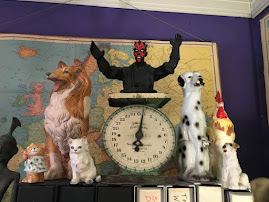
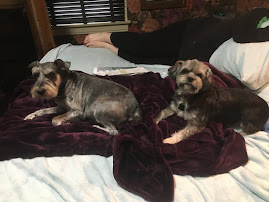
In our off time J and I toured several of our favorite thrift stores: Goodwill, St. Vincent de Paul, the Valley Thrift. This is a father-son activity that goes back forty years or more. We both enjoy incomes that would allow us to buy new stuff at Kenwood Town Centre, but we seem to prefer searching for used treasures at bargain basement prices. J bought a couple of T-shirts with Cincinnati logos, while I browsed for kitschy figurines to add to my collection. The three of us had 4-ways at the Clifton Skyline on Sunday, and then we were off to the airport, the end to a visit that went by much too quickly. Our dog Iko cried when J (his former master) got out of the car to go into the airport, and we felt like crying too.
The following Monday we got up early to greet the plumbing crew who arrived to do a major project in our basement, including installing a new water heater and replacing all the hundred-year old pipes. I wasn’t exactly sure why we were doing this. Our heating/air conditioning package came with a free annual plumbing inspection, and the guy’s free advice was to spend ten thousand dollars to update our system. We just went along with it. The city water works people came first and shut off all water to our house. This meant no water, no flushable toilets, no tooth-brushing, no air conditioning. Because it was scheduled as a two-day job, I suggested we go camping, but Katja refuses to do this, especially with heat in the 90’s. Then we discussed whether to stay in the house while the work was being done or take the dog and retreat to a motel. We decided to stay at home. This might have been more my preference than Katja’s, but she didn’t protest too much. Temperatures quickly climbed to the high 80’s inside our house. Though we didn’t go camping, we wound up roughing it anyway.
The day after our plumbing had been replaced, the Sears guy came to fix the refrigerator. The ice maker had quit working, and I wasn’t able to unclog it. Also one of the shelves had come crashing down. The Sears guy unclogged the caked ice in a few minutes and that solved that problem. (I could have done that.) Then he pushed the loose shelf back into its socket. (I could have done that too.) Finally he pulled out the burnt-out lightbulbs in the stove hood and pushed the new lights in. (I could have done that if I knew how.) The job didn’t take long, but the bill was $182 just the same. I felt ashamed to be so unhandy, but I hid upstairs and avoided public humiliation.
Tonight we have reservations at the Chart House on Riverboat Row in Newport. It’s on the Ohio River with a grand view of the Cincinnati skyline, and we’ll be celebrating our 61st anniversary. A few months ago we wouldn’t have done this, but, with our vaccinations, we’re gradually venturing forth in the world.
The dog days of August have reached their end. For us, some of it’s been fun, some of it painful; some of it cheap, some of it expensive; some of it relaxing, some of it stressful. Overall, pretty much like the hodgepodge of life itself. LOVE, DAVE

Tuesday, August 10, 2021

ALL ABOUT SQUIRRELS

DEAR GEORGE, Growing up on the river, we kids considered the squirrels to be part of our family. They built their nests in the oak trees in our front yard and driveway, scurried about our lawn all day long, and thrived on the thousands of acorns as well as the overflow of seeds from Mother’s bird feeder. They never seemed worried about our Irish Setters, probably because they were too quick to get caught. My dad explained that the squirrels were important because some of their buried acorns would grow into new trees and help replenish the forest. Some seventy years later and in the big city, we still have squirrels all over the place. Iko gets excited and pulls on the leash when he spots them on our daily walks though they’re too quick for him as well. Katja and I watch the pair of squirrels that have built their nest on the window ledge outside our second-floor TV room. They don’t mind us watching them from the other side of the window.
Squirrels have been around for 36 million years, about 180 times longer than we humans. They live on every continent in the world except Antartica. Gray tree squirrels (our familiar friends) grow up to 12 inches in body length with a tail up to 10 inches. Adults weigh between 14 and 21 ounces. Up until the mid-1800’s squirrels were virtually unknown in American cities except as exotic pets. In July 1856 the New York Daily Times reported a huge crowd gathered in Central Park to witness the rare appearance of a gray squirrel, probably a pet that had escaped from its Fifth Avenue owner. Cities, however, began introducing squirrels to parks for their entertainment value, and by the mid-1880’s there were 1500 squirrels in Central Park.
If they had an Olympics for animals, squirrels would bring home a lot of the medals. Though less than 5 percent the body size of human beings, they can run 20 miles an hour and leap a distance of twenty feet. Because of their ability to use their tail as a parachute, squirrels can fall off a tree branch or electric wire 100 feet above the the ground, land on their feet, and not get hurt. Squirrels are double-jointed, and consequently they can turn their ankles and face in any direction. Because of this ability, they are one of the few creatures that can run headfirst down a tree trunk. Not only that but their eyes are positioned so that they can see behind themselves.
Squirrels mostly eat nuts, seeds, and fruit, though they sometimes enjoy an occasional insect, bird egg, or young snake. They’re serious eaters, taking in their own body weight every week. Squirrels don’t hibernate during the winter, Instead they rely on stockpiles of food that they gather and store in hiding places in the ground. Because putting all their food in a single location might make it vulnerable to thieves, squirrels do “scatter hoarding”, spreading their food across hundreds or even thousands of locations. Such clever little guys, they are even known to dig fake holes with no food in them in order to trick onlooking thieves. Researchers at Berkeley have found that, when given a mixture of different types of nuts, squirrels will sort the nuts by type and bury each type in a different spot.
Squirrels live alone most of the time, though they’ll sometimes nest together in the cold winter months. They build their nests with leaves, twigs, bark, moss, dried grass, and other materials in the forks of nut-bearing trees (e.g., oaks) or sometimes in people’s attics or chimneys. Groups of squirrels (called a “scurry” or a “dray”) are very territorial and will fight to the death defending their area, especially mothers protecting their babies. The squirrel mating season is from February through May, with males trying to attract attention by slapping the bark of trees and chattering loudly. Baby squirrels are called kits. They are born hairless, blind, deaf, and about one inch long. Each litter has two to four kits who are weaned after 7 or 8 weeks and leave the nest after 14 or 15 weeks.
Squirrels’ lives are threatened by a large bunch of predators: hawks, weasels, raccoons, bobcats, coyotes, foxes, cats, snakes, owls, dogs, human beings. Tail flicking and the “yuk” or “quaa” call are used to ward off and to warn other squirrels about predators. Squirrels in cities rely more on visual signals because of the noisy background environment, while squirrels in quieter forests vocalize more. Because of all their predators, most squirrels don’t live beyond two years, though those that manage to survive may live for six to twelve years in the wild.
There are about 2 billion Eastern gray squirrels in the U.S. In Ohio there are four species: gray, red, fox, and flying squirrels. Much to my surprise, the flying squirrel is the most common species in Ohio, but they’re rarely seen because they stay in forests and are nocturnal. Eastern gray squirrels are most populous in Cincinnati and Columbus, while Eastern fox squirrels are dominant in Cleveland, Toledo, and Youngstown. There were so many gray squirrels in the state in the nineteenth century that the Ohio General Assembly required each taxable adult to produce to the township clerk a number of squirrel scalps in proportion to county levies (a minimum of 10 but no more than 100 scalps per person). Fox, red, and gray squirrels are still legal game animals in Ohio, though Ohio state law says that, after trapping them, one must not keep squirrels in their possession for over 24 hours.
Americans have eaten squirrels for food since the Colonial days, and they remain a popular item in several Southern states. Chefs describe the meat as delicious, like a cross between a lamb and a duck — incredibly sweet, nutty, and very lean. Consumers like the fact that squirrels are local and a wild meat. Because the loin is so small, a squirrel is cooked exactly like a rabbit, either very quickly or for a long time. There are about 12 companies on the internet that sell grey squirrel, and most local butchers can obtain them if asked. Potential cooks should ask the butcher to skin the squirrels because an amateur would pull them into pieces.
I asked Katja about cooking squirrels for supper one day, and she’s thinking it over. But whether or not we eat some, I’m glad to have done my research. Now I look at our little neighbors with a newfound appreciation. LOVE, DAVE
SOURCES: arrow exterminating.com, “21 Interesting Facts About Squirrels”; asking lot.com, “How many squirrels live in Ohio”; havahart.com, “Squirrels”; livescience.com, “Squirrels: Diet, Habits & Other Facts”; ohiodnr.gov, “Eastern Gray Squirrel”; ohiohistorycentral.org, “Eastern Gray Squirrel”; quora.com, “How many squirrels are there in the world”; skedaddlewildlife.com, “How Long Do Squirrels Live?”; summitenvironmenalsolutions.com, “20 Fun facts about squirrels”; theguardian.com, “The ultimate ethical meal: a grey squirrel”; treehugger.com, “18 Things You May Not Know About Squirrels”; vancouverwildlife.com, “Squirrel Facts and Information”; vice.com, “We Should Think About Eating Squirrel”; wikipedia.org, “Eastern Gray Squirrel”.

Saturday, July 31, 2021

THE AMAZING MONTH OF AUGUST

DEAR GEORGE, The month of August has special significance for our family because of all of the members, past and present, who are named August. My paternal great-grandfather was Carl August Lundgren (1830-1899). My paternal grandfather was Victor August Lundgren Sr. (1875-1959), and my father was Victor August Lundgren Jr. (1908-1993). One of my nephews, Steve and Margie’s second son, is Jason August Lundgren (1975- ). My grandnephews include August Clyde Levinson (2007- ; Vicki and George’s grandson and Jacob and Kazandra’s son) and Oskar August Mason (2006- ; Vicki and George’s grandson and Rhys and Tim’s son). In addition, Katja and I married on Aug. 28 1960. Peter married Faith on Aug. 7, 1968. Jacob married Kazandra on Aug. 13, 2007. Chris married Karrie on Aug. 21, 2010. It’s pretty obvious we are an August family. Here are some other interesting August facts.
AUGUST SYMBOLS: August birthstones: the peridot, sardonyx, and spinet; August birth flowers: the gladiolus, the poppy; August bird of the month: the kingfisher; August colors: orange, red, and light green; August trees: Cypress, Poplar, Cedar, Pine; August zodiac signs: Leo (until Aug. 21) and Virgo (starting Aug. 22).
SIX LITTLE-KNOWN AUGUST HOLIDAYS: Aug. 1, National Mustard Day; Aug. 5, Work Like a Dog Day; Aug. 9., International Lefthanders Day; Aug. 14, Creamsicle Day; Aug. 24, Pluto Demoted Day; Aug. 30, Frankenstein Day.
SIX HISTORICAL EVENTS IN AUGUST: Aug. 24, 79 A.D.: Mount Vesuvius erupted, destroying Pompeii, Stabiae, and Herculaneum; Aug. 4, 1914: The First World War began; Aug. 6, 1945: The first Atomic Bomb was dropped on Hiroshima by the American B-29 bomber Enola Gay; Aug. 28, 1963: Martin Luther King Jr. gave his “I have a dream” speech; Aug. 9, 1974: Richard Nixon resigned the presidency as a result of the Watergate scandal; Aug. 16, 1977: Elvis Presley died at age 42 at the Memphis Baptist Hospital; Aug. 31, 1997: Britain’s Princess Diana died at age 36 in a high-speed car crash.
SIX FAMOUS SINGERS WHO WERE BORN IN AUGUST: Tony Bennett, Aug. 3, 1926, New York, NY; Eddie Fisher, Aug. 10, 1928, Philadelphia, PA; Connie Stevens, Aug. 8, 1938, Brooklyn, NY; Madonna, Aug. 16, 1958, Bay City, MI; Michael Jackson, Aug. 29, 1958; Whitney Houston, Aug. 9, 1963, Newark, NJ.
SIX FAMOUS MOVIE STARS WHO DIED IN AUGUST: Bela Lugosi, Aug. 16, 1956; Marilyn Monroe, Aug. 5, 1962; Charles Boyer, Aug. 26, 1978; Victor Mature, Aug. 4, 1999; Charles Bronson, Aug. 30, 2003; Glenn Ford, Aug. 30, 2006; Julie Harris, Aug. 24, 2013.
SIX SONGS WITH AUGUST IN THE TITLE: August (Julia Nunes); August 7, 4:15 (Jon Bon Jovi); August is Over (We the Kings); Cold Wind in August (Van Morrison); First Day in August (Carole King); The 33rd of August (Waylon Jennings).
SIX CELEBRITY CHILDREN NAMED AUGUST: August Anna Brooks (b. 1994), daughter of singer Garth Brooks; Indiana August Affleck (b. 2004), son of actors Casey Affleck and Summer Phoenix; August Miklos Friedrich Hermann (b. 2006), son of actors Mariska Hargitay and Peter Hermann; August Oliver Matthews (b. 2007), son of musician Dave Matthews; August Theron (b. 2015), daughter of actress Charlize Theron; August Zuckerberg (b. 2017), daughter of Mark Zuckerberg and Priscilla Chan.
SIX MOVIES WITH AUGUST IN THE TITLE: Sunday in August (Marcello Mastroianni, 1950); The Teahouse of the August Moon (Marlon Brando, 1956); The Whales of August (Bette Davis, 1987); Rhapsody in August (Richard Gere, 1991); August Rush (Robin Williams, 2007); August: Osage County (Julia Roberts, 2013).
SIX NATURAL DISASTERS IN AUGUST: Arica earthquake in Chile (Aug. 13, 1868; 25,674 deaths); Krakatoa eruption in Indonesia (Aug. 26, 1883; 36,000 to 120,000 deaths); Swatow typhoon in Philipines and China (Aug. 3, 1922; 50,000 to 100,000 deaths); Diexi earthquake in China (Aug. 25, 1933; 7000-9300 deaths); Hanoi and Red River Delta floods in North Vietnam (Aug. 1, 1971; 100,000 deaths) Typhoon Nina in China (Aug. 7, 1975; 229,000 deaths).

SIX OTHER TITILLATING AUGUST FACTS: August is named after Augustus Caesar, first emperor of the Roman Empire; August only had 29 days until Julius Caesar added two days in 46 BC; The Anglo-Saxons called it Weod month, which means Weed month, because it’s the month that weeds grow most rapidly; August is known as the “dog days of summer” because Sirisu (the dog star) rose at sunrise during the month of August in ancient Roman times; In the U.S. August has the highest birth rate of any month; During August the Great Solar Wheel of the Year is turned to Lammas, one of the four Grand Sabbats celebrated each year by Wiccans and modern Witches throughout the world. That’s everything I know. LOVE, DAVE
SOURCES: birthdaycelebrations.net, “Traditions from Around the World”; bornglorious.com, “Famous People’s Death Anniversary, U.S.: August”;bornglorious.com, “Famous Singers’ Birthdays, U.S.: August”; express.co.uk, “Top 10 facts about August”; freep.com, “15 reasons August is the best month of summer”; history place.com, “This Month in History: August”; holidappy.com, “Birth Birds by Month”; nameberry.com, Baby girl names: August; name candy.com, “Celebrity babies named August”; popculturemadness.com, “About August”; projectbritain.com, “Facts About the Month of August”; ranker.com, The Best Movies With August in the Title; richmond.com, “August Fun Facts”; thecavanproject.com, 16 Songs About August; timeanddate.com, “Fun Holidays”; whattoexpect.com, “Birth Symbols by Month”; wikipedia.org, “August”; wikipedia.org, “List of natural disasters by death toll”.


Wednesday, July 21, 2021

Eighty-Four, Can You Believe It?

DEAR GEORGE, Holy Moly. Today is birthday number 84. It’s arrived much sooner than I expected. When I was five years old, it seemed to take forever to turn 6. Now, however, birthdays simply whiz by. I wish I could figure out how to slow time down.
The other day I was crossing Ludlow Avenue in the crosswalk across from Graeters. My hip was bothering me, and I was limping along. An SUV came to a stop in front of the crosswalk, and the driver hollered at me, “Get a move on, old man!” That was a shock. I wanted to tell him that I’m not that old, that I just have bursitis in my hip. But he was gone before I could utter a word. “Old man” is a nasty label because of the negative and often unwarranted stereotypes that it stirs up, e.g., physical and mental deterioration, frailty, incompetence. I told one of my friends about this episode and she pointed out that, in fact, I am an old man. Literally that is true, but I don’t feel any connection to the miserable portrait that follows.
Gerontologists divide old age into three stages: young old (65 to 74), middle old (75 to 84), and old old (85 and above). Young old sounds most favorable, old old sounds worst. My birthday, of course, puts me near the tipping point. Young-olders are healthiest and most independent; middle-olders begin to need some assistance; and old-olders, because of disease and disability, are dependent on caretakers, often in assisted care facilities. These, of course, are abstract categories, designed to describe the average progression of the aging process. At 84 my life and experiences still fit in the young old category, and I plan to hang out there as long as my luck holds out.
Now and then I get anxious about my age, but I think that’s foolish. I’m healthy, have lots of interests, and enjoy many life pleasures, so it’s ridiculous to waste a lot of emotional energy on an imagined future at some unknown time. Because of the pandemic, I’ve lost a lot during the last twelve months and I’m looking forward to a much richer and more enjoyable 85th year. We are starting by going to the Warren County Fair this afternoon in Lebanon. I can’t wait to mingle with the rabbits and the goats. LOVE, DAVE

Wednesday, July 14, 2021

BATTLING THE SLEEP DEMONS

DEAR GEORGE, Some years ago I was a Grade A sleeper. All the credit goes to my doctor who was happy to refill my Ambien prescription whenever I wanted. Ambien, in my view, is a wonder drug — like oxycodone or the polio vaccine. I would simply take a pill, fall asleep in precisely 30 minutes, sleep soundly for eight hours straight, and wake up refreshed and eager for the new day. Unfortunately that doctor retired and my new doctor was less enthusiastic about drugs. He hinted that one of his patients went out in a stupor and walked in front of a truck. Whatever the case, when I turned eighty he told me that federal guidelines prohibited him from refilling my Ambien prescription. I think that was a fib because my wife’s doctor didn’t seem subject to such guidelines. Nonetheless, my Ambien supply came to an abrupt end. And so did my good sleep. I tried all of the over-the-counter sleep aids, but none of them seemed to work. Now I often take two or three hours to fall asleep or I wake up at 3 a.m. and stay awake till sunrise. Such a drag.
I’ve been asking Google about sleep problems, and there’s a lot of info. One thing I learned is that rich people sleep better than poor people. If the world were just, this should be the reverse, but it’s not. Explanations for low-income insomnia include occupational hazards, off-hour shifts, lack of healthcare services, neighborhood stressors (e.g., noise, pollution), and daily stress. Sleep inequality in turn contributes to decreased cognitive performance, mental health issues, disease (e.g., diabetes, heart disease, stroke), weight gain, and up to a 30% greater risk of death.
Another unpleasant fact is that sleep problems increase with age. Older people often have more trouble falling asleep, sleep less deeply, wake up more often during the night, wake earlier in the morning, and wake up feeling tired. (This sounds familiar to me.) Many different factors enter into these aging-related changes: less production of hormones that promote sleep, more sensitivity to environmental stimuli, medical issues (e.g., arthritis, heart or lung disease), side effects of medications. In addition, low exercise, frequent naps, and drinking more alcohol or caffeine can contribute to sleep difficulties. Older adults with poor nighttime sleep are more likely to be depressed, experience more attention and memory problems, fall more in the night, and have a poorer quality of life. On the other hand, bad sleep is not an inevitable product of aging. Many healthy older adults report few or no sleep problems.
There are many standard sleep tips: don’t use cell phones, iPads, or TV in the bedroom; do aerobic exercise during the day (before 2 p.m.); avoid caffeine, alcohol, sugary foods, exercise, and smoking before bedtime; reduce light and noise in the bedroom; keep the same sleep schedule every day; check side effects of medications; keep a journal, listen to calming music, or read a relaxing book to reduce mental stress. I find that it sometimes helps to go to sleep if I slowly count backwards in my mind from 99 to 0, or progressively relax my muscles from my toes up to my nose, or visualize pleasant landscapes like the Menominee River. When I wake up bright-eyed at 2 or 3 a.m. I often play a game or two of computer solitaire. Winning the game seems to clear my mind and provides closure, such that I go to sleep quickly when returning to bed.
Two things bother me most about my erratic sleep. First, I don’t know why this is happening. My life isn’t that stressful, and I stay up till midnight so I ought to be tired. Second, it’s frustrating that I’m not in control of my own mind and body. I whisper to myself, “Go to sleep…go to sleep…go to sleep” fifty or more times, but my body pays no attention. Getting to sleep is, however, an interesting challenge, and I sort of look forward to it each night. I think I will eventually be successful. LOVE, DAVE
SOURCES: health.clevelandclinic.org, “22 Facts About Sleep That Will Surprise You”; healthline.com, “People with Lower Incomes Have More Sleep Issues…”; helpguide.org, “Sleep Tips for Older Adults”; sbm.org, “Insomnia in Older Adults”;sleepeduction.org, “Sleeping and Growing Older”; tuck.com, “The Inequality of Sleep”