Wednesday, October 27, 2021

THE BEST OF TIMES


Dear George, 
 I lived in four places while growing up in Menominee between 1937 and 1955. Up until I was six my parents lived had a second floor apartment in a large white house on Ogden Avenue (now 10th Ave.) at the foot of the Interstate Bridge. My age-mate and first friend, Sally Fernstrum, and her parents lived on the first floor, and Sally and I walked four or five blocks each day to kindergarten at Boswell School. At the end of that year my family moved to Sheridan Road (now 1st St.) around Michigan Ave. (now 16th Ave.), next to the State Street neighborhood where many family friends lived (Burkes, St. Peters, Worths, Sawyers, Murphys, and others). With the U.S. entry into World War II, my dad went for officer training at the Great Lakes Naval Station and was then shipped off to the Pacific. My mother, my younger brother Steve, and I moved to a second floor apartment at the corner of Quimby (3rd Ave.) and Sheridan Road. I think the building might have been owned by my paternal grandfather, V.A. Sr. Then when my dad returned in 1946, we moved to our house on the river that had been built by my maternal grandfather, Guy Cramer. That move was monumental for our family. For us kids, we went from being town kids to country kids — entirely new lives. I wrote a poem about this some time back, and recently I’ve worked at revising it for my OLLI poetry class. Here is the current version. 
Love, Dave 

              The Best of Times 

With the war finally over  
and my father back from the Pacific, 
our family, poorer than magpies, 
moved into my dead grandpa’s cottage, 
set among the white oaks 
on the banks of the Menominee, 
the only house on River Road, 
built of Norway Pine 
and boulders from the field, 
no electricity, 
no running water, 
no indoor toilet, 
no telephone, 
six-foot pine snakes in the foundation, 
a gaggle of bats in the attic, 
porcupines nesting in the evergreens. 
We grilled hot dogs at the outdoor fireplace, 
took weekly baths in the river, 
and caught fireflies in a Mason jar. 
With big snowstorms, 
the County took half a week to plow River Road, 
giving us kids private holidays from school. 
We pioneers of the Great North Woods, 
we children of the forest. 

As the oldest I had many tasks, 
to light the kerosene lanterns at sundown, 
to keep the firewood bin stocked, 
to bring water from the outdoor pump 
for the dog’s bowl and my parents’ coffee, 
to gather wild strawberries for breakfast, 
to shovel the walk in winter, 
and, most of all, to raise Old Glory, 
then fold her up again at dusk. 

My favorite times 
were going with my father to the city dump, 
a twenty-minute trek up the road, 
pulling my red wagon 
to lug found treasures home. 
I collected bottle caps 
while Dad searched for household goods, 
a bedside table with a chipped leg, 
a discarded flower vase, 
someone’s seashell ashtray 
from their Florida vacation, 
rusty old tools or perhaps a tin bucket. 

We loved our years on the river, 
swimming from morn till dusk, 
riding our bikes down the old road, 
camping out at Brewery Park, 
shooting at beer cans with the .22, 
acorn fights with my brother Steven, 
taking our green rowboat 
with its one horsepower motor 
for picnics on Indian Island 
or into the channel with its 
family of Great Blue Herons. 

Then came the summer of 1948 
and new neighbors, the Orths and the Meads,
built houses down from ours  
and the County strung up telephone and electric lines. 
Our wilderness world would never be quite the same.


Thursday, October 14, 2021

Skipper B


Dear George, 
        Recently I was saddened to learn that one of my best childhood friends, Skipper B, died several years ago. Our parents were close friends, so Skipper and I became close friends too. Our family lived on Sheridan Road at the time, and Skipper’s family lived a block away on State Street. We cruised the neighborhood on our bikes, played softball and touch football at Triangle Park, got ice cream cones at the Producer’s Dairy, swam in the bay at the end of a neighborhood street, built snow forts, and played cops and robbers or cowboys and Indians in my back yard. 
         Skipper was seven months older than me but several years more worldly, and I learned a lot about life from him, including most of what I knew about the birds and the bees. In fourth grade I had a crush on one of our classmates named Louise. Skipper got tired of my talking about how beautiful Louise was, and one day he took me up to his parents’ bedroom, opened up one of his mother’s women’s magazines, and showed my a two-page Clairol ad with dozens of pictures of models who had hair dyed in different shades. He asked me if I thought these women were beautiful, and, when I agreed, he asked me to show him one model that looked like Louise. I looked and looked but couldn’t find a single one. Skipper explained that a girl named Maxine in our class was beautiful and looked most like these models and that Louise, in comparison, had a big nose, a square jaw, and a large Adam’s Apple. That ended my crush on Louise (but started my crush on Maxine). 
         My own family was pretty non-religious, so Skipper provided a lot of my spiritual education as well. His family were good Catholics, and he went to Sunday School and mass every week. Every Monday morning Skipper told me the story of a new saint he had learned about. I also learned a lot about the priest’s drinking indiscretions and which of the nuns were the meanest. 
         Both of us were comic book enthusiasts. I liked Bugs Bunny and Donald Duck the most, but Skipper owned a complete collection of Classic Comics, i.e., the comic book adaptations of literary classics (Moby Dick,The Three Musketeers, Hamlet, the Iliad, etc.). When we debated which superhero was best, I picked Superman, but Skipper liked Batman the best because his powers relied on human abilities rather than fantasy super-powers. 
         In fourth grade our teacher devised a competitive system by which students could move through the military ranks by accumulating points for various extracurricular activities — e.g., going to church, participation on sports teams, singing in the Glee Club, belonging to the Boy or Girl Scouts. All the children began the year as buck privates, and, as they accumulated points during the year, they could proceed through the ranks of sergeant, lieutenant, captain, major, colonel, etc. The highest possible rank was Gold Star General. It involved so many points that it seemed impossible that anyone could every achieve that rank. For the most part, that was true. However, one of our classmates did become a Gold Star General by the school year’s end. Skipper belonged to the most groups, participated in the most activities, went to the most events, and had the most interests. 
         After fourth grade Skipper transferred to parochial school, and two years later he and his family moved to Minneapolis. That was the last time I saw or heard from him until I ran across his obituary. It was amazing and gratifying to read about the rest of Skipper’s life. He attended a top private school in Minneapolis where he lettered in three varsity sports, then went on to Yale University where he continued to excel academically and starred in Yale dramatic productions. After law school at the University of Chicago, Skipper joined a top law firm in Minneapolis and became Chair of the Litigation Department. An avid athlete who enjoyed sailing and skiing, Skipper took up marathon running at age 41 and completed nearly 90 marathons and several 50 mile and 62 mile races. Married four times and mentor to many fellow members of AA, Skipper owned homes in Minneapolis, Colorado, and Wisconsin; was a foster parent to several children; opened and ran a gourmet health food restaurant; wrote several plays, one novella, and an autobiography; and created a successful art fair in Minneapolis.                                                       
        When I knew him, Skipper was an extraordinary kid, but that was only a precursor to his extraordinary adult life. It’s like Freud said — our basic character structure is firmly in place by age 6 or 7.  I’m sad that I lost touch with Skipper.
Love, Dave 


Monday, October 4, 2021

On the Road Again

DEAR GEORGE, Recently long-time friends, Lois and Bob A, invited us to come up to visit them in Menominee, my Upper Peninsula home town. It was our first trip in 18 months. We drove up from Cincinnati via Chicago and Milwaukee in two days, arriving in Menominee in the late afternoon on Sunday. Menominee (pop. 8,150) is located on Green Bay at the southern tip of the U.P., about 55 miles north of the city of Green Bay. It’s right across the Menominee River from Marinette, Wisconsin (pop. 10,608), our twin sister city and the site of my father’s family home. Returning to Menominee and Marinette is always an emotional experience for me. I left for college in 1955, yet much of the town remains the same some 66 years later: the layout of the streets, most of the houses and buildings, the churches, the city parks, the courthouse, the library, the marina, the cemetery, the airport. On the other hand, many of the important places of my youth have either disappeared or been relocated: my grade school and high school, my father’s law office, my uncle’s Rexall drugstore, the DAR Boys Club, the Lloyd and Menominee Theaters, the Five and Dime, the GI Surplus Store, Harry Cooney’s gas station, Garbell’s soda shop, Sonny’s grocery, Trautners, the Gateway Cafe, the hospital, Herb Beyersdorf’s garage, the Ideal Dairy. While I was clearly home again, a big chunk of “home” now exists only in my mind.
Our friends live in a magnificent home that they built by hand themselves on the shore of Green Bay. Because we are so landlocked in southwest Ohio, it’s easy to forget how wonderful it is to live on the water. Menominee is spread out for three miles along the shoreline of Green Bay, Lake Michigan’s largest inlet, and the town’s southern boundary is along the Menominee River (the border between the U.P. and Wisconsin). Menominee’s main business district is situated on the bay, as are its five city parks. You never forget being on the water, the visual scenes are hypnotic, and the ready access to the bay and the river make the outdoors a central part of residents’ everyday lives: swimming, fishing, boating, water-skiing, kayaking and canoeing, skating, ice boating.
We have a regular routine as tourists when we visit Menominee and Marinette, and we did much of it this trip: driving around the loop, Henes Park (with a brand new pavilion bathhouse), the boutiques in the historic downtown district, the marina, the magnificent Spies Public Library, art galleries (including Marinette’s Rusty Wolfe Gallery which could just as well be on Madison Avenue in NYC), “Simply Charming”, Pine Tree Mall, antique malls, thrift shops, the Riverside Cemetery, Riverside Drive in Marinette, Sequins, Joe’s Cheese Shop, and a trip on River Road to the location of our old family home. We were saddened by the loss of Weathervane Antiques and Younkers department store, but pleased with the new Menekaunee Harbor Park and boat launch with its attractive regional sculptures and with the new House of Yesteryear antique store in downtown Menominee. I bought a Menominee Maroons T-Shirt for $12.95 at the drugstore, and Katja got us two U.P. hoodies and some $75-a-pound cheese at Joe’s. Katja and I had a date night at Berg’s Landing, Menominee’s finest restaurant, and enjoyed a lot of other local eateries as well: The Watermark [successor to Schloegel’s], Applejacks, The Brothers Three, the Serving Spoon, and Culvers where we had our traditional lunch with my cousins Ann and John B.
In the late 1960’s and early 1970’s my parents purchased and renovated an 1880’s farm near Birch Creek, five miles north of town, and my Seattle niece and nephew, Jennifer and Greg, currently operate the family property as a successful Airbnb. Katja and I went out to Farm on a day between rentals and Jim and Sharon K gave us a tour. My parents, Vic and Doris, would have been thrilled. There were new roofs on four of the buildings, the Barn’s sagging foundation had been shorn up, the guest house had been renovated, the bridge over Birch Creek repaired. All in all, the property was more inviting than it’s ever been, and it’s no wonder that nearly all of the Guest Book comments refer to it as “magical” or “mystical”. We thoroughly enjoyed our visit, though it was bittersweet. We’ve had so many happy family reunions over the years with lots of joking and laughter, but now, with the loss of parents and siblings, it’s more of a place for quiet reminiscing and nostalgia.
We decided to return to Cincinnati by way of the Upper Peninsula and the Mackinac Bridge. The 195-mile trip from Menominee to St. Ignace and the bridge reminded me of how remarkable the U.P. is. We passed through about a dozen villages and small towns, but only one had a population of 10,000 or more (Escanaba) and most had 200 people or less. The U.P. is largely a wilderness area, and we spent the vast majority of time driving through evergreen forests along the Lake Michigan shoreline — a wild and beautiful country. The Upper Peninsula is about the size of Denmark, but contains only 3% of Michigan’s population. Population density is 19 people per square mile (compared to 94 people per square mile for the U.S. as a whole). Yoopers, as natives are colloquially called, enjoy an outdoor life — hunting, fishing, boating, camping, hiking. Our trip made me once again contemplate how much my personality and attitudes were shaped by growing up in the U.P. LOVE, DAVE

Monday, September 27, 2021

ONLINE NIGHTMARES

DEAR GEORGE, When our long-time Menominee friends invited us up for a visit, we jumped at the chance. We haven’t gone on a real trip for almost two years. Because I haven’t driven anywhere more than 20 miles away in all that time, I was a bit wary about a 1500-mile road trip to the U.P. and back. However, it all went smoothly — not counting the blip outside Chicago.
It was rush hour so we decided to use the Illinois Tollway on the city’s western edge to avoid the heaviest traffic. As we entered the tollway I was puzzled by a digital display that read “NO CASH — Use I-Pass or Pay Online”. We didn’t have an I-Pass, of course, and I had no idea how paying online was even possible. Sure enough, when we got to the first set of toll booths, all of the booths that formerly housed human toll-takers were barricaded off. There was a new set of lanes designated for people who had I-passes, and the cars breezed through at 60 miles an hour, but there was only one single lane for people who wanted to pay online. No human toll-taker in sight. Since the online lane was my only option, I held up my cell-phone to the windshield and drove through. I didn’t really think that my cell phone was smart enough to pay my toll, and I was acutely aware that when I had last done this in Florida I wound up paying a $65 traffic ticket.
Ten miles later we came to an identical set of barricaded toll booths and I-Pass lanes. This time, faced with the prospect of a second $65 ticket, I pulled over to the side of the road and parked. I noticed a small sign that said, “To apply for an I-Pass, go to ipass.com." Hooray! I breathed a big sigh of relief and went to ipass.com on my cell phone. To say that the web-site was user-unfriendly would be an understatement. It required a couple dozen pieces of information, some of it very confusing, at least to me After twenty minutes, I was still not close to finishing. I couldn’t believe that the authorities subjected innocent drivers to this nightmare, and I fantasized that we would be marooned for days on the tollway. There was an official-looking building to the right of the toll-booths, so I got out of the car, climbed a fence, and went over to it. I banged on the front door, then walked around and banged on the back door, but there were no humans around. As I headed back toward my car, a tollway truck pulled into the parking lot. Thrilled by my good luck, I rushed over, holding out my cellphone to the driver. He just shook his head, refused to look at my phone, and told me to go to “illinoistollway.com" to pay online. Even if he hadn’t solved my problem directly, I was certain I was now on the right track.
“illinoistollway.com" turned out to be disappointing because it required all the same responses as did “ipass.com". I misspelled the first word I typed in, listing my name as “davif”, and I couldn’t figure out how to correct my mistake. After a lot of personal information, the website eventually asked for a password. I typed in my favorite password, “12345”. “Failure,” the website said, “ use a small letter”. I tried “d12345” but that too was a Failure: “Use a capital letter.” “Dav12345”, I responded. No luck — “Use a non-alphanumeric character”. I typed“ Dav@12345”, and — Voila! — I finally had created an acceptable password. After inputting my credit card information, the last step involved a box labelled “Verification”. I had no idea what Verification meant. I typed “verified” in the box but that was more “Failure”. Likewise for “yes” and “david.lundgren” and “finished”. Finally I noticed a box just above Verification that contained some squiggly fuzzy numbers and letters. They were very obscure and I couldn’t make them out clearly, but I guessed they might be “mN08”. I typed “mN08”in the Verification box but that too was “Failure”. I looked at the characters even more carefully. Perhaps they were “nW06”. I typed that in, and, miracle of miracles” the website said that I had successfully completed my Pay by Plate application.
It was exactly one hour since we had stopped to apply for our I-pass. My wife was ready to kill someone. No other cars had had to stop during that time, and I wondered if I were the only technologically inept traveller passing through Chicago. We zipped through the remaining five “pay online” lanes without a moment’s hesitation. I’m hopeful that we paid our tolls online though I’m uncertain and still nervous. I definitely don’t know about the first lane that we passed through without paying, but, if we only wind up with a $65 ticket, I will be content. I’m sure next time will be easier. LOVE, DAVE

Saturday, August 28, 2021

THE DOG DAYS OF AUGUST

DEAR GEORGE, People sometimes think that the “dog days of summer” means the late summer days when temperatures aren’t even fit for a dog. Actually the phrase was coined by the ancient Romans and denotes the period when the star Sirius (the Dog Star) rises and sets with the sun. Because the Dog Star is the brightest star in the sky, the Romans believed that it gave off heat and added to the sun’s warmth, thus accounting for the sultry weather in late summer. Hence, the “dog days”. We’ve definitely experienced the dog days in Cincinnati this month, and we’re glad to be moving on. But despite the heat, the dog days in our household have included lots of highs along with lows.
Two weeks ago our friends Paula and Frank gave us tickets for an evening session at the Western and Southern Open tennis tournament out in Mason. Katja and I have been going to the tournament since the late 1970’s when it was called the A.T.P. We’ve seen Borg, Connors, McEnroe, Lendl, Vitas Gerulaitis, and a host of other luminaries. As we arrived at the Lindner Tennis Center, we realized that this was the first time that we’ve been out in a big crowd in 18 months. At 6 p.m. the temperature was beastly hot, but Paula and Frank’s seats fortunately were in the luxury air-conditioned pavilion at the south end of Center Court. We were excited to see Coco Gauff and Matteo Berretini in person, and we splurged on $11 sandwiches for supper (a Greek gyro for Katja, pulled pork for me).
Two days later our son J flew up from New Orleans to go with us to quarter-final and semi-final sessions of the tournament. Due to a flight delay, he arrived in the wee hours of the morning on Friday. It turns out it is hard to get an Uber after midnight in Greater Cincinnati, but his insomniac parents were awake to greet him at 2:30 a.m. Our original plan had been for Katja to accompany J on Friday and for me to go on Saturday. However, with the heat index in the 90’s I went to both sessions with J while Katja enjoyed watching at home in our air-conditioned den. We saw Medvedev (the number one seed) and Rublev (the eventual men’s champion), along with women’s doubles matches featuring Ash Barty (#1) and Samantha Stosur. To combat the dog days we stopped at Frisch’s after the tournament on Friday for large chocolate shakes and on Saturday at Arby’s for Jamocha shakes.
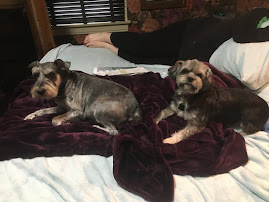
In our off time J and I toured several of our favorite thrift stores: Goodwill, St. Vincent de Paul, the Valley Thrift. This is a father-son activity that goes back forty years or more. We both enjoy incomes that would allow us to buy new stuff at Kenwood Town Centre, but we seem to prefer searching for used treasures at bargain basement prices. J bought a couple of T-shirts with Cincinnati logos, while I browsed for kitschy figurines to add to my collection. The three of us had 4-ways at the Clifton Skyline on Sunday, and then we were off to the airport, the end to a visit that went by much too quickly. Our dog Iko cried when J (his former master) got out of the car to go into the airport, and we felt like crying too.
The following Monday we got up early to greet the plumbing crew who arrived to do a major project in our basement, including installing a new water heater and replacing all the hundred-year old pipes. I wasn’t exactly sure why we were doing this. Our heating/air conditioning package came with a free annual plumbing inspection, and the guy’s free advice was to spend ten thousand dollars to update our system. We just went along with it. The city water works people came first and shut off all water to our house. This meant no water, no flushable toilets, no tooth-brushing, no air conditioning. Because it was scheduled as a two-day job, I suggested we go camping, but Katja refuses to do this, especially with heat in the 90’s. Then we discussed whether to stay in the house while the work was being done or take the dog and retreat to a motel. We decided to stay at home. This might have been more my preference than Katja’s, but she didn’t protest too much. Temperatures quickly climbed to the high 80’s inside our house. Though we didn’t go camping, we wound up roughing it anyway.
The day after our plumbing had been replaced, the Sears guy came to fix the refrigerator. The ice maker had quit working, and I wasn’t able to unclog it. Also one of the shelves had come crashing down. The Sears guy unclogged the caked ice in a few minutes and that solved that problem. (I could have done that.) Then he pushed the loose shelf back into its socket. (I could have done that too.) Finally he pulled out the burnt-out lightbulbs in the stove hood and pushed the new lights in. (I could have done that if I knew how.) The job didn’t take long, but the bill was $182 just the same. I felt ashamed to be so unhandy, but I hid upstairs and avoided public humiliation.
Tonight we have reservations at the Chart House on Riverboat Row in Newport. It’s on the Ohio River with a grand view of the Cincinnati skyline, and we’ll be celebrating our 61st anniversary. A few months ago we wouldn’t have done this, but, with our vaccinations, we’re gradually venturing forth in the world.
The dog days of August have reached their end. For us, some of it’s been fun, some of it painful; some of it cheap, some of it expensive; some of it relaxing, some of it stressful. Overall, pretty much like the hodgepodge of life itself. LOVE, DAVE

Tuesday, August 10, 2021

ALL ABOUT SQUIRRELS

DEAR GEORGE, Growing up on the river, we kids considered the squirrels to be part of our family. They built their nests in the oak trees in our front yard and driveway, scurried about our lawn all day long, and thrived on the thousands of acorns as well as the overflow of seeds from Mother’s bird feeder. They never seemed worried about our Irish Setters, probably because they were too quick to get caught. My dad explained that the squirrels were important because some of their buried acorns would grow into new trees and help replenish the forest. Some seventy years later and in the big city, we still have squirrels all over the place. Iko gets excited and pulls on the leash when he spots them on our daily walks though they’re too quick for him as well. Katja and I watch the pair of squirrels that have built their nest on the window ledge outside our second-floor TV room. They don’t mind us watching them from the other side of the window.
Squirrels have been around for 36 million years, about 180 times longer than we humans. They live on every continent in the world except Antartica. Gray tree squirrels (our familiar friends) grow up to 12 inches in body length with a tail up to 10 inches. Adults weigh between 14 and 21 ounces. Up until the mid-1800’s squirrels were virtually unknown in American cities except as exotic pets. In July 1856 the New York Daily Times reported a huge crowd gathered in Central Park to witness the rare appearance of a gray squirrel, probably a pet that had escaped from its Fifth Avenue owner. Cities, however, began introducing squirrels to parks for their entertainment value, and by the mid-1880’s there were 1500 squirrels in Central Park.
If they had an Olympics for animals, squirrels would bring home a lot of the medals. Though less than 5 percent the body size of human beings, they can run 20 miles an hour and leap a distance of twenty feet. Because of their ability to use their tail as a parachute, squirrels can fall off a tree branch or electric wire 100 feet above the the ground, land on their feet, and not get hurt. Squirrels are double-jointed, and consequently they can turn their ankles and face in any direction. Because of this ability, they are one of the few creatures that can run headfirst down a tree trunk. Not only that but their eyes are positioned so that they can see behind themselves.
Squirrels mostly eat nuts, seeds, and fruit, though they sometimes enjoy an occasional insect, bird egg, or young snake. They’re serious eaters, taking in their own body weight every week. Squirrels don’t hibernate during the winter, Instead they rely on stockpiles of food that they gather and store in hiding places in the ground. Because putting all their food in a single location might make it vulnerable to thieves, squirrels do “scatter hoarding”, spreading their food across hundreds or even thousands of locations. Such clever little guys, they are even known to dig fake holes with no food in them in order to trick onlooking thieves. Researchers at Berkeley have found that, when given a mixture of different types of nuts, squirrels will sort the nuts by type and bury each type in a different spot.
Squirrels live alone most of the time, though they’ll sometimes nest together in the cold winter months. They build their nests with leaves, twigs, bark, moss, dried grass, and other materials in the forks of nut-bearing trees (e.g., oaks) or sometimes in people’s attics or chimneys. Groups of squirrels (called a “scurry” or a “dray”) are very territorial and will fight to the death defending their area, especially mothers protecting their babies. The squirrel mating season is from February through May, with males trying to attract attention by slapping the bark of trees and chattering loudly. Baby squirrels are called kits. They are born hairless, blind, deaf, and about one inch long. Each litter has two to four kits who are weaned after 7 or 8 weeks and leave the nest after 14 or 15 weeks.
Squirrels’ lives are threatened by a large bunch of predators: hawks, weasels, raccoons, bobcats, coyotes, foxes, cats, snakes, owls, dogs, human beings. Tail flicking and the “yuk” or “quaa” call are used to ward off and to warn other squirrels about predators. Squirrels in cities rely more on visual signals because of the noisy background environment, while squirrels in quieter forests vocalize more. Because of all their predators, most squirrels don’t live beyond two years, though those that manage to survive may live for six to twelve years in the wild.
There are about 2 billion Eastern gray squirrels in the U.S. In Ohio there are four species: gray, red, fox, and flying squirrels. Much to my surprise, the flying squirrel is the most common species in Ohio, but they’re rarely seen because they stay in forests and are nocturnal. Eastern gray squirrels are most populous in Cincinnati and Columbus, while Eastern fox squirrels are dominant in Cleveland, Toledo, and Youngstown. There were so many gray squirrels in the state in the nineteenth century that the Ohio General Assembly required each taxable adult to produce to the township clerk a number of squirrel scalps in proportion to county levies (a minimum of 10 but no more than 100 scalps per person). Fox, red, and gray squirrels are still legal game animals in Ohio, though Ohio state law says that, after trapping them, one must not keep squirrels in their possession for over 24 hours.
Americans have eaten squirrels for food since the Colonial days, and they remain a popular item in several Southern states. Chefs describe the meat as delicious, like a cross between a lamb and a duck — incredibly sweet, nutty, and very lean. Consumers like the fact that squirrels are local and a wild meat. Because the loin is so small, a squirrel is cooked exactly like a rabbit, either very quickly or for a long time. There are about 12 companies on the internet that sell grey squirrel, and most local butchers can obtain them if asked. Potential cooks should ask the butcher to skin the squirrels because an amateur would pull them into pieces.
I asked Katja about cooking squirrels for supper one day, and she’s thinking it over. But whether or not we eat some, I’m glad to have done my research. Now I look at our little neighbors with a newfound appreciation. LOVE, DAVE
SOURCES: arrow exterminating.com, “21 Interesting Facts About Squirrels”; asking lot.com, “How many squirrels live in Ohio”; havahart.com, “Squirrels”; livescience.com, “Squirrels: Diet, Habits & Other Facts”; ohiodnr.gov, “Eastern Gray Squirrel”; ohiohistorycentral.org, “Eastern Gray Squirrel”; quora.com, “How many squirrels are there in the world”; skedaddlewildlife.com, “How Long Do Squirrels Live?”; summitenvironmenalsolutions.com, “20 Fun facts about squirrels”; theguardian.com, “The ultimate ethical meal: a grey squirrel”; treehugger.com, “18 Things You May Not Know About Squirrels”; vancouverwildlife.com, “Squirrel Facts and Information”; vice.com, “We Should Think About Eating Squirrel”; wikipedia.org, “Eastern Gray Squirrel”.

Saturday, July 31, 2021

THE AMAZING MONTH OF AUGUST

DEAR GEORGE, The month of August has special significance for our family because of all of the members, past and present, who are named August. My paternal great-grandfather was Carl August Lundgren (1830-1899). My paternal grandfather was Victor August Lundgren Sr. (1875-1959), and my father was Victor August Lundgren Jr. (1908-1993). One of my nephews, Steve and Margie’s second son, is Jason August Lundgren (1975- ). My grandnephews include August Clyde Levinson (2007- ; Vicki and George’s grandson and Jacob and Kazandra’s son) and Oskar August Mason (2006- ; Vicki and George’s grandson and Rhys and Tim’s son). In addition, Katja and I married on Aug. 28 1960. Peter married Faith on Aug. 7, 1968. Jacob married Kazandra on Aug. 13, 2007. Chris married Karrie on Aug. 21, 2010. It’s pretty obvious we are an August family. Here are some other interesting August facts.
AUGUST SYMBOLS: August birthstones: the peridot, sardonyx, and spinet; August birth flowers: the gladiolus, the poppy; August bird of the month: the kingfisher; August colors: orange, red, and light green; August trees: Cypress, Poplar, Cedar, Pine; August zodiac signs: Leo (until Aug. 21) and Virgo (starting Aug. 22).
SIX LITTLE-KNOWN AUGUST HOLIDAYS: Aug. 1, National Mustard Day; Aug. 5, Work Like a Dog Day; Aug. 9., International Lefthanders Day; Aug. 14, Creamsicle Day; Aug. 24, Pluto Demoted Day; Aug. 30, Frankenstein Day.
SIX HISTORICAL EVENTS IN AUGUST: Aug. 24, 79 A.D.: Mount Vesuvius erupted, destroying Pompeii, Stabiae, and Herculaneum; Aug. 4, 1914: The First World War began; Aug. 6, 1945: The first Atomic Bomb was dropped on Hiroshima by the American B-29 bomber Enola Gay; Aug. 28, 1963: Martin Luther King Jr. gave his “I have a dream” speech; Aug. 9, 1974: Richard Nixon resigned the presidency as a result of the Watergate scandal; Aug. 16, 1977: Elvis Presley died at age 42 at the Memphis Baptist Hospital; Aug. 31, 1997: Britain’s Princess Diana died at age 36 in a high-speed car crash.
SIX FAMOUS SINGERS WHO WERE BORN IN AUGUST: Tony Bennett, Aug. 3, 1926, New York, NY; Eddie Fisher, Aug. 10, 1928, Philadelphia, PA; Connie Stevens, Aug. 8, 1938, Brooklyn, NY; Madonna, Aug. 16, 1958, Bay City, MI; Michael Jackson, Aug. 29, 1958; Whitney Houston, Aug. 9, 1963, Newark, NJ.
SIX FAMOUS MOVIE STARS WHO DIED IN AUGUST: Bela Lugosi, Aug. 16, 1956; Marilyn Monroe, Aug. 5, 1962; Charles Boyer, Aug. 26, 1978; Victor Mature, Aug. 4, 1999; Charles Bronson, Aug. 30, 2003; Glenn Ford, Aug. 30, 2006; Julie Harris, Aug. 24, 2013.
SIX SONGS WITH AUGUST IN THE TITLE: August (Julia Nunes); August 7, 4:15 (Jon Bon Jovi); August is Over (We the Kings); Cold Wind in August (Van Morrison); First Day in August (Carole King); The 33rd of August (Waylon Jennings).
SIX CELEBRITY CHILDREN NAMED AUGUST: August Anna Brooks (b. 1994), daughter of singer Garth Brooks; Indiana August Affleck (b. 2004), son of actors Casey Affleck and Summer Phoenix; August Miklos Friedrich Hermann (b. 2006), son of actors Mariska Hargitay and Peter Hermann; August Oliver Matthews (b. 2007), son of musician Dave Matthews; August Theron (b. 2015), daughter of actress Charlize Theron; August Zuckerberg (b. 2017), daughter of Mark Zuckerberg and Priscilla Chan.
SIX MOVIES WITH AUGUST IN THE TITLE: Sunday in August (Marcello Mastroianni, 1950); The Teahouse of the August Moon (Marlon Brando, 1956); The Whales of August (Bette Davis, 1987); Rhapsody in August (Richard Gere, 1991); August Rush (Robin Williams, 2007); August: Osage County (Julia Roberts, 2013).
SIX NATURAL DISASTERS IN AUGUST: Arica earthquake in Chile (Aug. 13, 1868; 25,674 deaths); Krakatoa eruption in Indonesia (Aug. 26, 1883; 36,000 to 120,000 deaths); Swatow typhoon in Philipines and China (Aug. 3, 1922; 50,000 to 100,000 deaths); Diexi earthquake in China (Aug. 25, 1933; 7000-9300 deaths); Hanoi and Red River Delta floods in North Vietnam (Aug. 1, 1971; 100,000 deaths) Typhoon Nina in China (Aug. 7, 1975; 229,000 deaths).
SIX OTHER TITILLATING AUGUST FACTS: August is named after Augustus Caesar, first emperor of the Roman Empire; August only had 29 days until Julius Caesar added two days in 46 BC; The Anglo-Saxons called it Weod month, which means Weed month, because it’s the month that weeds grow most rapidly; August is known as the “dog days of summer” because Sirisu (the dog star) rose at sunrise during the month of August in ancient Roman times; In the U.S. August has the highest birth rate of any month; During August the Great Solar Wheel of the Year is turned to Lammas, one of the four Grand Sabbats celebrated each year by Wiccans and modern Witches throughout the world. That’s everything I know. LOVE, DAVE
SOURCES: birthdaycelebrations.net, “Traditions from Around the World”; bornglorious.com, “Famous People’s Death Anniversary, U.S.: August”;bornglorious.com, “Famous Singers’ Birthdays, U.S.: August”; express.co.uk, “Top 10 facts about August”; freep.com, “15 reasons August is the best month of summer”; history place.com, “This Month in History: August”; holidappy.com, “Birth Birds by Month”; nameberry.com, Baby girl names: August; name candy.com, “Celebrity babies named August”; popculturemadness.com, “About August”; projectbritain.com, “Facts About the Month of August”; ranker.com, The Best Movies With August in the Title; richmond.com, “August Fun Facts”; thecavanproject.com, 16 Songs About August; timeanddate.com, “Fun Holidays”; whattoexpect.com, “Birth Symbols by Month”; wikipedia.org, “August”; wikipedia.org, “List of natural disasters by death toll”.