Wednesday, June 28, 2023

OUR QUICK SWEET MICHIGAN TRIP

Dear George, 
Painful to all, our daughter-in-law K’s mom, Linda, passed away in New Orleans in late April, and the family arranged for a mid-June memorial service in East Lansing, next door to her home town. We had had to cancel an earlier planned trip to New Orleans because of our coming down with covid, so this was the first time in a while that we’ve seen our family and really gone anywhere. Our cleaning lady Jan and her husband take care of Iko when we go out of town, and we brought him over on Thursday evening, the night before our departure. Iko loves Jan, but he sensed that something was up when we carried in his bed and a large container of food. Iko promptly peed on the living room curtain, which I interpreted as him saying, “I’m not the sort of dog you want to stay here in your house.” Iko got very clingy and started whimpering as we started to leave, staring up at me with his soulful eyes. Jan grabbed him by the collar, and we made our way out the door. We felt guilty for the next three days. 

We had planned to leave Cincinnati between 9 and 10 on Friday morning, and, as is typical, we left at 1 p.m., heading north on I-75 on the 300-mile journey. We stopped at three Ohio rest areas so I could gather up tourist brochures to use in a scrapbook project, and I bought a marvelous liquor bottle sculpted as a volunteer fireman for only two dollars at a Goodwill. To enjoy more of the small town scenery, we left I-75 at Lima and continued on US-127 the rest of the way to Lansing. The two-lane highway was a more interesting route, though I did get lost and drove 20 miles out of our way. 

We got to East Lansing about 8 p.m. and went straight to our hotel, the Executive East Lansing, located across the street from the Michigan State campus and a block away from the memorial service location. Totally out of character for me, we picked the Executive not only because of its location but also because it was the most expensive lodging in the city. It turned out that we also paid an annoying sixty dollars to park our car in the hotel garage. The lobby of the Executive was quite elegant, and the hotel was technologically on the cutting edge. We had to use our digital room card to operate the elevator, open the door to our room, and turn on the lights. I depended on the kindness of strangers to operate the elevator, and it took several tries to turn on the lights in our room. 

We went out for a late supper, but the first three restaurants we tried were closed, and the only place we found was Murphy’s Brewery, a hangout for MSU college students. I doubt they’ve ever had patrons in the 80s age group. It was so noisy inside that we opted for an outdoors table and watched as the parade of twenty-something students showed their IDs to the bouncer at the door. We haven’t been in a collegiate bar scene for many decades and the energy level was remarkable. The girls and boys came in separate groups of three or four, the boys sporting mod haircuts shaved on the sides and the girls dressed in clothing designed to accentuate their torsos. After a while our son J and grandkids A and L joined us, and the children got our firsthand view of what their lives would be like in 5 or 6 years. The crowd was active and happy, and we were happy too. 

We slept in on Saturday morning, then had brunch at the Thieve’s Banquet, the memorial service site. After eating we drove up the street to the MSU art museum and enjoyed a display concerning “working at home.” Afterwards I went to get the car a couple of blocks away, arranging with Katja to pick her up at the drop-off point in front of the museum. When I returned, however, I didn’t see Katja anywhere. I waited about ten minutes in the car, then got out and walked around the area, hollering “Katja” at the top of my voice. No luck. After five or so minutes Katja did show up. She had been waiting on the bench at a nearby bus stop, finding it more comfortable than the benchless dropoff point. She didn’t see me drive by; I didn’t see her. 

J encouraged us to come promptly for the 4:00 memorial, and the large room was already jam-packed when we arrived. Linda had a big family and a lot of friends in the area, some 90 attendees in total. The mood was literally a “celebration of life,” lots of chatter, catching up, laughter. At 5:00 speeches began by family, friends, and professional legal colleagues. I think it’s amazing to learn so much about a person, and it’s clear that Linda was beloved and respected. Many funny and affectionate stories. J gave a speech about what a wonderful mother-in-law Linda had been, and he had to hold back tears multiple times. K, still more emotional, talked about the final weeks of her mom’s life and the courage and thoughtfulness with which she had dealt with it. The memorial was scheduled for four to six, but half the crowd was still there when we left at seven.

Sunday was Father’s Day. J, K, A and L, K’s sister Jayme, her nephew Con, and K’s dad Ted were staying at a gothic-themed airbnb in Lansing, and Katja and I drove over for a holiday brunch. J made pancakes, the kids wrote greeting cards for the three dads, and Jayme gave Ted and myself T-shirts with an image of a elegant vintage car and a legend that proclaimed, “I’m Not Old — I’m Classic.” We were sad to leave at 1:30 and get on the road. 

On our way home we took a detour through Ann Arbor, a mere fifty miles out of our way, so that Katja could buy a loaf of avocado bread at Zingelman’s Deli. They were out of avocado bread, but Katja bought pumpernickel instead and a basket full of other deli delights. I was disappointed that the Ann Arbor thrift shop was closed on Sunday, but that’s the breaks. We headed south on US-23 and then I-75, eating subs at Hungry Howie’s, and getting back to Cincinnati about 9 p.m. Iko was out of his mind to see us, and we were happy to see him too. Our trip had gone by quickly, but it was packed with good feelings. 
Love, 
Dave

Thursday, June 1, 2023

COVID AT OUR HOUSE


 Dear George, 
 It’s so ironic. We followed all the rules, did all the vaccinations and boosters, and successfully avoided covid for three years. Then Joe Biden announced that the pandemic was over and two days later I came down with the disease. My theory is that my immune system heard Biden’s announcement and decided it deserved a vacation. I think this is probably true, but, even if not, here is my report about covid in our household. 

 At first it never dawned on me that I might have covid. One of my OLLI teachers had cancelled class because of a bad cold, and I’d come down with all the familiar cold symptoms: sore throat, racking cough, runny nose, chest congestion, cold chills, muscle aches. This set in suddenly at the Art Museum on a Saturday afternoon, a busy public place. We drove home, and I took two Tylenol and went to bed. Katja made chicken noodle soup for me and took over walking the dog. Our physician son J happened to call that evening and asked how I was doing. I said I felt sick and described my symptoms. He immediately said I should take a covid test. I’d just gotten 8 covid tests from CVS before the deadline for free tests, and I didn’t want to squander them. Plus I didn’t really want to know the result anyway. But J said I should do it for his mom’s sake, so I went ahead and took the test. Much to my surprise (and shock), I tested positive. 

 I never like to call the doctor, but Katja called the office right away. At her request, the doctor on call prescribed Paxlovid, and Katja went over to the pharmacy to pick it up. Paxlovid is prescribed for elderly patients to avoid more serious symptoms of covid. I think the medication worked fine but it had the unpleasant side effect of making my mouth taste like a running sewer. 

 Katja and I have carefully followed all the covid information advice in recent years, and we discussed how we ought to proceed. I suggested that I probably should sleep alone on the sofa-bed in the den, but she didn’t see any point in that. I did put on a mask, but I got tired of it after five minutes. Most of the time we sat on the couch together and watched TV. An impartial observer would probably have concluded we were daffy, but I think we implicitly felt we couldn’t harm each other. We’d already been together 24 hours or more while I was contagious with no ill effects. Also Katja had recently contracted covid on a trip to New York, so it seemed likely that she was now immune. She didn’t seem worried, and I didn’t worry either. On a 0-10 cold scale, I was a 7 the first day, a 4 the second day, and a 2 the third day. However, just as I was getting better Katja started coughing and sneezing. She took the covid test immediately, and, of course, she tested positive. I felt guilty for infecting her, but Katja seemed pretty matter of fact about it. She was very irritated that her doctor wanted to interview her while my doctor prescribe Paxlovid without any questions. 

 With both of us testing positive, we stayed home and pretty much followed our regular routine. We had bought airline tickets to go to New Orleans for our grandkids’ graduation, but we cancelled them. I worried that with Katja sick and contagious she would infect me again, and we would just keep infecting each other back and forth for months on end. We skipped OLLI classes, my writers’ group, the fitness center, grocery and drugstore shopping, virtually all other outings to public places. About all I did outside the house was walk the dog. Five days after Katja became ill she was feeling much better and decided to take the covid test again. She tested negative, a big relief. While I was hesitant about wasting another test, I finally decided to take one too. Happily, my test was also negative. 

 To be on the safe side, we skipped some more OLLI classes and avoided public outings for another four or five days. Now we’re back full steam. I don’t know what to make of it all. When the pandemic began we basically went on a total lockdown for two years — no movies, restaurants, concerts, museums, public gatherings of any sort. I regard these as “lost years”. Knowing now how we’ve reacted to covid, we spent two years depriving ourselves of most of our pleasures in life in order to avoid the equivalent of a few days of a minor cold. Of course, we didn’t know that at the time and worried instead about the risk of dying. If we were starting all over again, I’m not sure how I would respond. Maybe the same. What I do feel is a strong sense of lost years which seems to have served little or no meaningful purpose in our particular case. 
Love, 
Dave

Friday, May 5, 2023

ED THE DIVER


Dear George, 
When my father came home from Japan after the end of World War II, my parents had very little money, and so we moved out of town to my recently deceased grandfather’s cottage on the banks of the Menominee River. It was a momentous change for myself and my siblings. Among other things, we spent a great deal of time in or on the river. Swimming every day during the season and taking our green rowboat for expeditions to Pig Island, the Channel, the dam, Indian Island, the lumberjack hut, and Little River. 

Because of the importance of the river in my youth I read with some interest a recent news story about Ed the Diver from my home town. Ed Bieber had taught his kids to fish in the Menominee River, but, fed up when they kept losing his expensive lures, he bought scuba diving equipment so he could retrieve them. It took only one outing, and Ed got hooked on retrieving lures and other treasures from the river bottom. He started spending all of his free time on his new preoccupation. Currently he collects about 10,000 lures a year from the Menominee River, as well as 4 or 5 Apple watches and 6 or 7 i-Phones. Ed broadcasts his adventures on TikTok, Facebook and Youtube, and he has 40,000 followers on Instagram. He makes enough money cleaning up and re-selling the found lures that he’s quit his day job as an electrician and spends all of his time on his lure-retrieval business. He’s branched out from the Menominee and also dives in the nearby Fox, Oconto, Peshtigo, and Wolf Rivers. He estimates that he and his partner also remove a ton of trash from the rivers each year. 

I am thrilled by this story. As children, we constantly sought to find treasures on the river bpttom, swimming underwater with our eyes open, believing that pirates might have lost gold coins on the river floor. The most exciting time of the year was in late March or early April when the ice melted and began flowing eastward toward Green Bay. We stepped out in the river in hip-waders and retrieved items flowing along with the ice with a bamboo fishing pole. Buckets, bottles, planters, patio chairs, what have you. 

The Riverside Country Club offered lessons for members’ kids, and we went once a week, then played on weekday mornings before noon. The ninth hole was infamous at Riverside because it was right along the river’s edge, and, if you sliced your ball, it was gone in the river. When playing, we were always thrilled to get to the ninth hole because we’d strip to our undies and search the water for golf balls. On a good day we might each get half a dozen or more golf balls, enough to keep us in stock for weeks and weeks. I still have exciting feelings about retrieving golf balls from the river bottom. I can understand Ed the Diver’s obsession and wish I could join him. 

Love,
Dave

SOURCE: Jeff Alexander, “SMALL TOWNS: Marinette’s ‘Ed the Diver’ making a difference in local rivers; www.wbay.com; May 4, 2023.

Sunday, April 9, 2023

SO WHO IS LOSING THEIR MIND?


 Dear George, 
 Katja and I went out for dinner at Le Bar a Boeuf last Friday night. It had just been included in Cincinnati Magazine’s list of the city’s top ten restaurants, so it was a special occasion. As we sat down, I said to Katja that I thought we’d eaten here once before. She shook her head and gave me a funny look. “You don’t remember?” she asked. “Well, I think I do,” I said, “I just can’t remember when.” “We ate here for my birthday,” Katja said. “Oh,” I said, “which year was that?” “My last birthday,” Katja said, “just last December.” That was a total shock. I had no recollection whatsoever of the occasion. I said, “My short-term memory is getting worse and worse.” Katja suggested that I see the doctor, but, even though I was actually worried about losing touch with reality, I resisted her suggestion. 

 I had bad dreams that night about memory loss, and I went to the computer when I got up. I keep a daily diary there, so I went to Katja’s birthday on December 9, 2023. Much to my relief, it said that we celebrated by enjoying dinner out at McCormick and Schmick’s, a local seafood restaurant. I woke Katja up to give her the news. “So who is losing their mind?” I asked. Katja said, “Well, we did eat at Le Bar a Boeuf recently. Maybe it was for our anniversary.” 

 I went back to the computer and did a search on “Le Bar a Boeuf.” It turned out that we had eaten there on November 5, 2022, about five months ago. I still had no recollection of that recent an outing. My main conclusion is that I’m not the only one losing their mind. I was mixed up, Katja was mixed up. It’s not encouraging, but at least I’m not alone in the wilderness.
 Love, 
Dave

Friday, March 31, 2023

ON ALPHABETIZING ONE'S LIFE


Dear George, 
 When I turned 61 I decided it was time to write a memoir to pass along to the younger generation. The task, however, proved overwhelming. There was so much stuff. I didn’t know where to start, what to include, how to organize it. I got dizzy just thinking about it, and I didn’t complete a single word.. Then I was in the thrift store one day and I ran across a battered old dictionary with tons of illustrations in it. It was a eureka moment. I could use the illustrated items in the dictionary to write a memoir in alphabetical order, adding a personal anecdote with the picture and definition for each dictionary item. This still proved to be a big task, but selecting and organizing content became much easier. I finished half the alphabet back then and set it aside, but recently I decided I should complete the task. Here are selected entries for the letter A to give you a sense of what an alphabetical memoir looks like (though I haven’t included the illustrations here). The first half took three years. I hope to be quicker (and around) for the second half. 
 Love, 
Dave 

Abreast.  Walking or marching side by side. When my dad was scoutmaster of our troop, he recruited a former army drill sergeant to train us for three months to march in Menominee’s annual Memorial Day parade. While my father was sure that the rigorous discipline would have wholesome effects upon his attention-deficit charges, we scouts were less enthusiastic and grumbled a lot among ourselves. 

Addams, Jane.  A graduate of Rockford (Ill.) Seminary, Jane Addams was an American social worker who founded Hull House in Chicago. After working for years as an adjunct French instructor, my wife Katja followed her sister’s advice and completed her MSW at the university, then taking a full-time social work position at the Cincinnati Association for the Blind. She and her classmate Terry joked that they were cut out to be social workers for the wealthy. Katja was particularly successful in working with seniors, one of whom proclaimed, “I never knew it was so much fun to be blind.” 

Airplane Hostess.  Airplane hostesses render a variety of personal services to passengers of an airliner in order to make their trip as pleasant as possible. On one of Katja’s and my flights to Green Bay on North Central Airlines, she had a head cold and complained of pain in her ears. The hostess returned a few minutes later, asked if she felt better, and explained that the pilot had lowered the plane by 10,000 feet. 

Alaskan malamute.  The oldest known Alaskan breed originally bred by an Alaskan tribe known as Mahlemute and often crossed with the wolf. After graduating from college, our son J moved to San Francisco for the summer. When visiting an acquaintance and trying to pet his hybrid dog-wolf, the creature slashed J’s right eyelid in two. At the emergency room he was so impressed with his experience that he decided to become a doctor. Despite his father’ voiced skepticism, J persisted and carried out his dream. 

American literature.  Originating in the 17th century as a branch of English literature, American literature has become one of the most exciting national literatures the world has known. When I discovered in my freshman year of college that I was ill-suited to be an Engineering major, I switched to Literature, but then, when my lit professor explained that this was a gravely under-rewarded career choice, I followed his advice and switched once more to Psychology. 

Amoeba.  Any of a genus of unicellular, naked protozoans found in stagnant water. As a freshman biology student I bred amoeba and other protozoa in a dozen or so Mason jars filled with swamp water and yeast. Unfortunately my roommate became offended by the increasing swamp odor in our room and insisted that I move my collection to the fire escape. When I came out to check one day, they had mysteriously disappeared. 

Anchovy.  A small fish resembling herring in appearance, possessing very rich pungent flavor. One of the various conflicts Katja and I coped with in our early courtship was her strong preference for anchovies on the pizzas we ate at Com’s Hilltop Tavern. 

Animal intelligence.  The capacity of animals for learning new behaviors, memory, and other forms of adaptive behavior. Our sheepdogs Mike and Duffy pretty much failed every task set for them at dog obedience school, though everyone admired their cuteness and funny antics. We decided that sheepdogs are too intelligent to be engaged with the boring tasks of dog school. 

Antioch College.  Yellow Springs, Ohio; founded in 1853; about 600 students. An Antioch alumnus interested my parents in the college, but he became annoyed with my mother’s obsession with Greek houses and formal balls and sarcastically said that a tuxedo was an absolute must for Antioch students. When admitted, I managed to convince my mother that I should check out the campus before they buy me a tuxedo. 

Aquarium.  A vessel constructed of glass and containing fresh or salt water in which freshwater animals are kept. When Katja and I went on a weeklong trip, we asked our elderly upstairs neighbors if they would keep and take care of our aquarium. Though speaking little English and initially reluctant, they finally agreed. Unfortunately the air hose stopped working, and all the fish died. Our neighbors kept the little bodies in their freezer, riddled with guilt and not knowing what we might want to do. 

Armor.  Covering worn to protect the body against weapons; any defensive or protective covering. In grad school I participated in one of the professor’s pre-testing of a new projective measure of defense mechanisms he was developing. Later he took me aside and said I was the most defensive subject he had ever encountered. While he cautioned me about the negative effects of prolonged total inhibition, I’ve only experienced positive effects to date. 

Atomic bomb.  The atomic bomb, or more accurately the Nuclear Fission Bomb, relies upon a fast chain reaction in a sample of relatively pure uranium and produces an explosion greater than 40,000 tons of TNT. In the mid-1950’s when fears of a nuclear holocaust were reaching their peak, my father, my uncle Ralph, and my grandfather decided to build a nuclear fallout shelter in a small room in the basement of our family drugstore. There was a lengthy discussion of whether to stock it with guns to prevent neighbors from trying to break in, but they finally decided not to do so.

Sunday, March 12, 2023

TIME FLIES


Dear George, 
 Here we are almost three months into 2023. Such a shock. I feel as if 2022 just zipped by. While we know that the January 6th insurrection occurred fourteen months ago, it feels like more recent than that. And I find it hard to believe that Joe Biden, our new-ish president, has finished over half of his term in office. I’m always amazed when I read that Hurricane Katrina occurred 17 years ago or that the World Trade Center attack was 21 years ago. In my own life I’m particularly astonished that it’s been thirteen years since I retired. Where did that time go? Likewise it seems not that long ago that my wife and I turned forty and not much longer than that that we first met as college sophomores. 

 Researchers have amply documented that younger and older persons differ in their perceptions of the passage of time. There are multiple ideas why this might be the case. In the first Psychology textbook (1890) William James proposed (as do many current scholars) that time seems to speed up as we age because adulthood involves fewer new and memorable events. For the little kid life is filled with novel and exciting things. Practically everything is new. In adulthood life becomes far more routine and familiar, and, in James’ words, days and weeks “smooth themselves out…and the years grow hollow and collapse”. In brief, the smaller the number of memorable events in a time period, the briefer we feel the time period has been. Curiously, I think of my grandkids, born in 2009, as having been alive for a long time, but the time since I retired in 2009 has gone by in a flash. 

 As do current theorists, William James also speculated that age differences occur because the amount of time passed relative to one’s age varies. For a ten-year-old, five years is half of their life — a long, long time. For an eighty-year-old five years is a mere 6% of their lifetime — a much briefer slice of time. This “ratio theory” suggests we compare time intervals with the total amount of time we have lived. 

 I haven’t seen any discussion of it but my hunch is that one factor may involve fears about mortality. The older people get, the less time they have left, the more they wish that time would slow down, and the faster time seems to be moving toward a feared outcome. For young children, on the other hand, the passage of time is desirable. Growing older and all the benefits associated with it are eagerly anticipated, and the long wait for such change is frustrating. For a nine year old it takes forever to turn ten. For a ninety year old birthdays arrive much more quickly than desired. 

 Now and then I think about how to slow time down. There do seem to be some possibilities. One way is to experience new things, e.g., learning a language or taking a French cooking class. Living a totally routine life makes time fly by much too quickly. 

 Experts also suggest that being “mindful” — fully engaged and in the moment — can make those moments seem longer. Finding joy and excitement in one’s here and now life will counter the attitude that “nothing much is happening” and “time is slipping by.” 

 I also think keeping better track of events stretches time out more. For several years I’ve been keeping a daily diary. I might have the impression that the month of January went by very quickly. However, when I go back and look over my diary entries for January, I realize that a lot happened over a fairly lengthy period of time. 

 Here’s one final suggestion that I make to myself. When one begins to panic because of accelerating time, it’s desirable to remind yourself that time is not literally getting any faster as you age. It’s all in one’s mind. 
 Love, 
 Dave 

 SOURCES: Anderer, John. Physics offers explanation to why time flies as we get older. studyfinds.org, Jan 20, 2022; Dwyer, Christopher. Why Does “Time Fly” as We Get Older? psychologytoday.com, Sept. 6, 2022; Lewis, Jordan Gaines. Why Does Time Fly as We Get Older? blogs.scientificamerican.com, Dec. 18, 2013; Sawyer, Abigail. Wy time flies so fast as we get older. biotechniques.com, Mar. 22, 2019; Wilson, Jillian. Time Flies By Faster As We Get Older. Here’s Why. huffpost.com, Dec. 16, 2022.

Wednesday, March 1, 2023

SWEET MARCH, THE SEASON OF HOPE AND NEW BEGINNINGS


Dear George, 
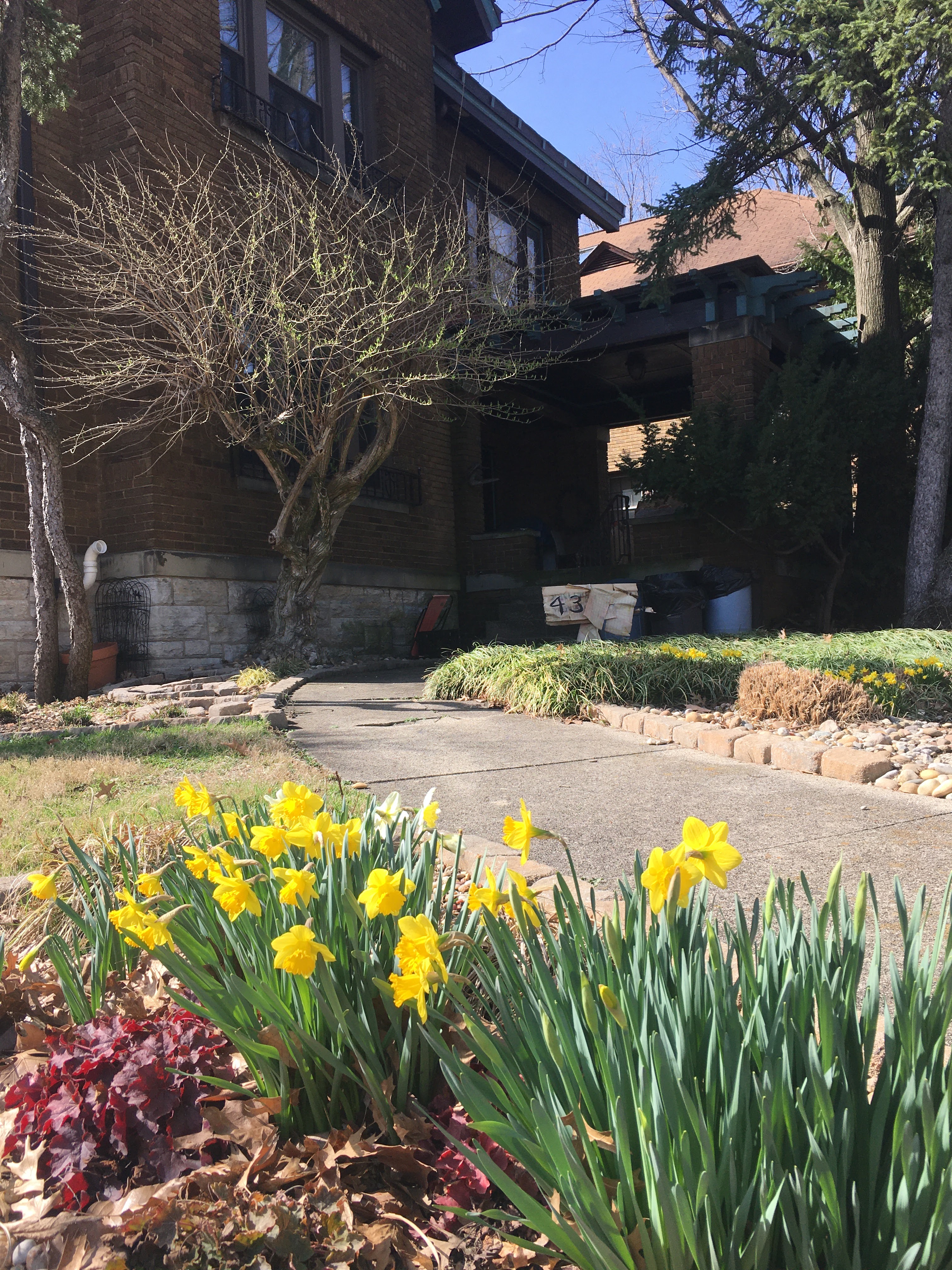
It’s 67 here on March first, with a predicted high today of 76. The sky is sunny, the daffodils are blooming in our garden, and the newly sprouting grass on our lawn is a handsome green. In some ways March is the most exciting month of the year. It signals the end to the snow and ice that have made dog walking a little perilous and makes outings to the zoo and the city parks more enticing. True, we have more frost and a few chilly storms to go, but this is definitely a season of hope and new beginnings. Here are some of the many interesting things about March. 

Some Basic March Facts.  In the early Roman calendar March was the first month of the year. It was named after the Roman god Mars because it was the month in which generals resumed military campaigns which had been interrupted by the winter. It’s also the start of the season for farming, and many societies still celebrate March as the beginning of the New Year (which is how it feels to me today). The Anglo-Saxons called it Hlyd monath (Stormy month) or Hraed monath (Rugged month). The Vernal Equinox is on March 20th this year, marking the beginning of Spring and the day on which day and night have the same 12-hour length. Daylight Savings Time starts on March 12th. (d) 

March in Cincinnati.  March is a transition month, winding up winter and beginning to move toward summer. Compared to the year as a whole, March is cooler, wetter, and less sunny than the average month in Cincinnati. It’s the fourth snowiest month of the year (averaging 4.5 inches). We typically get rain on ten days during the month. Sixty-three percent of March days are cloudy, 20% are partly cloudy, and 17% are sunny days free of clouds. The average high temperature is 55, the average low 34. March is the windiest month of the year in Cincinnati with winds averaging 11 m.p.h. (a) 
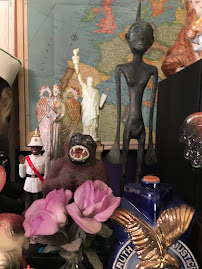
Quirky March Holidays.  March 1 is “National Pig Day”, and March 2 is “What if Cats and Dogs Had Opposable Thumbs Day?” “National Fanny Pack Day” is on March 11, and March 13 is “National Open an Umbrella Indoors Day”. Some celebrate “National No Selfie Day” on March 16 which is the same day as “Absolutely Incredible Kid Day”. March 20 is the “International Day of Happyness”. On the more serious side, Purim begins on March 6th and St. Patrick’s Day is March17th. (d) 

March Madness.  March is the number one month of the year for college basketball fans since it’s the time for March Madness, the NCAA tournament in which the nation’s 64 best teams compete to become the national champion. As a consequence, it’s also the most unproductive month of the year for businesses in America because of all the time workers spend on office betting pools. It’s estimated that some companies lose up to $1.9 billion because of wasted time during March Madness. Because the surgical procedure requires staying home for recovery (presumably on the couch in front of the TV), the first week of March Madness also sees the highest number of vasectomies of any week in the year. (e) 

Poets born in March: Elizabeth Barrett Browning (Mar. 6, 1806); Paul Verlaine (Mar. 30, 1844); A. E. Housman (Mar. 26, 1859); Robert Frost (Mar. 26, 1874); Dr. Seuss (Mar. 2, 1904); Robert Lowell (Mar. 1, 1917); Lawrence Ferlinghetti (Mar. 24,1919); Jack Kerouac (Mar. 12, 1922); Frank O’Hara (Mar. 27, 1926); Gregory Corso (Mar. 26, 1930); John Updike (Mar. 18, 1932). (c) 

March in My Childhood.  After the war our family moved out of town to our house on the Menominee River. Ice on the river melted, broke up, and flowed toward the bay in late March. My parents named the day “Chinese Bells Day” because of the wonderful tinkling sounds from the moving ice. Steve and I tried to rescue treasures from the river that the ice had torn from the banks. We made our last snowmen of the season in March, and I spent less time shoveling our hundred-yard driveway. The melting snow caused deep muddy ruts on Riverside Boulevard, and we’d usually get several days off from school in March because the road was impassable. 

March Nowadays at Our House.  Because of the warming temperatures our dog Iko will get to enjoy longer walks. Katja will go to Rahn’s Greenhouse to buy trays of pansies, and the gardener will begin working on the front and side of our house in earnest. We will watch the Oscars on March 12th, and we’ll celebrate World Poetry Day that same day too. We’ll see the new pottery exhibition by Roberto Lugo at the Art Museum (opening on March 17th), take in the Frank Stella prints at the Skirball Museum (opening March 23), and go to the Dayton Art Institute’s show on artists from Taos and Santa Fe in the 1920’s and 30’s. My OLLI classes in Advanced Poetry and Greek and Roman Mythology wind up in mid-March, and we’ll plan for the Spring quarter. We’ll go to the Linton Concert and the symphony, and Katja and I will each attend our writing groups. I hope to take my first camping trip of the year by the end of the month. 

A March Quote:  "March is a tomboy with tousled hair, a mischievous smile, mud on her shoes and a laugh in her voice.” (Hal Borland, writer) (b) 

 SOURCES:  (a) city-data.com, “Cincinnati, Ohio”; (b) louisem.com, “70 Inspiring March Quotes to Welcome a Marvelous Month”; (c) marchbirthdaysofpoets.wordpress.com, “March Birthdays of Poets”; (d) random-times.com, “The Month of March: holidays, fun facts, folklore and more”; (e) rd.com, “14 Facts You Probably Never Knew About the Month of March”; (f) thefactsite.com, “20 Marvelous Facts About March”; (g) wikipedia.org, “March”.

Friday, February 10, 2023

THRIFT STORE MANIA


Dear George, 
I can’t remember when my passion for thrift stores began. The closest thing in my childhood was when my dad came back from the war. Though he had his law degree, his practice was just beginning, and he had very few clients. Hence, our family had very little income. To save money, we moved to the unfurnished cottage that my grandfather had built shortly before his death out of town on the Menominee River. Every now and then I would get my red wagon and my dad and I would walk the half mile up Riverside Boulevard to the City Dump in order to find furnishings for our new house. This was the most exciting father-son activity of my young life. While he retrieved household items (e.g., broken furniture, worn kitchen utensils), I collected soda bottle caps (a remarkable variety being available back in the forties). I definitely was convinced at an impressionable age of the wonder and value of discarded, secondhand items. 

Nowadays our nearest thrift shore is about two miles away in Winton Place. I visit perhaps once a month. I was excited when they recently opened up a discount warehouse store a block away. As an employee explained, the second store is the “end of the line.” It’s all the stuff that wouldn’t sell in the regular store and is purportedly being given away at bargain basement prices. It’s much more popular than the main store. All of the merchandise is piled into one or another of about sixty huge bins, each holding about 80 cubic feet of cast-offs. Everything is sold by the pound: clothing, toys, electronics, and odds and ends for $1.09 a pound; books for 49 cents. Most of the customers are busy searching through the clothing bins. However, it’s the books and odds and ends that appeal to me. Stuffed animals, toys and games, records and CDs, tableware, office supplies, Xmas lights, baseball caps, artwork, just about everything one might need or desire. On my first visit I filled my shopping basket with miscellaneous treasures including a 1966 Columbia Encyclopedia yearbook (the year I came to Cincinnati). The book was admittedly heavy, but, even so, I was shocked at the cash register to learn that I was being charged $2.35. Since hardback books at the “up-scale” thrift store next door cost $1.00 apiece, the so-called discount price struck me as way out of line. 

I went home and stewed about this for the rest of the day. Finally I took 10 average-sized hardbound books off our bookshelf and weighed them. The average book weighed 2.4 pounds, meaning it would cost $1.18 at the discount warehouse. Convinced of the injustice of my purchase, I wrote a letter to the manager, conveying this information and arguing that it was unfair for the discount warehouse to sell books, on average, for 18 cents more than the “main” store charges. I suggested that 39 cents a pound would be more fair. Even 29 cents would be reasonable for a discount thrift store. I didn’t hear back right away, but I assumed that the price per pound for books would have been lowered by the time of my next visit. Disappointingly it wasn’t. The manager, despite several months to consider the matter, still hasn’t replied to my carefully thought out, helpful and persuasive letter. While discouraged, I do still buy books at the warehouse. But I’m careful to only choose their less weighty offerings. 
Love, 
Dave